
 E-Paper



SC issues notice to Narsinghanand over remarks against judiciary
A bench of justices AS Bopanna and MM Sundresh directed Narsinghanand to submit his response to the petition filed by social activist Shachi Nelli

 Prefer HTon Google


The Supreme Court on Friday issued a notice to Yati Narsinghanand, priest of Dasna Devi temple in Ghaziabad, on a contempt petition filed against him for his alleged derogatory remarks against the judiciary last year.
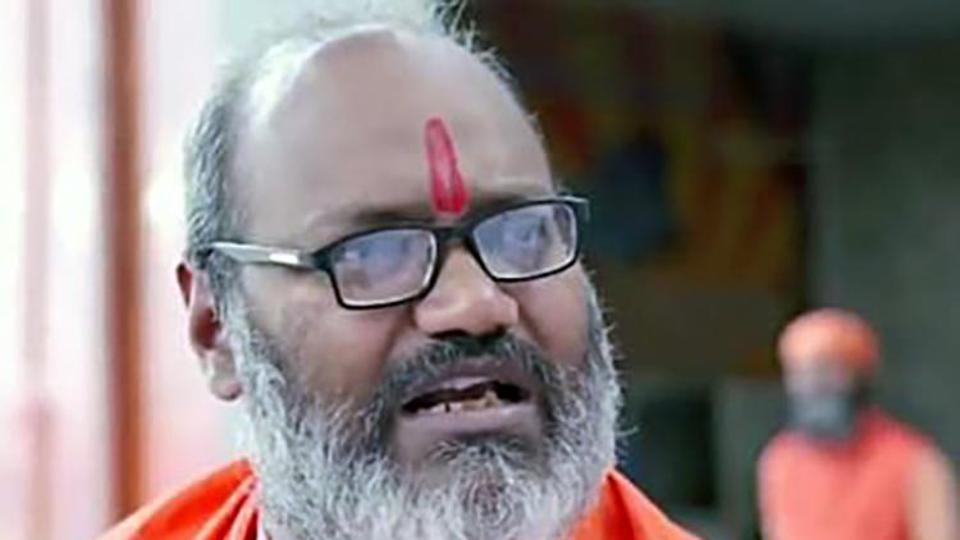
A bench of justices AS Bopanna and MM Sundresh directed Narsinghanand to submit his response to the petition filed by social activist Shachi Nelli, who pointed out at an alleged contemptuous statement made by the priest during an interview with a YouTube channel on January 14, 2022.
In his petition, argued by senior advocate Nitya Ramakrishnan, Nelli shared excerpts of the interview in which Narsinghanand was quoted as saying: “We have no trust in the Supreme Court and the Constitution.”
The priest also said that “those who believe in the Supreme Court of India will die a dog’s death”, according to the petitioner.
The interview was held against the backdrop of a case, pertaining to hate speeches delivered during an event in Haridwar in December 2021, pending in the top court.
In his contempt petition, Nelli said: “The contemnor has a huge reach and influence, and his statement has been spread far and wide by his followers and sympathisers, leading to widespread disaffection for this court, thereby undermining the authority and bringing its majesty into disrepute.”
Seeking action against Narsinghanand under section 15 (cognizance of criminal contempt) of the Contempt of Courts Act, the plea said: “The danger imminent to ordinary people and litigants to an armed and militant band of people who appear to know neither fear of the law nor any consequence of breaking the same calls for the strongest action by this court.”
On December 23, 2021, Haridwar Police registered its first case into the three-day Dharma Sansad event held from December 17-19, which caused a furore on social media as the participating religious leaders called for violence against minorities. Narsinghanand was arrested on January 15, a day after the Supreme Court heard a PIL seeking an action taken report from the Uttarakhand police against those accused in the hate speech cases.
Narsinghanand, sect chief of the influential Juna Akhada, was among five accused named in the FIR. The seer is also facing multiple charges in Delhi and Uttar Pradesh for alleged hate speeches at the event.
On May 12 last year, the top court observed that people who delivered hate speeches at the Haridwar event were “spoiling the whole atmosphere” of the country.
For initiating contempt proceedings, one has to obtain the consent of the Attorney General of India under Rule 3(c) of the Rules to Regulate Proceedings for Contempt of Supreme Court, 1975.
On January 22 last year, then attorney general KK Venugopal had granted consent to the petitioner to file the contempt case on the grounds that prima facie, Narsinghanand’s statement had tried to lower the image of the top court in the public’s mind.


