E-Paper



Supreme Court junks plea seeking ban on structures named after Babar
The immediate trigger for the plea was the announcement for the construction of a replica of the Babri Masjid in West Bengal’s Murshidabad district

 Prefer HTon Google


The Supreme Court on Friday dismissed a public interest litigation (PIL) seeking directions to restrain the Union government and states from permitting the construction or naming of any mosque or structure in the name of Mughal ruler Babar.
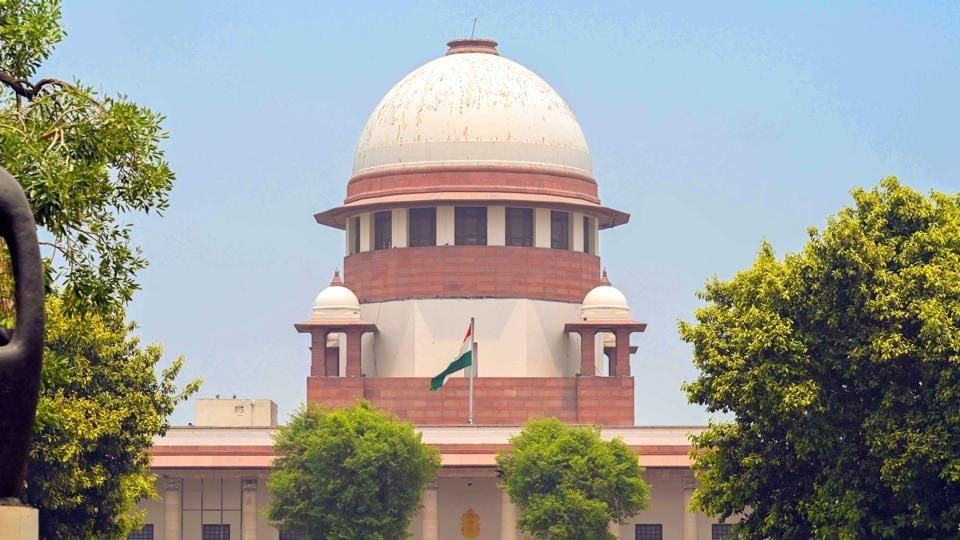
A bench of justices Vikram Nath and Sandeep Mehta refused to entertain the plea almost immediately after briefly hearing the petitioner’s counsel. “We want this court to restrain the construction of a mosque or any structure in the name of Babar, who was an invader and a cruel ruler. Some action should be taken against the legislator who says so,” the lawyer for petitioner Devkiandan submitted, referring to suspended Trinamool Congress (TMC) lawmaker Humayun Kabir.
The bench showed little inclination to engage with the merits. “Dismissed,” the court said. When the lawyer attempted to persist, the bench reiterated its order twice more. “We have said ‘dismissed’ three times by now. You should get the message and stop arguing now,” Justice Nath remarked.
With the court making its position clear, the petitioner’s counsel sought permission to withdraw the plea, which was allowed.
The petition sought a writ of mandamus directing the Union government and all states to restrain or ban the construction, establishment, or naming of any mosque or religious structure in the name of “Babur or Babri Masjid or any other derivative names” across India. It sought directions to frame guidelines or issue advisories preventing the construction of any religious structure named after “any such person who came as an invader in our country”.
The immediate trigger for the plea was Kabir’s announcement last year that he intended to construct a replica of the Babri Masjid, a 16th-century mosque demolished in Ayodhya in December 1992, in West Bengal’s Murshidabad district.
Kabir’s declaration sparked a political row in poll-bound West Bengal, where assembly elections are due in March-April.
Construction of the proposed mosque replica reportedly began last week at Beldanga in Murshidabad. Kabir has told the media that the project is expected to be completed within two years.
The TMC distanced itself from the announcement and suspended Kabir, in what was widely seen as an attempt to reinforce its secular positioning amid a sharpening political contest with the Bharatiya Janata Party (BJP).
Kabir launched a broadside against chief minister Mamata Banerjee and floated his own outfit, the Janata Unnayan Party (JUP), which he described as a “game-changer” in Bengal politics. He said the JUP will contest 135 of the state’s 249 assembly seats in 2026.
The BJP alleged that the controversy was a calculated attempt to stoke communal tensions, while also claiming that Kabir’s apparent rift with TMC was a façade aimed at splitting votes. State BJP chief Samik Bhattacharya said Kabir would “not be a factor” and would face defeat.
Assam chief minister Himanta Biswa Sarma weighed in, describing the proposed structure as a mere “putlaa” (dummy). “When the original is gone, what will the putlaa do?” he remarked earlier this week.
In its unanimous 2019 verdict in the Ayodhya dispute, a five-judge Supreme Court bench paved the way for the construction of a Ram temple at the contested site, while directing that a separate five-acre plot be allotted for the construction of a mosque. The court had held that while the Hindu belief that Lord Ram was born at the site was undisputed, the demolition of the mosque was a violation of the rule of law that “must be remedied”.