
 E-Paper



Supreme Court puts on hold child right body NCPCR's 'Madrassa' recommendations
The Supreme Court said the communications issued by the body on June 7 and June 25 should not be implemented.

 Prefer HTon Google


The Supreme Court has put on hold child rights body NCPCR's recommendations to stop state funding to Madrassas that don't comply with the Right to Education Act.
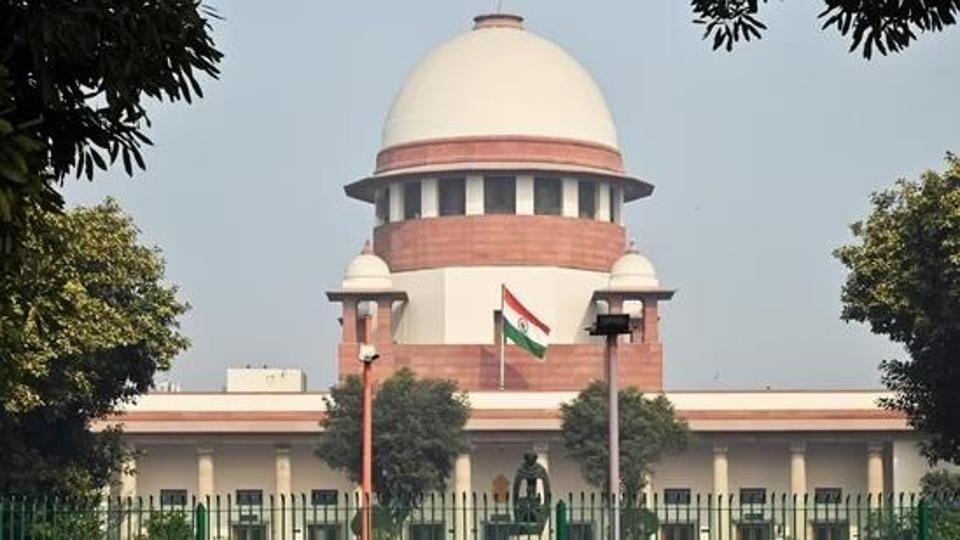
A bench comprising Chief Justice of India DY Chandrachud and Justices JB Pardiwala and Manoj Misra took note of the submissions of the lawyer of the Muslim organisation, Jamiat Ulema-i-Hind, that the communications of the National Commission for Protection of Child Rights (NCPCR) and consequential actions of some of the states needed to be stayed.
The organisation has challenged the action of the Uttar Pradesh and Tripura governments directing that students of unrecognised madrassas should be shifted to government schools.
The Supreme Court said the communications issued by the body on June 7 and June 25 should not be implemented.
Also read: NCPCR suggests stopping govt funding for madrasas
What did the NCPCR report say?
In a recent report, the National Commission for Protection of Child Rights (NCPCR) said that state funding should be stopped in madrassas unless they comply with the Right to Education Act.
The report received sharp reaction from political leaders, including SP chief Akhilesh Yadav who blamed the ruling BJP for selectively targeting minority institutions. Kerala's Indian Union Muslim League (IUML) said it was the latest display of the communal agenda by the BJP-led central government.
Earlier this month, NCPCR chairperson Priyank Kanoongo said he never called for the closure of such madrassas but recommended that state funding to these institutions must be stopped as they were depriving poor Muslim children of education.
"We never advocated for the closure of madrasas. Our stance is that while affluent families invest in religious and regular education, even children from impoverished backgrounds should be imparted that," he said.
Also read: Supreme Court slams child rights body NCPCR: 'Don't drag us in your agenda'
In an interview with PTI, he said certain factions within the country dread the empowerment of Muslims.
"There exists a faction in our nation that dreads the empowerment of Muslims. Their fear stems from the anticipation that empowered communities will demand accountability and equal rights," he added.
He claimed impoverished Muslim children are often pressured into religious schooling over secular education, undermining their prospects.
"We have recommended mapping unmapped madrassas and enrolling children into schools. While some states like Kerala have resisted, others like Gujarat have taken proactive steps. In Gujarat alone, over 50,000 children have been enrolled in schools despite facing violent opposition," he explained.
With inputs from PTI, ANI


