E-Paper



Supreme Court raps states over delayed affidavits in stray dogs case: 'India showed in bad light...'
Representatives of all states and UTs, except West Bengal and Telangana, were issued summons by the Supreme Court, and asked to appear before it on November 3.

 Prefer HTon Google


The Supreme Court on Monday came down heavily on states and Union territories (UTs) for failing to submit compliance reports from their animal husbandry departments and local bodies on the implementation of the Animal Birth Control (ABC) Rules, 2023, warning that top bureaucrats will face personal accountability for their inaction in controlling the stray dog menace while safeguarding human and animal welfare.
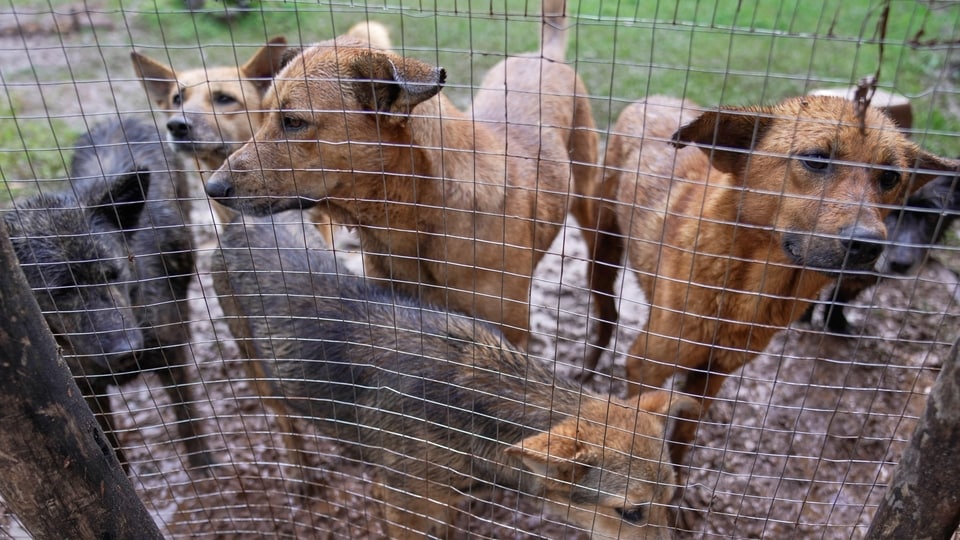
A three-judge bench led by Justice Vikram Nath directed the chief secretaries of all states and UTs to be present before it on November 3, along with explanations for why no compliance affidavits had been filed despite ample time.
The bench noted that only Telangana, West Bengal, and the Municipal Corporation of Delhi (MCD) had filed their reports so far, exempting the chief secretaries of the two states mentioned from personal appearance. The court clarified that the Delhi chief secretary would also have to appear on November 3 and that the report by the MCD would not suffice.
“Let chief secretaries of all states and Union territories remain present before this court on November 3, along with an explanation why no compliance affidavit was filed till date,” the bench, also comprising justices Sandeep Mehta and NV Anjaria, said.
Expressing strong displeasure, the court reminded the states that they had been given three months in August to apprise the bench of the progress made in implementing the ABC Rules, requiring local authorities to run sterilisation and anti-rabies programmes based on the catch-neuter-vaccinate-release model.
“Three months were given to them in August, but nothing has come on record. Continuous incidents are happening and your country is shown in a bad light at international platforms,” said Justice Nath, adding that the court would not hesitate to impose costs for the continuing non-compliance.
“Our order was widely reported by all newspapers and other media outlets. Do the state officers not read newspapers or use social media?” the bench said, as it summoned all chief secretaries to appear in person.
The court is monitoring the matter suo motu to evolve a national policy on stray dog management, having in August expanded the scope of proceedings to cover all states and UTs and transferred all similar cases pending before high courts to itself.
During Monday’s hearing, senior advocate Sidharth Luthra, appearing for animal rights activist Gauri Maulekhi, informed the bench that his client had filed a compilation highlighting best practices from various jurisdictions to aid the court’s consideration.
Senior advocate Abhishek Manu Singhvi, representing an NGO that has sterilised thousands of dogs, sought to assist the court in formulating a workable solution. “Okay. Impleadment allowed,” the bench said.
When another advocate pointed out instances of cruelty to animals, the bench responded tersely: “What about cruelty to humans?” The bench underlined that the court’s intent was to strike a balance between animal welfare and public safety. “We are solely monitoring it so that we can achieve the objective. There has to be a balance. We will hear it on November 3 now,” it said.
In its last substantive order on August 22, the same bench modified an earlier directive issued by a two-judge bench on August 11, which had required the mass capture of stray dogs across Delhi and adjoining districts without release. Calling that prohibition “too harsh,” the Justice Nath-led bench clarified that dogs must be sterilised, vaccinated, and released back into the same locality, except for those suffering from rabies or displaying aggressive behaviour.
The clarification effectively restored adherence to the ABC Rules, 2023, framed under the Prevention of Cruelty to Animals Act, which mandates humane management of stray dogs through sterilisation and immunisation rather than mass confinement.
The court had also ordered the establishment of dedicated feeding spaces in every ward and barred feeding in public streets and residential areas, warning that violations would invite legal action.
At that time, the bench had impleaded all states and UTs and directed them to submit detailed reports from their animal husbandry departments and local bodies on ABC compliance, so that a uniform national framework could be evolved. It had also asked the municipal authorities in Delhi, Noida, Ghaziabad, Gurugram, and Faridabad to proceed with mass capture and creation of shelters, while ensuring that treated dogs were released back in their localities as per the rules.
The August order required animal welfare organisations and individual petitioners to deposit ₹2 lakh and ₹25,000, with the Supreme Court registry, to be utilised by municipal bodies for building facilities for stray dogs.
The court’s intervention followed widespread concern over a spate of dog-bite incidents, including the death of a six-year-old girl, which had prompted the earlier order by a bench of Justices JB Pardiwala and R Mahadevan. That sweeping order drew criticism from animal welfare groups, who warned of cruelty and statutory violations.
Subsequently, Chief Justice of India Bhushan R Gavai, in a rare administrative step, withdrew the matter from the Pardiwala bench and reassigned it to the Justice Nath-led three-judge bench to harmonise public safety concerns with the statutory mandate of animal protection.