E-Paper



Supreme Court to reconsider its ruling in favour of Adani Power
A five-judge bench, headed by chief justice of India NV Ramana, issued notices on a curative petition filed by GUVNL after noting that the plea raises significant questions of law.


The Supreme Court has decided to reconsider its 2019 judgment, which affirmed Adani Power (Mundra’s) call to terminate the power purchase agreement (PPA) signed with Gujarat Urja Vikas Nigam (GUVNL).
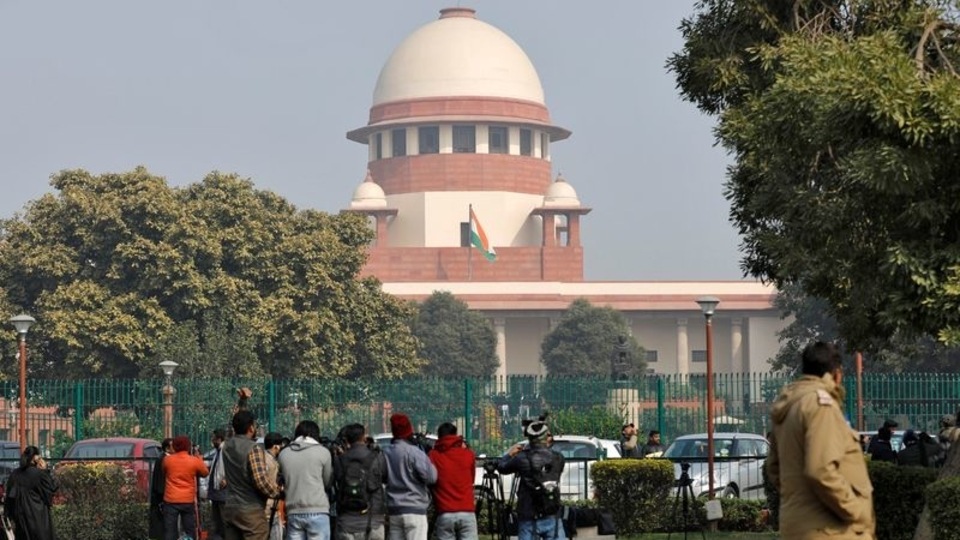
A five-judge bench, headed by chief justice of India NV Ramana, issued notices on a curative petition filed by GUVNL after noting that the plea raises significant questions of law. Apart from Adani Power (Mundra), notices have also gone to Gujarat Electricity Regulatory Commission (GERC) and an NGO, Consumer Education and Research Society.
“We have gone through the curative petition and the relevant documents. In our prima facie opinion, there are substantial questions of law raised in this curative petition, which require consideration. Issue notice,” stated the court’s order on September 16.
The bench, which also included justices Uday U Lalit, AM Khanwilkar, BR Gavai and Surya Kant, has listed the matter for a hearing in the open court on September 30.
Curative petition is the final legal remedy available to a litigant after dismissal of the main petition and the review petition.
In its July 2019 judgment, a three-judge bench comprising justices Arun Mishra, BR Gavai and Surya Kant underlined that Adani Power was justified in terminating the PPA since it could not get coal supply on time from the Naini block of Gujarat Mineral Development Corporation (GMDC).
The apex court, in its 2019 order, also allowed Adani to seek a compensatory rate for the electricity it had alternatively supplied to Gujarat from its Korba power project in Chhattisgarh. It had asked the Central Electricity Regulatory Commission (CERC) to decide the compensatory rate for Adani Power within three months from the date the company approaches it. GUVNL will then have to make the payment to Adani within three months from the date the CERC decides.
The dispute dates back to 2010, when Gujarat Electricity Regulatory Commission (GERC) said Adani Power illegally terminated the PPA the latter had signed with GUVNL. This decision of GERC was later upheld by the Appellate Tribunal for Electricity, prompting Adani to approach the top court.
According to Adani’s contention in the top court, it signed the PPA in 2007 with GUVNL for supply of 1,000 MW at ₹2.35/unit from its power project at Korba, Chhattisgarh, based on coal supply from Naini. GMDC agreed to supply 4 million tonne of coal a year to Adani by developing the Naini coal block.
Later, in 2007, Adani told GUVNL it would supply power from its Mundra power project in Kutch, Gujarat, instead of from Chhattisgarh since GMDC was lagging in coal production. However, despite repeated reminders to the Gujarat government, GUVNL, and GMDC, the coal supply did not start. Adani claimed it was forced to terminate the PPA in December 2009, arguing the agreement for supply of power was based on the assurance given by GMDC.