
 E-Paper



Inside BJP’s 10-point Vande Mataram resolution: ‘No vote bank' politics, cites Mahatma Gandhi’s ‘anti-imperialist cry’
BJP resolved to highlight Mahatma Gandhi’s description of Vande Mataram as an “anti-imperialist cry” linked to the “purest national spirit”.

 Prefer HTon Google


The Bharatiya Janata Party on Saturday passed a 10-point resolution opposing the Congress Working Committee's decision to reaffirm its 1937 resolution restricting the singing of Vande Mataram to its first two stanzas at party programmes.
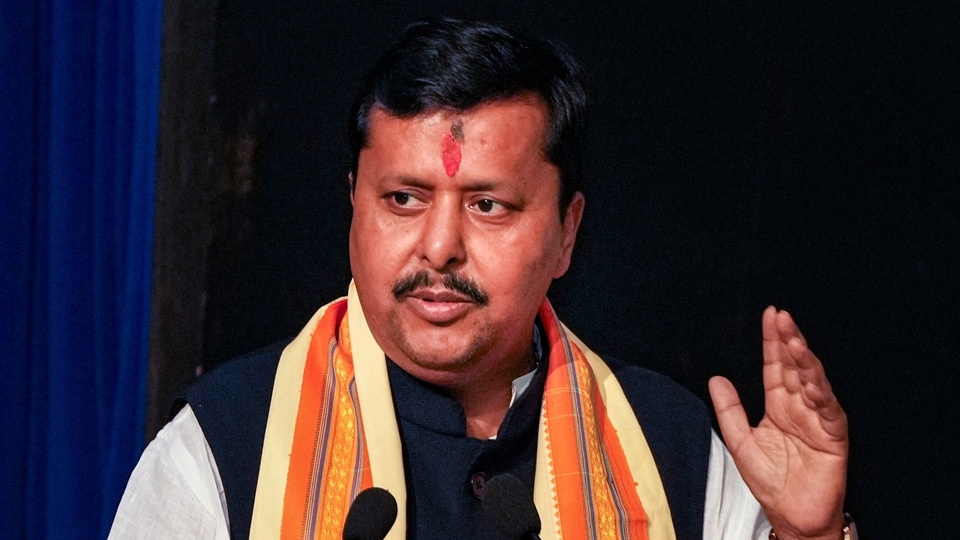
The party resolved to highlight Mahatma Gandhi’s description of Vande Mataram as an “anti-imperialist cry” linked to the “purest national spirit” and oppose attempts to subject the National Song to “communal pressure, political appeasement or narrow vote-bank considerations”.
Also Read: BJP passes resolution on 'Vande Mataram', condemns Congress move to sing 2 stanzas
Here are the 10 points:
Deep Dive

1. To strongly condemn and unequivocally oppose the Congress Working Committee’s decision of 19th August 2026 to reaffirm its 1937 resolution and restrict Vande Mataram to its first two stanzas at Congress programmes.
2. To uphold the honour, dignity, legacy and national status of the complete Vande Mataram as the National Song of Bharat and as an immortal symbol of India’s national consciousness and freedom struggle.
3. To affirm the constitutional and statutory status of Vande Mataram as established by the Constituent Assembly’s 1950 pronouncement and reinforced by Parliament’s 2026 amendment extending statutory protection to the National Song equivalent to that accorded to the National Anthem.
4. To reject every attempt to subordinate the National Song to communal pressure, political appeasement or narrow vote-bank considerations.
5. To remind the Congress that a resolution of its Working Committee cannot override the constitutional institutions or laws of the Republic of India, and that a political compromise of 1937 cannot be elevated above the constitutional settlement of 1950 and legislation enacted by Parliament in 2026.
6. To expose before the people of Bharat the historical and political context in which the truncation of Vande Mataram took place, including the objections raised by the Muslim League and the subsequent politics of communal and separatist demands.
7. To recall and disseminate Mahatma Gandhi’s own testimony that Vande Mataram had become an “anti-imperialist cry” and that he associated it with “the purest national spirit”, demonstrating its larger national meaning beyond the literary or religious context of particular stanzas.
8. To undertake a nationwide campaign through BJP Karyakartas to take the history, meaning, national significance and glorious legacy of Vande Mataram to every corner of Bharat.
9. To educate and mobilise the people, especially the younger generation, so that the complete six-stanza National Song and its history are not forgotten and future generations understand the sacrifices, struggles and patriotic awakening with which Vande Mataram is inseparably associated.
10. To affirm that no compromise can be accepted with the honour and legacy of Vande Mataram for political convenience or appeasement.


