
 E-Paper



Courts must not show mercy to those violating orders, says SC
Noting a disturbing trend of courts accepting apologies offered by persons found guilty under the Act


People who disobey orders and undertakings given to courts deserve no mercy, the Supreme Court said in a recent ruling, asking courts to show more discretion in accepting apologies which are used as a “potent weapon” and a “legal trick” to wriggle out of responsibility by litigants.
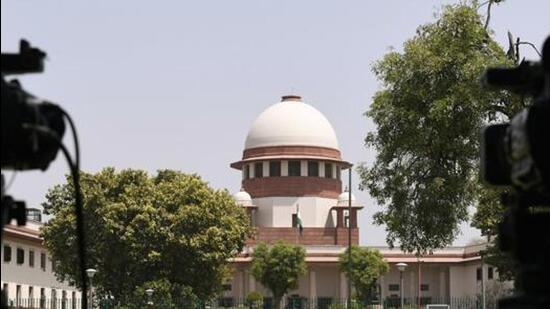
The Court sounded this warning while deciding an appeal of a judgement of the Gujarat high court which sentenced five people under the Contempt of Courts Act, 1971 for breaching an oral undertaking given to the court in 2015 . The case in question related to the sale of property and the undertaking was to the effect that no sale would be concluded. The high court order of July 13, 2022 sentenced three of the people to two months simple imprisonment and ordered two others to pay a ₹1 lakh in lieu of sentencing. A fine of ₹2,000 was uniformly imposed on all contemnors. Simultaneously, the high court cancelled all sale agreements made in violation of the 2015 undertaking.
Upholding the order, a Supreme Court bench of justices JB Pardiwala and Manoj Misra said, “The sanctity to judicial proceedings is paramount to a society governed by law. Otherwise, the very edifice of democracy breaks and anarchy reigns.”
The bench directed the contemnors to undergo the sentence as awarded by the high court and said, “The litigating public cannot be encouraged that such a situation can continue or the court will not rise to the occasion to book people violating its orders.”
Noting a disturbing trend of courts accepting apologies offered by persons found guilty under the Act, the bench said, “There ought not to be a tendency by courts to show compassion when disobedience of an undertaking or an order is with impunity and with total consciousness.”
The judges said that the litigants facing contempt proceedings have realised that they have a very potent weapon in their hands in the form of apology.
Justice Pardiwala, authoring the 83-page judgment said, “This lenient attitude shown by the courts over a period of time has actually emboldened unscrupulous litigants to disobey or commit breach of the order passed by any court or any undertaking given to the court with impunity.”
In the present case, the four contemnors accepted that their action in selling off the property in breach of the undertaking to the court was a big mistake. “The law is very clear that the court should not get compassionate and dilute an indictment and not follow it with conviction. The fact that the appellants have committed contempt is not in doubt. The law enjoins that a punishment must follow,” the bench said.
Section 12 of the 1971 Act provides for a simple imprisonment for a term extending up to six months or a fine extending up to ₹2,000 or both. This provision allows the court to accept bona fide apologies.
The top court said, “Apology is not just a word. The court should not accept the apology when it appears that saying sorry is nothing but a legal trick to wriggle out of responsibility. In the absence of a deep ethical act of introspection, self-introspection, atonement and self-reform, any apology will be farce.”
Referring to past decisions, the ruling reiterated that no court is bound to accept apologies as a matter of course.
In the present case, the Court was convinced that the apology offered by the contemnors was a “gamble” and a “calculated risk” to escape legal consequences for their alleged act of contempt after pocketing a sizeable amount towards the sale consideration obtained from the purchasers. Their conduct in the entire case was also suspect as they did not cancel the sale agreements even after they faced contempt proceedings, the court pointed out.


