Surendra Koli, who spent nearly two decades in jail before being acquitted in all 13 cases linked to the 2006 Nithari killings, died by suicide, according to his post-mortem report, Uttarakhand Police said on Wednesday.
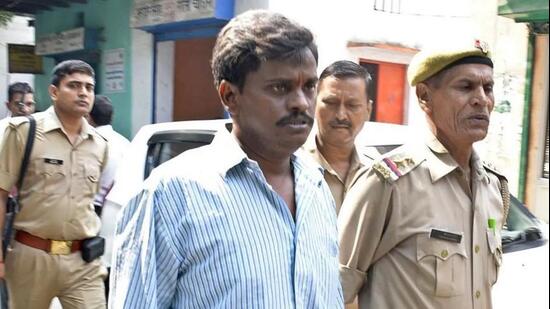
Koli was found dead at a tea stall in Haridwar on September 18, and the autopsy found that he died of asphyxia due to ante-mortem hanging, police said.
“The autopsy report of Surendra Koli states it as a suicidal death. The cause of death is specified as asphyxia due to ante-mortem hanging. During the investigation also, no other forensic evidence, CCTV footage of any suspect person or suspicious activity came to light,” in-charge of the City Police Station Kundan Singh Rana told HT.
Koli, who worked as a domestic help at the Noida house of businessman and co-accused Moninder Singh Pandher, was found with a noose around his neck, but no suicide note was recovered. Koli had rented the tea stall in the Sapt Rishi area of Haridwar three days before his death. Chandan Koli, Koli’s brother, submitted a complaint at the Saptarishi police outpost in Haridwar on Sunday, seeking a high-level probe into his brother’s death, which he alleged occurred under suspicious circumstances.
Following the recovery of the body, police initiated an investigation into the circumstances surrounding the death. The body was sent for a post-mortem examination to ascertain the cause of death.
{{/usCountry}}Following the recovery of the body, police initiated an investigation into the circumstances surrounding the death. The body was sent for a post-mortem examination to ascertain the cause of death.
{{/usCountry}}The post-mortem examination was conducted on September 19. After the examination, Koli’s final rites were performed at the Khadkhadi Cremation Ganga Ghat in Haridwar by his brothers and son.
Police said that, apart from the postmortem findings, the investigation did not uncover any forensic evidence, CCTV footage involving a suspect or any suspicious activity that would indicate that another person was involved in Koli’s death.
Koli, dressed in a powder-blue shirt, black pants and a navy-blue jacket, had walked out of jail on November 12, 2025.
Anil Sharma, who had rented out the tea stall to Koli in the Kumbh Mela area in Haridwar, said Koli introduced himself as Sada Ram and said he had previously worked in Roshanabad. Neighbouring shopkeepers said Sada Ram appeared to have been looking ahead to next year’s Ardh Kumbh fair, hoping to maximise his earnings during the four-month event.
The area falls in the core Mela zone and has a large number of temples, ashrams, dharamshalas, maths and hotels.
He had rented the tea stall to Koli for a monthly rent of ₹7,000 and an advance of ₹14,000.
The police said Koli was identified as a resident of Magrukhal in the Bhikiasain area of Almora.
The Nithari case came to light in 2006 when skeletons, skulls, and bones were discovered in the drains and the backyard of businessman Pandher’s bungalow in Noida’s Sector 31. The incident sparked nationwide outrage as the disappearances and murders of several children and women were suspected. Koli and Pandher were arrested on December 29, 2006 and charged with rape, murder, abduction, trafficking and destruction of evidence.