
 E-Paper



Suspicious communications helped locate Pahalgam terrorists
To be sure, neither the army nor the NIA has yet officially disclosed the identities of the three Pahalgam attackers.

 Prefer HTon Google


On July 11, intelligence agencies intercepted a “suspicious communication” in an area near Dachigam National Park in Jammu & Kashmir. Soon, soldiers started combing the area as the intercept suggested that the user of the communication device from which the signal originated had some links with the April 22 Pahalgam terrorist attack, people familiar with the development said.
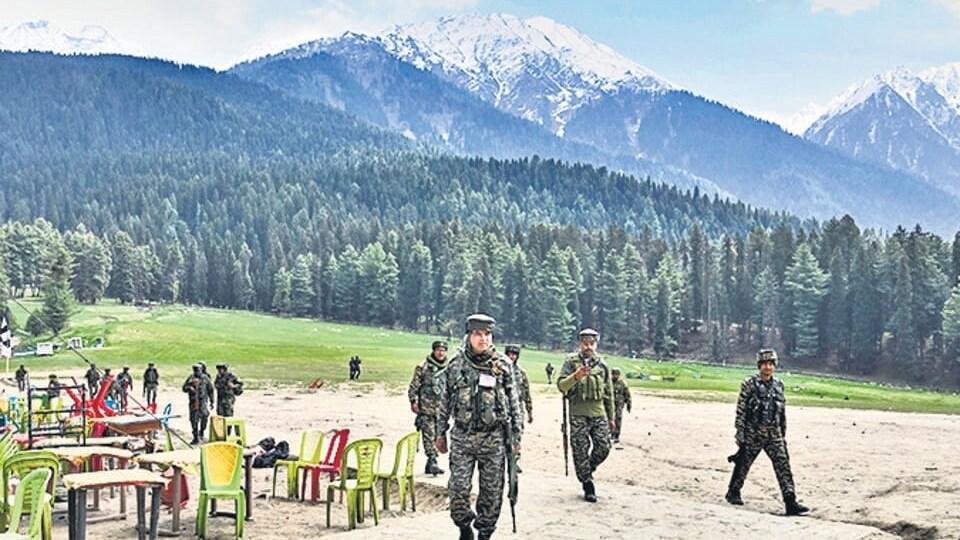
After almost 17 days of search operations, around 11.30am on Monday, a team from 24 Rashtriya Rifles and 4 Para Commandos detected three “high value Pakistani terrorists”, these people said. The three were caught unawares and killed; one of them was Suleiman Shah, a Lashkhar e-Taiba (LeT) operative suspected to be the main shooter and one of the masterminds of the Pahalgam attack, these people said.
“We have been intercepting terrorists’ communications regularly. A suspected communication was detected in Dachigam on July 11 and it suggested the user of the communication device had a link with the Pahalgam attack. Several parties were inducted for search and domination in the entire region. We were finally successful around 11.30am on Monday when we tracked them hiding in the forested area,” said an officer who didn’t want to be named.
Suleiman Shah’s name figured as the main suspect after the attack in which 25 tourists and one local pony operator were gunned down in a picturesque meadow in Pahalgam. The National Investigation Agency (NIA), which is investigating the case, was also on the lookout for him. It is suspected that he was a former Pakistan army commando , the officer cited above said.
The security forces recovered one M4 carbine and two AK47 rifles along with grenades and ammunition, besides food provisions, from the hideout in the Harwan area of Dachigam. The identities of the other two killed have not been revealed officially.
Jammu & Kashmir Police, in a post on X, said, “Op Mahadev: The identification of the neutralised #terrorists is being done! Please await further details.”
To be sure, neither the army nor the NIA has yet officially disclosed the identities of the three Pahalgam attackers.
“Suleiman Shah’s name figures repeatedly in most intercepts since the Pahalgam attack. He was a key operative. Their electronic devices are being examined to know about their communications, routes taken and places of hideout in the last three months. We will have some clarity by Tuesday morning,” said a second officer, who also requested anonymity.
The second officer said their identities are likely to be confirmed by two persons –– Parvaiz Ahmad Jothar and Bashir Ahmad Jothar –– arrested by the NIA last month for allegedly harbouring the Pahalgam attackers.
The NIA probe has revealed that “Parvaiz and Bashir had knowingly harboured the three armed terrorists at a seasonal dhok (hut) at Hill Park before the attack,” according to a statement issued by the agency last month.
“The two men had provided food, shelter and logistical support to the terrorists, who had, on the fateful afternoon, selectively killed the tourists on the basis of their religious identity, making it one of the most gruesome terrorist attacks ever,” said the agency.
The Resistance Front, a proxy group for the banned LeT organisation, claimed responsibility for the attack. Indian agencies say the group is a front used by Pakistan to avoid international sanctions.
As first reported by HT on April 24, intelligence agencies traced the attacker’s digital communications to safe houses in Muzaffarabad and Karachi, establishing Pakistani involvement in what officials described as similar to the control room operated during the 2008 Mumbai attacks.
India responded to the Pahalgam attack with Operation Sindoor on May 7, bombing nine terrorist camps across Pakistan and Pakistan-occupied Kashmir in pre-dawn strikes that killed at least 100 militants.
The operation sparked four days of cross-border fighting involving fighter jets, missiles, and artillery. On the intervening night of May 9 and 10, the Indian Air Force struck targets at 13 Pakistani airbases and military installations before hostilities ended on May 10.


