
 E-Paper



Political veteran with strong OBC outreach quits BJP ahead of UP polls
Swami Prasad Maurya was the labour and employment minister in the UP government before he quit the BJP to join the Samajwadi Party ahead of the polls.

 Prefer HTon Google


Swami Prasad Maurya, 65, from Chawad village in Kunda tehsil of Uttar Pradesh’s Pratapgarh district, has been for almost four decades a significant OBC (other backward classes) leader across multiple political formations – and on Tuesday, he moved to another one.
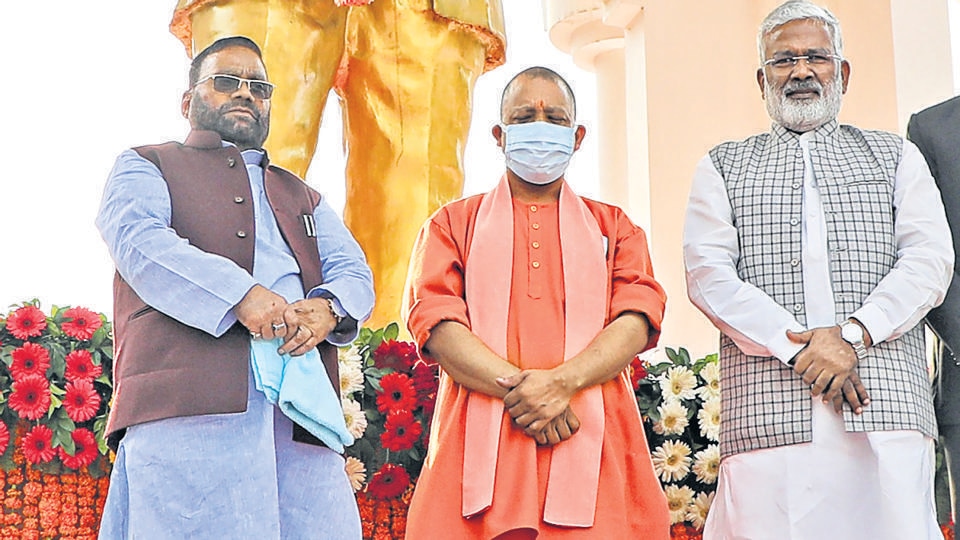
Maurya was the labour and employment minister in the Bharatiya Janata Party (BJP) government, representing the Padrauna assembly seat (in Kushinagar district) in the UP assembly before he quit to join the Samajwadi Party. He enjoys considerable influence over the OBC Maurya-Kushwaha- Shakya-Saini community, and analysts say his exit will likely hurt the BJP, and perhaps broaden the SP’s appeal to OBCs.
Tuesday’s events are reminiscent of those of June 22, 2016, when Maurya exited the Bahujan Samaj Party (BSP), a few months before the 2017 assembly elections. An OBC poster-boy of the BSP, he was the party’s national general secretary and leader of opposition in the legislative assembly from 2012.
On August 8 that year, he joined the BJP along with his supporters. He was given a ticket from his traditional assembly seat, Padrauna, in the 2017 assembly elections. After the formation of the BJP government in March 2017, he was made a cabinet minister and given the labour and employment portfolio. His daughter Sanghmitra Maurya was elected to the Lok Sabha on a BJP ticket from the Badaun Lok Sabha seat in the 2019 general elections.
“I have resigned from the cabinet in protest against the indifferent attitude of the BJP government toward the problems faced by the Dalits, backwards, farmers, unemployed youths as well as medium and small class traders in Uttar Pradesh,” Maurya said.
Maurya was treated as a big leader in the BSP, but remained on the second rung in the BJP, a party with other OBC stalwarts, including deputy chief minister Keshav Prasad Maurya, Swatantra Deo Singh and Anil Rajbhar. He was not even invited to the backward community mobilisation programme organised by the BJP on December 20, said his aide Manoj Maurya.
A postgraduate in geography from Allahabad University, Maurya started practising law in the Allahabad high court after completing LLB from the university in 1980. He took the plunge into politics during his student days and contested the university’s student union elections.
Soon, he established himself as a front-line backward classes leader in state politics. Maurya joined the Lok Dal and was appointed its general secretary in 1989. He played an important role in the merger of Lok Dal with the Janata Dal and was appointed state general secretary of the Janata Dal for his efforts.
But with differences cropping up with other Janata Dal leaders over the alliance with Maulayam Singh Yadav, Maurya resigned from the JD, and on January 20,1996, he joined the BSP.
He won the confidence of BSP founder Kanshi Ram as well as Mayawati, and his stature rose. While SC Mishra was considered the forward classes face of the party, Maurya emerged as its backward classes face. He played an important role in spreading the base of the BSP in east and central UP. He led the charge of the BSP against the BJP before joining the latter.
Maurya was first elected to the state assembly in 1996 on a BSP ticket from Dalmau, and re-elected in 2002. Though he lost the 2007 assembly election from Unchahar assembly seat in Rae Bareli district, Mayawati fielded him in the by-poll on Padrauna assembly seat in 2008. He retained this seat in 2012 and then, as a BJP candidate in 2017. He was made the president of the state unit of Bahujan Samaj Party (BSP) in 2010.
Maurya was appointed cabinet minister and entrusted with the task of building the BSP’s OBC base. He was also made head of the bhaichara (brotherhood) committee constituted to woo the Maurya- Kushwaha community.


