E-Paper



Swine flu impact highest in four states
North India has been worst hit by influenza (A) H1N1 or swine flu this year, with at least 61% cases reported from across the country coming from Rajasthan, Delhi, Haryana and Punjab.

 Prefer HTon Google


North India has been worst hit by influenza (A) H1N1 or swine flu this year, with at least 61% cases reported from across the country coming from Rajasthan, Delhi, Haryana and Punjab.
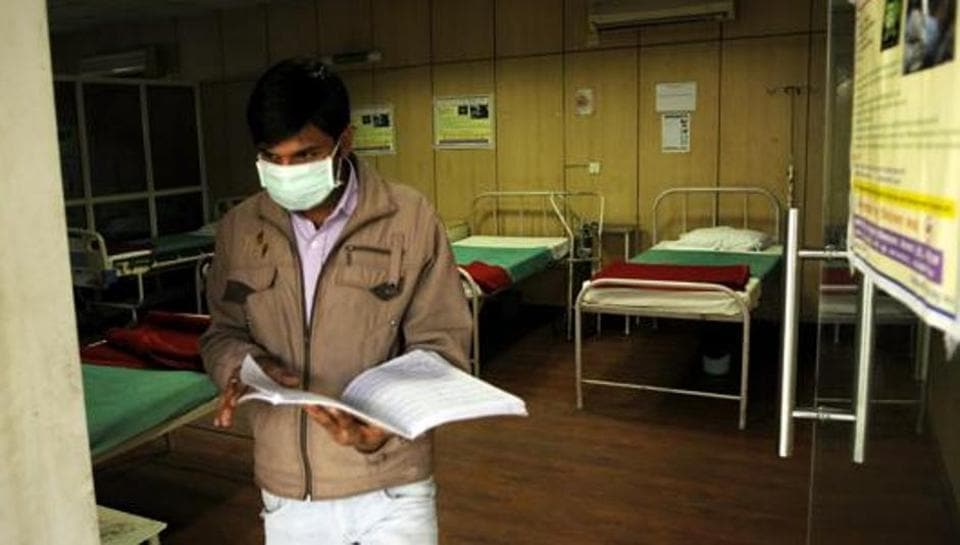
According to surveillance data collected under the government’s Integrated Diseases Surveillance Programme (IDSP), the week between January 28 and February 3 this year was particularly bad as 1,176 of the 2,101 cases that tested positive during this period were from the four north Indian states.
Again, of a total of 6,701 cases, as many as 4,114 were reported from these states with Rajasthan reporting 2,363 cases, Delhi 1,011, Haryana 490 and Punjab 250 cases. Of 226 swine flu deaths, 117 were reported from three of these states, except Delhi that has officially reported no death.
Experts have, however, warned against creating panic, saying this was a cyclic phenomenon.
“Flu cases are either due to influenza (A) H1N1, H3N2 or influenza B. There will always be a strain or a combination of strains that is more prevalent than the other and cause infection. There’s largely immunity within the community against the strains but whenever there is a build-up of people who aren’t exposed to the prevalent strain, infections will go up,” said an expert in a government laboratory requesting anonymity as the expert is not authorized to speak to the media.

There are typically two peak flu seasons — monsoon (August-October) and winter (January-March). While H3N2 was the dominant strain last monsoon, between 70-90% of the cases this winter were found carrying the H1N1 strain.
“There is an increase in the number of cases reported when the pool of unimmunised population increases. This can be due to migration and new births. But it can also be because of the changing structure of the virus that leaves the population without immunity,” said Dr Nivedita Gupta, senior scientist at Indian Council of Medical Research (ICMR).
The H1N1 outbreak in 2009 had sparked fears that it would be the killer virus of the future. But the fear has proved unfounded, said an expert not wishing to be named.
Also read: Google searches for swine flu in north and northwest India highest this year, shows data
“The cases and deaths aren’t higher than what we have seen in other parts of the world. All flu cases have the potential of causing death in about 1% of those infected. There has been no higher pattern seen.
“Also, deaths mostly happen in cases that have some underlying medical condition or in those with low immunity,” said the expert.
Dr Nivedita Gupta, senior scientist at ICMR, said, “The flu virus is very dynamic and its antigenic structure keeps changing, so it is impossible to predict when the next spurt would be. This is also the reason we do not have any universal vaccine for flu.”
Another trigger could be the climate as a drop in temperature provides the virus a conducive environment to grow.
“Climate makes some difference and may add to the numbers. Since this year the winter was colder, the numbers started pouring in early and may ebb sooner,” he said.