Namjaa and Onon, two Common Cuckoos, fitted with transmitters by scientists in northern Mongolia in June, have reached India after flying for thousands of kilometers, as part of one of the animal kingdom’s most fascinating journeys – one that researchers are only now beginning to understand in its entirety.
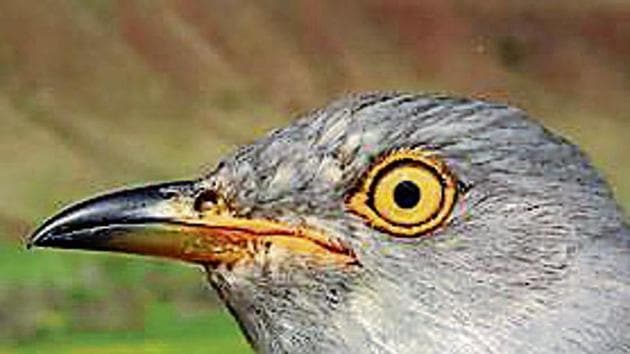
Scientists said that the birds are expected to stay in India till the end of October before they embark on the final lap of their migration and cross the Arabian Sea to reach Southeast Africa, where they will spend the winter.
“Both Namjaa and Onon are now in Madhya Pradesh. On September 7, Namjaa was traced around 50km south of the town of Chhatarpur. The habitat looked like a small range of hills. Onon was traced around 18 km South-east of Gwalior,” said Terry Townshend, a British conservationist who launched Birding Beijing in 2010.
Between June 4 and 8, five cuckoos – one Oriental Cuckoo and four Common Cuckoos – were fitted with transmitters around Khurkh Bird Banding Center in northern Mongolia. The birds were named by local schools. While Namjaa is the name of a storyteller in Mongolian folklore, Onon is the name of a local river in Mongolia.
“We expected the four Common Cuckoos to head into South Asia before crossing the Arabian Sea to Africa. However, the migration route and wintering grounds of Nomad, the Oriental Cuckoo, will be new to science. From sight records we believe Nomad’s most likely destination is Southeast Asia or possibly Australia,” he said.
{{/usCountry}}“We expected the four Common Cuckoos to head into South Asia before crossing the Arabian Sea to Africa. However, the migration route and wintering grounds of Nomad, the Oriental Cuckoo, will be new to science. From sight records we believe Nomad’s most likely destination is Southeast Asia or possibly Australia,” he said.
{{/usCountry}}On Saturday morning BirdCountIndia tweeted: “Fantastic news! Male Common Cuckoo Namjaa, originally tagged in Mongolia this past June, is in Madhya Pradesh as we speak, presumably filling up on food before making the ocean crossing to Africa. Fly well, honoured visitor!”
The project is a collaboration between the Wildlife Science and Conservation Center in Mongolia, the British Trust for Ornithology and Birding Beijing, and supported by the Oriental Bird Club.
“The idea is to collect new scientific data about the migration of this popular and well-known bird and to engage the public about the amazing journeys taken by birds that we take for granted. The hope is that, by tracking these birds, we can learn more about their journeys and the habitats they use so that we are better able to protect them and the places they need,” said Townshend.
The other three birds have been traced in other countries. Nomad, an Oriental Cuckoo, was tracked to inner-Mongolia on Sunday after crossing the Gobi Desert, 800-1600 km wide in an overnight flight. It is the first Oriental Cuckoo to be tracked. Scientists from Birding Beijing carried out a similar exercise in 2016.
Transmitters help trace birds that may otherwise be overlooked.
“It is very hard to say which parts of India they (the Common Cuckoos) will pass or stop in after flying from Madhya Pradesh. It is certainly possible that one or two may pass close to Delhi but we cannot be sure,” Townshend said.