E-Paper



Taiwan President Lai Ching-te congratulates Modi, radio silence from Beijing
Two-way trade between India and Taiwan was worth $8.2 billion dollars in 2023, making India the 16th largest trading partner for Taiwan

 Prefer HTon Google


Diplomatic circles in New Delhi have noted Prime Minister Narendra Modi’s response to a congratulatory message from Taiwan President Lai Ching-te on his election victory, especially against the backdrop of strained India-China relations.
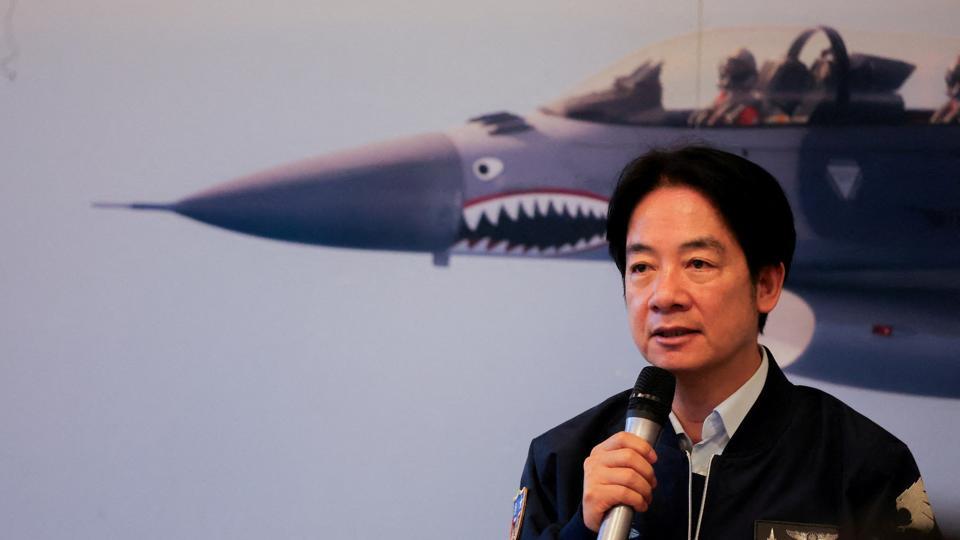
Lai was among world leaders who greeted Modi on securing a third term on Wednesday through a post on X. “We look forward to enhancing the fast-growing #Taiwan-#India partnership, expanding our collaboration on trade, technology & other sectors to contribute to peace & prosperity in the #IndoPacific,” he wrote.
Modi responded on X a few hours later, thanking Lai for his “warm message”. He added, “I look forward to closer ties as we work towards mutually beneficial economic and technological partnership.”
In marked contrast, China’s top leadership is yet to issue a congratulatory message to Modi. There was only an anodyne response from Chinese foreign ministry spokesperson Mao Ning when she was asked about the Bharatiya Janata Party’s election win at a regular media briefing on Wednesday, and this was followed by a congratulatory message from Chinese ambassador Xu Feihong in the form of a post on X.
Mao said in her response that a “healthy and stable China-India relationship is in the interest of both countries, and conducive to the peace and development in this region”. China stands ready to work with India on the fundamental interests of both countries and to “advance bilateral relations on a healthy and stable track”, she said.
Xu, in his post, said China look forwards to joint efforts with India for a “sound and stable” relationship in line with the interests and expectations of both countries. There was no acknowledgment of these messages from the Indian side.
India-China ties are currently at their lowest ebb in six decades over the military standoff on the Line of Actual Control (LAC), which began in May 2020. The Indian side has dismissed China’s assertion that the border issue be put in its “appropriate place” in the overall relationship and external affairs minister S Jaishankar has insisted bilateral ties cannot be normalised without peace and tranquillity on the border.
In the past few weeks, Modi has mentioned Taiwan at least twice in public remarks – once, during the laying of the foundation stone on March 13 for the Tata Electronics’ semiconductor fabrication facility at Dholera in Gujarat, which is being developed in collaboration with Taiwan’s Powerchip Semiconductor Manufacturing Corporation (PSMC) with an investment of up to ₹91,000 crore, and in a condolence message posted on X after Taiwan was hit by an earthquake on April 3.
In the past, it was rare for Indian leaders to mention Taiwan in their public remarks.
Kuan-Ting Chen, a Taiwanese MP and member of a parliamentary panel for foreign and national defence, noted Modi’s response to Lai’s message and said in a post on that it marked a “new chapter in #Taiwan-#India relations”. He added, “As a legislator, I feel that in the coming decades, Taiwan and India, as leading nations in AI and IT, are natural allies.”
Two-way trade between India and Taiwan was worth $8.2 billion dollars in 2023, making India the 16th largest trading partner for Taiwan. Taiwan’s exports to India touched $6 billion, marking 13% growth and positioning India as the 12th largest export market.
Taiwan is home to some 3,000 Indian students and the island has plans to open its third representative office in Mumbai later this year.