
 E-Paper



Tamil Nadu health minister blames union, MP govt for inaction after Coldrif found toxic
The health minister’s comments come a day after Madhya Pradesh police arrested G. Ranganathan, proprietor and manufacturing chemist of Sresan Pharma, from his Chennai residence

 Prefer HTon Google


Chennai: Tamil Nadu’s health minister M. Subramanian on Thursday accused the union and Madhya Pradesh governments of not taking action after being informed that the cough syrup Coldrif was found to be contaminated with a toxic substance.
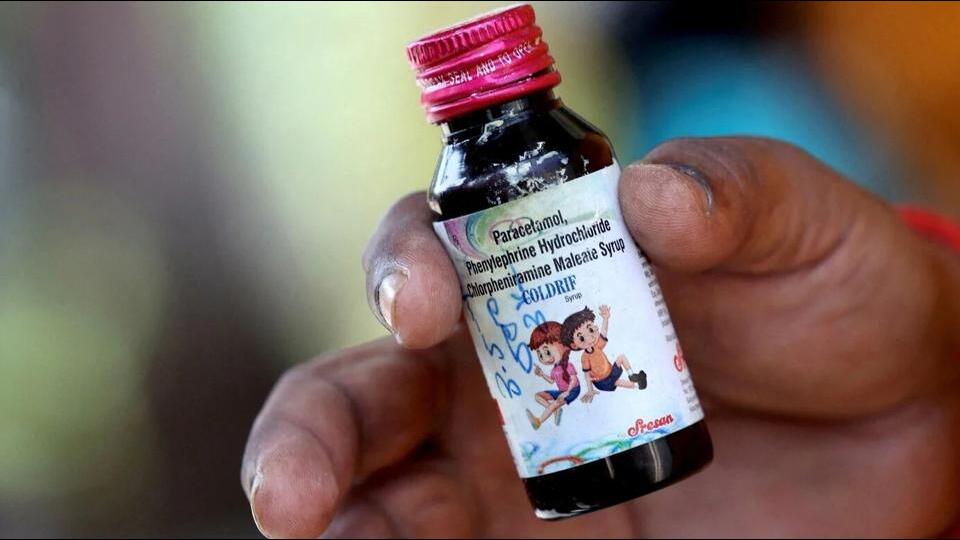
“After Madhya Pradesh wrote to us on October 1, Tamil Nadu immediately investigated, found contamination and informed Madhya Pradesh, Union Ministry of Health and Family Welfare, and the states of Odisha and Puducherry. But Madhya Pradesh and the Union government left it, saying that there was nothing wrong with this medicine (Coldrif). But we confirmed how much contamination is present in the medicine and we issued a ‘stop production’ order on October 3,” Subramanian said.
Tamil Nadu has suspended two of its senior drug officials after the deaths of 21 children were linked to Sresan Pharmaceutical Manufacturing, which manufactured Coldrif cough syrup based out of Tamil Nadu’s Kancheepuram district. “Two senior drug inspectors have been suspended for not consistently inspecting such drugs in the last two years,” Subramanian said.
The health minister’s comments come a day after Madhya Pradesh police arrested G. Ranganathan, proprietor and manufacturing chemist of Sresan Pharma, from his Chennai residence. “After he responds to the police investigation, we will take steps to permanently cancel the license of the pharma company. It has been temporarily suspended,” Subramanian said.
The sample tests “found that the alleged batch was manufactured using non-pharmacopoeial grade Propylene Glycol as an excipient, which might have been contaminated with Diethylene Glycol (DEG) and Ethylene Glycol, which are known nephrotoxic and poisonous substances,” deputy director of the Tamil Nadu Drugs Control department S. Gurubharathi had said.
Also Read: Criminal case against pharma firm for manufacturing Coldrif
The Tamil Nadu government has not procured the Coldrif syrup since all government clinics and hospitals procure medicines from the Tamil Nadu Medical Services Corporation (TNMSC).
A showcause notice was issued to Ranganathan and analytical chemist K. Maheswari on October 7 to answer 16 questions within 5 days. Since the manufacturing unit remains shut and abandoned, the notice was pasted on their building number 787 door on the Bengaluru highway in Sunguvarchathiram, Kancheepuram.
HT has seen a copy of the showcause notice, which says that the test report concludes that the drug is “Not of Standard Quality and found to be adulterated, since it contains Diethylene Glycol (48.6%), which is a toxic substance and may render the contents injurious to health.”
“Thirty-nine critical observations and 325 major observations were noticed” by the team at the manufacturing unit, in which several non-compliances under Schedule M and L1 of the Drugs Rules, 1945, were found.
The government banned sales immediately after receiving an alert from Madhya Pradesh on October 1 so that private entities do not use the syrup. Tamil Nadu also informed states where this drug has been distributed from Tamil Nadu, such as Puducherry and Odisha, to ban it.
Also Read: Coldrif cough syrup toll climbs; doctor held, Tamil Nadu firm booked
It was after an urgent letter was sent from the Madhya Pradesh State Drug Control Department to the Tamil Nadu Drug Control Department on October 1 that inspections, testing of samples, and investigations began. The batch of Coldrif syrup was manufactured in May 2025 with an expiry date of April 2027.
A “stop production” order was issued by the government to the pharmaceutical company on October 3. On October 5, the Tamil Nadu government issued a notice to the pharmaceutical company, asking why their drug license should not be completely cancelled and demanded a response within 10 days.
The article will be updated once the union or MP government reacts.


