
 E-Paper



Tamil Nadu passes resolutions against delimitation, ‘one nation, one poll’
The Tamil Nadu legislative assembly has passed two resolutions opposing the delimitation exercise and the "one nation, one election" policy proposed by the Indian government. The resolutions argue that the delimitation exercise should be based on the 1971 census and not the 2026 census, and that the proposed simultaneous elections are impractical and against the constitution. The resolutions have been hailed as a decisive stand against the BJP-led government. Southern states fear that the delimitation exercise will reduce their political representation. The BJP opposed the resolution on one nation, one election.

 Prefer HTon Google


Chennai: The Tamil Nadu legislative assembly on Wednesday adopted two resolutions moved by the Dravida Munnetra Kazhagam (DMK) government opposing the scheduled delimitation exercise for redrawing of poll constituencies in 2026 and the Centre’s proposed “one nation, one election” policy.
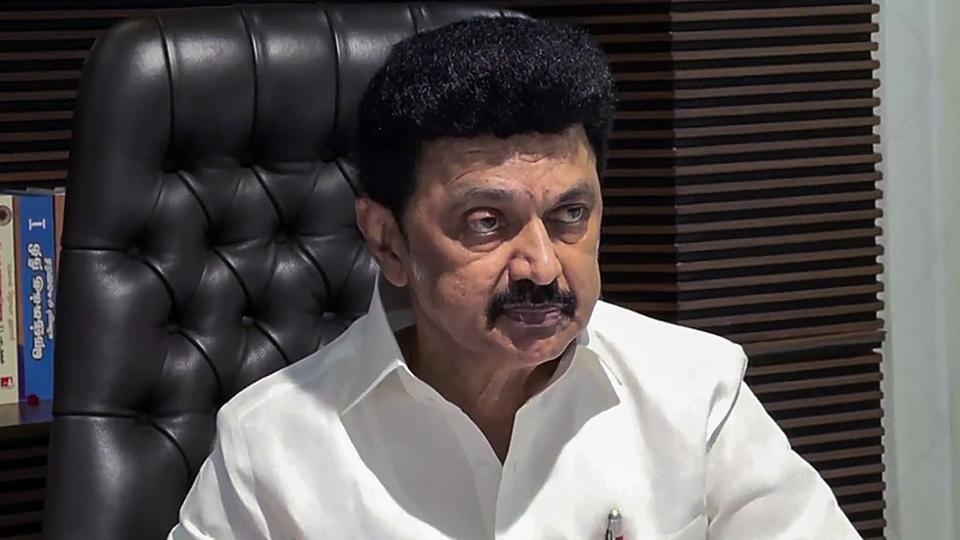
Calling it a “decisive stand” against the Bharatiya Janata Party (BJP)-led Union government’s “authoritarian agenda”, chief minister MK Stalin in assembly hailed the passage of the two resolutions as “a watershed moment for Tamil Nadu”.
“We refuse to be treated as second-class citizens and have unanimously passed two resolutions: one to shield our state from unfair delimitation exercise, ensuring that we are not punished for our socio-economic progress and successful population control measures; and another staunchly opposing the undemocratic One Nation One Election fantasy, which threatens the very fabric of our diverse democracy,” Stalin said. “Tamil Nadu’s resolve is unyielding, our spirit indomitable.”
The resolution on the delimitation exercise said if it was to be held for “unavoidable reasons”, the population of 1971 census should be the criteria for carrying out the process and not the one scheduled in 2026.
The debate around delimitation, an exercise of redrawing boundaries of assembly and parliamentary constituencies based on population proportion, was reignited after the passage of women’s reservation bill in Parliament in September last year after the Union government said the law would be implemented after the delimitation process is completed in 2026 based on the decadal census which is pending since 2021. In 2001, the 84th amendment to the Constitution had extended the freeze on delimitation till 2026.
“Due to unavoidable reasons, if the number of seats on the basis of population were to increase it shall be maintained at the present ratio of the constituencies between the States in the State Assemblies and both Houses of Parliament fixed based on the population of 1971,” the resolution said.
Southern states such as Tamil Nadu, Karnataka, Andhra Pradesh, Telangana and Kerala fear their political representation might reduce if the exercise was held, citing that they sincerely implemented pollution control measures.
Elaborating his stance on delimitation, Stalin drew a comparison of Tamil Nadu and Bihar — the two states, he said, had almost the same population in 1971. “Today, Bihar’s population is 1.5 times more than Tamil Nadu. If delimitation comes into force, Tamil Nadu’s representation in Parliament will be lesser than many north Indian states. We already have to plead with the Union government despite having 39 MPs, such a situation is scary. Our bargaining power will come down… Delimitation could be a conspiracy to reduce the number of Parliament seats from southern states like Tamil Nadu,” the DMK chief said.
“Tamil Nadu should not be penalised for implementing various socio-economic development programmes and welfare schemes for the benefit of people over the past 50 years,” the resolution said.
On the proposed simultaneous polls in the country as part of “one nation, one election” policy, Stalin described it as “impractical” and “against the basic feature” of the Constitution of India. “The one nation one election is out-and-out impractical and it is against the basic feature of the Constitution. It is fully opposed to the Constitutional guarantee of independent, free and fair polls,” he said.
The proposal may lead to dissolution of state assemblies in advance, which is against the Constitution, the DMK chief said. “If the government at the Centre is to fall, will all state assemblies be dissolved?” he asked. “Similarly, if governments in a few states were to be short-lived, will those in power at the Centre demit office?”
The chief minister further added that holding elections to local bodies is in the state government’s domain.
A high-level committee led by former president Ram Nath Kovind is currently holding deliberations with various political parties on the proposal of one nation, one election.
Tamil Nadu’s principal opposition party, the All India Anna Dravida Munnetra Kazhagam also supported the resolution on the delimitation exercise. On the second resolution, AIADMK MLA Thalavai Sundaram said the “one nation, one election proposal could be completed in 10 years”.
The BJP opposed the resolution on one nation, one election, with state party chief K Annamalai saying it will not adversely impact any state. “The chief minister has brought this resolution to confuse people,” he said.
The party, however, backed the resolution against delimitation exercise.
“We agree with the concerns of states in South India that have achieved certain socio-economic standards should not suffer in the delimitation process… We agree with that,” BJP legislator Vanathi Srinivasan said in assembly.


