E-Paper



The caste of national and state presidents of BJP and Congress-I | Number Theory
This first of a two-part data series will first describe the social composition of national presidents

 Prefer HTon Google


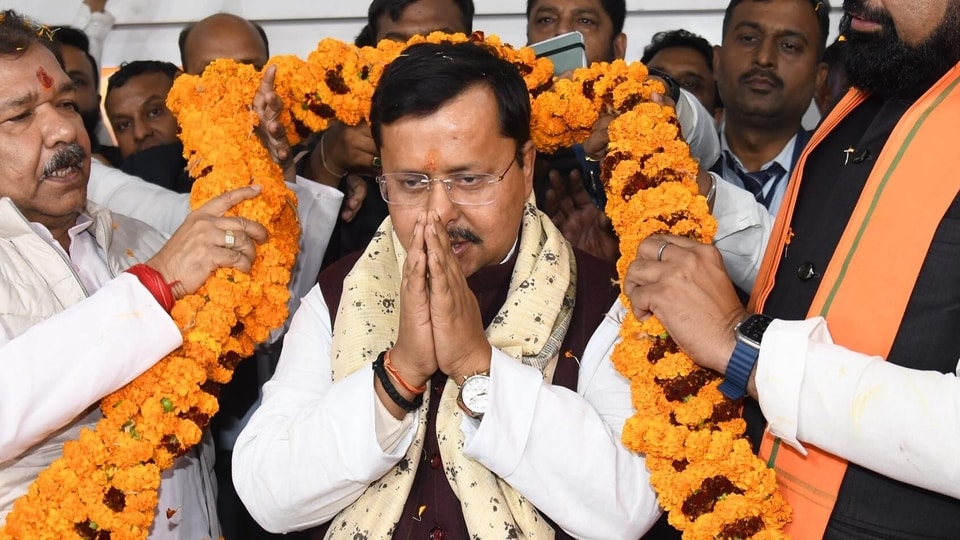
Bihar cabinet minister Nitin Nabin, who was appointed as the working president of the Bharatiya Janata Party (BJP) on December 14, is likely to be elevated as the president of the party next month. If that happens, he will become the 12th person to hold that post, but only the second person from the Kayastha sub-caste to do so. Is there a caste pattern to the post? How does it differ from the post in the Congress? Using their respective websites, HT has created a caste database of all national party presidents of the BJP and that of the Congress since 1947 to answer this question. This first of a two-part data series will first describe the social composition of national presidents. The second part will look at this composition in comparison to the current state presidents of both parties.
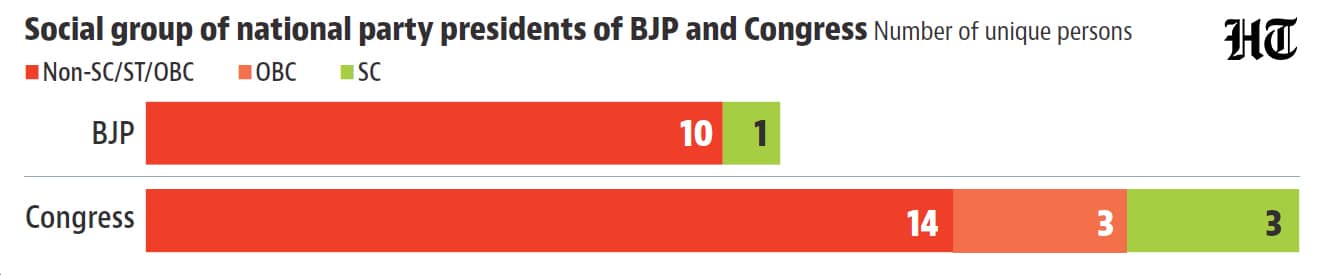
 National presidents of both the BJP and the Congress have been overwhelmingly upper casteOf the 11 people who have served as the national president of the BJP, 10 are from non-Scheduled Caste (SC)/Scheduled Tribe (ST)/Other Backward Class (OBC) castes. Bangaru Laxman, an SC politician who served as party’s national president from 2000 to 2001, is the only non-upper caste person to have held that post. This is also the case with the Congress. Of the 20 people who have been national presidents of the party since 1947, 14 are from the upper castes and only three each from SC and OBC castes. This has not changed over time. Seven people have served as Congress presidents from 1980 onward, the year BJP was formed, and only two of them -- Sitaram Kesri and current president Mallikarjun Kharge, from OBC and SC groups respectively – have not been from the upper castes.
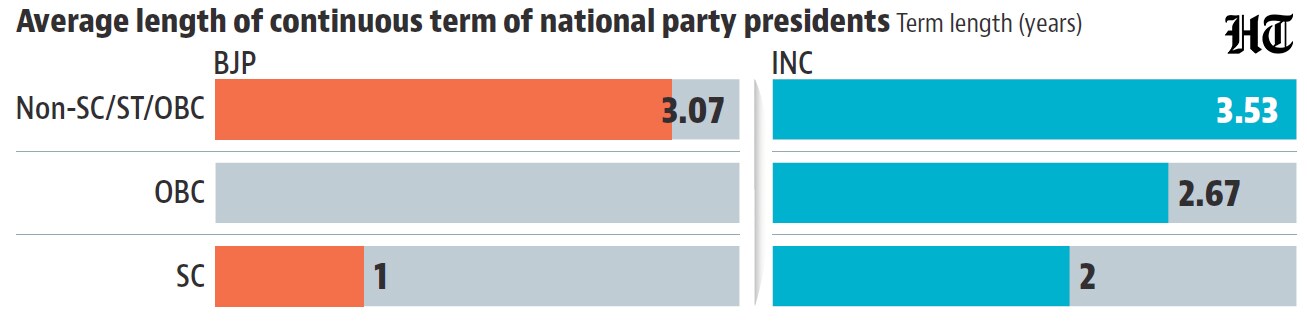
- SC, OBC presidents have also not had long terms in the partyThe terms of organizational posts are loosely defined in the constitution of both parties. For example, BJP and Congress constitutions currently say that the term of organizational posts will “ordinarily” be three and five years. This means that not all who served as the national president of these two parties served for a minimum period of time. While Bangaru Laxman, the only SC national president of the BJP, resigned after a corruption charge, that is not the case for the Congress. For example, Mallikarjun Kharge, whose tenure at the post in the Congress reached the three-year mark in October, is the first SC president to have lasted that long at the party’s top. The other two SC presidents of the Congress – Damodaran Sanjivayya and Jagjivan Ram – served for only one and two years. Of the three OBC presidents of the party – K Kamaraj, S Nijalingappa, and Sitaram Kesri – only Kamaraj’s four-year tenure was of at least three years. To be sure, Nijalingappa was from the Lingayat sub-caste, which is an OBC sub-caste in Karnataka but not in the central list of OBC sub-castes. A more important caveat to note is that even upper caste presidents in the Congress – with the exception of Jawaharlal Nehru and U N Dhebar – largely served single year terms early on. It is only after Kamaraj’s four year-term ending 1967 that the party’s president started serving terms longer than one year more generally; and it is only after Indira Gandhi’s six-year term starting 1978 that the post was usually held by the same person continuously for three years or longer.
- The Brahmin sub-caste dominates the post of party president in both BJP and CongressThis is another interesting insight from the database of the national presidents of the two parties. Of the 10 upper caste presidents of the BJP, five have been from the Brahmin sub-caste alone, such as the first party president Atal Bihari Vajpayee and the current president JP Nadda. Of the other five, two were from the Baniya sub-caste, and one each from Kayastha, Kamma, and Rajput sub-castes. Brahmins have also dominated the post of party president in the Congress, but their exact number is complicated by the fact that Rajiv Gandhi and his son Rahul Gandhi are children of inter-caste marriages, whose caste is usually (but not necessarily) based on the father’s caste. Nonetheless, even if neither of the two are considered Brahmins, six of the 14 upper caste presidents of the Congress have been Brahmins. While there have been two party presidents from the Reddy sub-caste, other sub-castes have been represented by only one person each. This is the first of a two-part data series on the caste of national and state presidents of the BJP and Congress. The second part will analyse the caste of national presidents in contrast with the current state presidents.