
 E-Paper



The curious case of a Chhattisgarh grocer who is police witness in ‘300 cases’
Twenty-five-year-old Somesh Panigrahi’s conscience pricks him sometimes. He admits he shouldn’t have become a stock witness and lied in court.


Chhattisgarh grocer Somesh Panigrahi is 25 and a witness in about 250 to 300 criminal cases, but the feat hangs like a millstone round his neck.
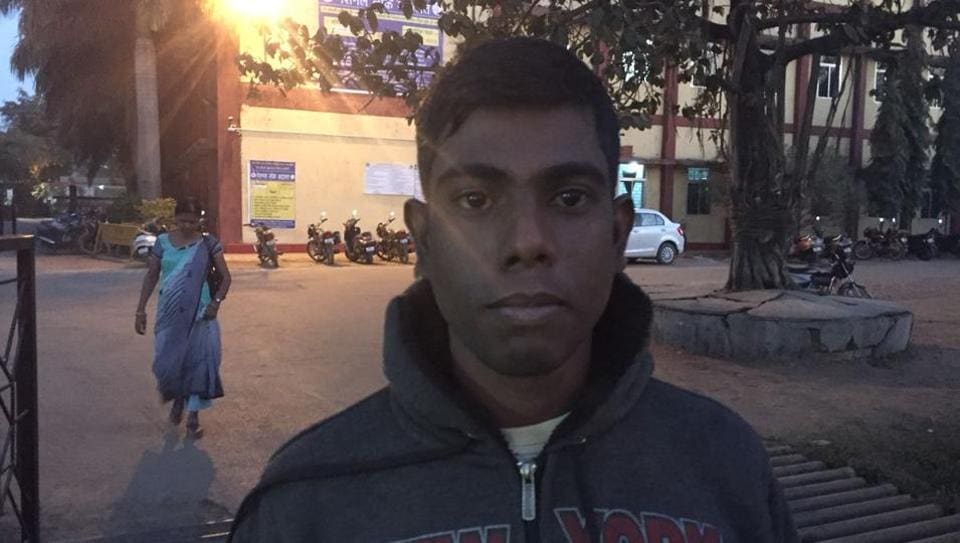
He is what the legal fraternity describes as a stock witness, one who is tutored to say before a court what police want him to. He has fallen foul of judges and gets life threats from criminals too.
“Every magistrate, lawyer and policeman here knows me because I am a regular in court. A magistrate even warned he would put me in jail. I am stuck between police and court,” said Somesh, a resident of Bastar district’s Jagdalpur town, about 285km south of state capital Raipur.
He is a witness in cases ranging from gambling and confiscation of marijuana to murder and Maoist violence, and all of it started in 2013.
After completing Class 12, he joined a local news channel as a cameraman to supplement the family income. “One day in 2013, I visited Kotwali police station after a senior told me to record the police statement over the arrest of some alleged gamblers. The inspector asked me to become a witness in the case because he had none. I agreed. After that, they started making me a witness in other cases,” Somesh said. “Later, other police officers started using me as a witness.”
Why did he agree in the first place? His father, Sushil Panigrahi, has the answer. “He did it to get close to police officers, hoping they would assist him in landing a government job one day.”
Somesh, now a graduate, still harbours the hope of getting a government job for financial security.
He can’t remember how many times he became a bogus witness. “I don’t know exactly how many, but from the number of court notices I get, I estimate it would be between 250 and 300.”
His conscience pricks him sometimes and he admits he shouldn’t have become a stock witness and lied in court. But any regret is triggered largely by threats.
“In 2015, I told police not to make me a witness in cases, but they ignored me. I told them I gave statements in court in Maoist cases too. I get threat calls that I will be killed. But police tell me not to worry, saying ‘tell us if the situation is really grim’.”
Somesh, the breadwinner in a family of five, wants police protection and financial help.
“I have helped them, they must protect me. I get multiple court notices a week. I go to courts five to six times for each case. Every time I head to court, I have to close my shop. We are a poor family and this does not help.”
His fate might change as Jagdalpur police superintendent Arif Sheikh had asked police stations to provide details of cases in which Somesh was made a witness.
“We are ready to provide him security, if he needs it. I am also enquiring whether he was forcibly made a witness without his knowledge. If this has been done, action will be taken against police officers,” he said.
Satish Verma, a senior advocate with the Chhattisgarh high court, described Somesh’s situation as a farce, saying: “This means police are wrongly implicating people.”
A senior police officer in Bastar, who did not want to be named, explained the pitfalls of presenting stock witnesses in courts.
“Police generally help such witnesses financially or in other ways. In important cases, when lawyers question them, they fail to deliver statements convincingly and the police case weakens. Also, the stock witnesses and police earn the court’s ire,” he said.
-kW0H-U20214218012MgB-250x250%40HT-Web.jpg)


