...
...
Next Story

The ‘taste’ challenge to fixing protein deficiency

A policy push to pulses will have to promote more than one crop

Published on: Aug 14, 2023 05:51 PM IST
Advertisement

A policy solution to India’s protein deficiency faces a (pulses) taste hurdle, shows an Economic and Political Weekly (EPW) paper by Praduman Kumar, Surabhi Mittal, and P K Joshi published earlier this year. Unlike in the case of the green revolution, which allowed the Indian state to solve its food security (calories) problem by giving a boost to the production of rice and wheat, a policy push to pulses will have to promote more than one crop because Indians are

PREMIUMVegetable prices contracted by 21.98% while pulses and milk witnessed inflation rates of 9.21% and 8.59%. (PTI File)
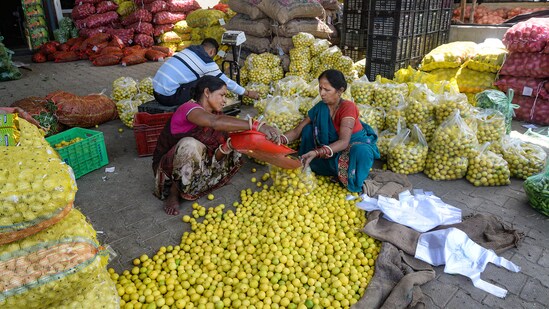
Vegetable prices contracted by 21.98% while pulses and milk witnessed inflation rates of 9.21% and 8.59%. (PTI File)
The charts that matter
  • Half of all Indians are likely deficient in protein
    The Indian Council of Medical Research (ICMR) recommends that a normal person should consume a gram of protein per kilogram of body weight. This requirement is higher for pregnant and lactating woman. Data from the 2011-12 Consumption Expenditure Survey (CES) – it is the latest available data – shows that India’s average protein consumption is 60 grams per day. However, this number is much lower for the bottom half of the population. This suggests that most Indians likely suffer from a protein deficiency.
  • Pulses can be a cheap source of protein across India
    There are multiple ways to plug this protein deficiency. The consumption of protein-rich meat, fish, and eggs (MFE), even if one were to ignore their higher costs, is regionally skewed in India. In fact, their consumption can be skewed even within a state due to cultural and religious factors. A comparison of food items by protein delivered per rupee suggests that the best non-MFE option is wheat, followed by a variety of pulses, and then rice. Wheat and rice consumption, however, is much more regionally skewed than pulses as a group, making the latter a somewhat better choice.
  • Data shows that purchasing power is a big factor in low consumption of pulses
    The EPW paper has used econometric analysis to calculate the price and income elasticity – change in consumption per unit change in price or income – for pulses. The analysis shows that increasing income increases pulse consumption among the poor more than the rich as expected. This suggests that low consumption of pluses among the poor is a result of low incomes and hence low purchasing power.
  • Can making the cheapest pulse available to all work?
    This will require the replication of a strategy which has been used to provide cheap rice and wheat to ensure food security in India. However, the paper shows that this is unlikely to work to address protein deficiency. The paper modelled cross-price elasticities of different pulses – it shows how demand for one kind of pulses changes in response to price movement for another kind of pulses – and found it to be very low for various pairs. Simply speaking, this means that a decrease in price of say, pigeonpea (toor dal), does not make people shift from eating chickpea (chana) .
  • Regional difference in tastes is the reason for this
    The anecdotal explanation for this is fairly straightforward. The regional skew in consumption of different pulses shown above is not simply a matter of availability, but on account of more entrenched regional food habits. One cannot expect those preferences to change in a few months or years because of a change in prices.
All Access.
One Subscription.

Get 360° coverage—from daily headlines
to 100 year archives.

E-Paper
Full
Archives
Full Access to
HT App & Website
Games
 
Check India news real-time updates, latest news on Hindustan Times and more across India.
SHARE THIS ARTICLE ON