
 E-Paper



Top court may resume hearing in electoral bonds case
The Supreme Court on Tuesday agreed to examine a request for resuming its proceedings on a clutch of petitions that have challenged the validity of the Centre’s electoral bonds scheme as a source of political funding

 Prefer HTon Google


The Supreme Court on Tuesday agreed to examine a request for resuming its proceedings on a clutch of petitions that have challenged the validity of the Centre’s electoral bonds scheme as a source of political funding.
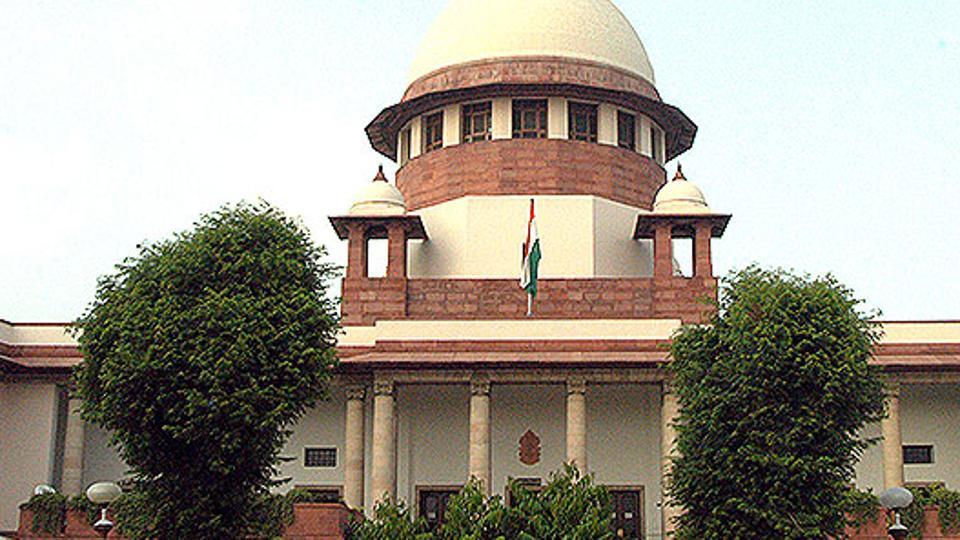
A bench, headed by Chief Justice of India NV Ramana, observed that had it not been for the limited hearings due to the Covid-19 pandemic, the court would have taken up the matter earlier.
“If it was not because of Covid, we would have heard this. Let us see… we will take this up,” he told advocate Prashant Bhushan, who sought an early hearing of the matter on behalf of NGO Association for Democratic Reforms (ADR).
Bhushan submitted before the bench, which also included justices Krishna Murari and Hima Kohli, that the case was listed last more than a year ago. “Every two months, fresh tranches of electoral bonds are issued. In fact, there is a story (news report) today that a Kolkata-based company has paid ₹40 crore through electoral bonds to stop excise raids. This is distorting democracy,” the lawyer complained.
At this, the bench assured Bhushan that it would look into his plea for resumption of the hearing. According to the status available on the Supreme Court website on Tuesday evening, the matter is expected to be heard on April 18.
In March last year, the court had dismissed two stay applications moved by ADR to stop the sale of the electoral bonds ahead of elections in West Bengal, Tamil Nadu, Assam, Kerala and Puducherry. It held there was no justification to block their sale over concerns of anonymity in political party funding or apprehensions of their misuse and that the sale had continued “without any impediment” in 2018, 2019 and 2020 as well.
Earlier, in April 2019, the top court introduced an interim “safeguard” by directing all political parties to submit details of receipts of the electoral bonds to the Election Commission of India (ECI) in a sealed cover. This was done as an interim measure till the pending petitions challenging the validity of these electoral bonds were decided.
At that time, the ECI had supported the existing system of political party funding through electoral bonds although the constitutional body flagged lack of transparency, which it said could be considered at a later stage.
The electoral bonds system was introduced by way of a money bill introducing amendments in the Finance Act and the Representation of Peoples Act.
The ADR claimed that such an anonymous route of funding amounted to legitimizing bribery as corporates could fund the party in power in a state or Centre as a matter of quid pro quo. These donations enjoy 100% tax exemption and even foreign companies can donate through Indian subsidiaries, the petitioner added.
“The Electoral Bonds Scheme has opened the floodgates to unlimited corporate donations to political parties and anonymous financing by Indian as well as foreign companies which can have serious repercussions on the Indian democracy,” the ADR claimed, adding that the Finance Act of 2017 exempts contributions by way of electoral bonds to be disclosed to the ECI under Section 29C of the Representation of Peoples Act.
Petitions by CPI(M) and Bharatiya Janata Party leader Ashwini Upadhyay have also raised issues pertaining to electoral bonds and have been tagged with the ADR’s plea.


