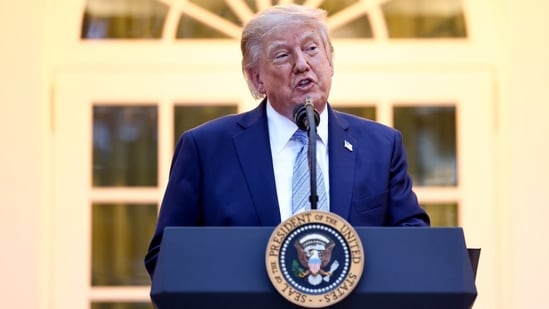
US President Donald Trump is expected to sign the Lindsey O. Graham Sanctioning Russia and Iran Act of 2026 on Friday, news agency ANI reported citing a White House official.
Notably, the proposed law would allow the US president to impose tariffs of up to 100% on countries that continue purchasing Russian oil and gas, including India.
The legislation cleared the House of Representatives with a 262-159 vote after receiving approval from the Senate last month.
Deep Dive
What is the Lindsey O. Graham Sanctioning Russia and Iran Act of 2026?
How can India avoid the 100% tariffs imposed by the new sanctions bill?
What are the potential impacts of the U.S. sanctions bill on India and its energy security?
It also includes measures against vessels associated with Russia's "shadow fleet". According to the US, these ships have helped Russia continue energy exports despite Western sanctions.
Under the bill, countries importing less than 15 per cent of Russia's natural gas exports could qualify for an exemption if they have taken significant steps to reduce those imports.
For India, the bill creates a legal framework that could enable Washington to levy tariffs of up to 100 per cent on Indian goods if New Delhi continues purchasing Russian energy.
{{/usCountry}}For India, the bill creates a legal framework that could enable Washington to levy tariffs of up to 100 per cent on Indian goods if New Delhi continues purchasing Russian energy.
{{/usCountry}}However, the legislation does not automatically introduce a 100 per cent tariff on Indian imports. Instead, it grants the executive branch the power to impose such duties under specific legal conditions, provided the bill becomes law and Trump chooses to implement them.
India and China remain major buyers of Russian crude oil. Their ongoing energy trade with Moscow has therefore become a key part of discussions surrounding the legislation.
India on Russia sanctions bill
India warned on Thursday that the proposed legislation could affect its relationship with the US as well as global energy markets.
In a statement, India's external affairs ministry said the government was determined “to take all necessary measures to protect its trade and economic interests” and would coordinate with trade and industry organisations to address the possible impact.
The ministry said India had discussed the legislation “at high levels in recent months with various US interlocutors”. It added that New Delhi had “very clearly articulated” the potential consequences — “for not just the bilateral relationship but also the international energy market.”
Reaffirming its position, the ministry said India's energy purchases are based on national interest. “India remains firmly committed to ensuring energy security for its 1.4 billion people,” it said, adding that the country would continue buying energy through “diversified sourcing and on the basis of evolving market dynamics.”
Russia sanctions bill
The US Senate passed the legislation in an 86-11 vote on August 7. However, its passage through the House was delayed by disagreements over tariff provisions and their potential impact on American trade policy.
The package also includes Trump's proposal to extend existing sanctions on Iran by five years. This provision played a significant role in obtaining his support for the bill.
Trump backed the inclusion of Iran in the proposed Russia sanctions legislation in July. He wrote on Truth Social, "Republicans should add Iran to the Russian Sanctions Bill. That's what Lindsey wanted to do, and it was going to happen. Important!!!"