
 E-Paper



Understanding Assam’s delimitation draft
Assam’s delimitation draft has redrawn areas of almost all constituencies, leading to much heartburn

 Prefer HTon Google


The release of the draft for delimitation of assembly and parliamentary seats in Assam by the Election Commission of India (ECI) on June 20 has led to a war of words between the ruling Bharatiya Janata Party (BJP) and the Opposition. Though there is no change in the number of assembly and Lok Sabha seats — 126 and 14 respectively — the draft has redrawn areas of almost all constituencies, leading to much heartburn. The last delimitation exercise in Assam took place nearly five decades ago in 1976.
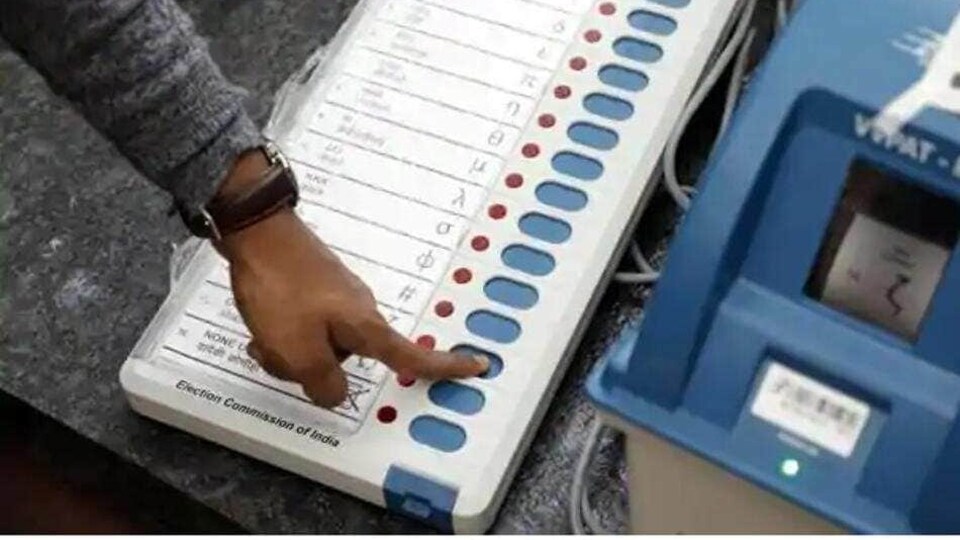
The draft has proposed renaming 24 assembly and three Lok Sabha seats, altering the areas they cover and changing reserved seats to unreserved and vice versa. In the draft, the number of assembly seats reserved for scheduled caste (SC) and scheduled tribe (ST) seats have increased from eight to nine and from 16 to 19, respectively.
The seats of several political bigwigs including senior ministers such as industry minister Chandra Mohan Patowary (Dharmapur), excise minister Parimal Suklabaidya (Dhalai) and panchayat and rural development minister Ranjeet Kumar Dass (Patacharkuchi) will cease to exist. Handloom and textile minister Urkhao Gwra Brahma, who is from the BJP’s alliance partner United Peoples’ Party Liberal (UPPL) and represents the Chapaguri seat will also lose his seat. Another UPPL colleague Assam assembly speaker Biswajit Daimary who won from the Paneri constituency stands to lose his home constituency.
The question of ‘illegal infiltrators’
The BJP and its allies, Asom Gana Parishad and the UPPL claim the draft, if implemented in its present form, would ensure the protection of the rights of indigenous people implying that there would be fewer seats for Bengali-speaking Muslims, who migrated to Assam from East Pakistan (now Bangladesh) and are regarded as “illegal infiltrators” in the state. While only those people from Bangladesh who entered Assam after March 24, 1971, can be legally regarded as 'illegal immigrants’, in Assam many indigenous groups view even those who came to the state prior to that date as falling in the same category.
Muslims comprise around 34% of Assam's population (as per 2011 census) and estimated Bengali-speaking Muslims with origins in Bangladesh comprise around 70-75% of that figure. They exercise a decisive role in 35-40 assembly seats. There are 31 Muslim MLAs and 2 Muslim MPs in Assam.
Several seats which are now represented by Muslim MLAs would see redrawing of boundaries and they will get included in other seats and parts of it get divided into nearby seats with Hindu majority. Three such assembly seats have been reserved for scheduled tribe and scheduled caste candidates in the draft effectively making Muslims non-eligible.
Polarising views on the delimitation draft
The Jalukbari seat, which Chief Minister Himanta Biswa Sarma represents since 2001, has been redrawn and divided into three parts. "I am feeling very saddened by this news. However, I welcome the draft as it accurately reflects the sentiments of Assam," he said after the release of the draft.
"It shouldn't be a bother if the draft proposal gets implemented. I had represented Sorbhog seat earlier, but in 2021 it contested from Patacharkuchi and won," told panchayat raj minister Ranjeet Kumar Dass to journalists. Kumar's Patacharkuchi seat will cease to exist as per the draft.
Assam Chief Minister Himanta Biswa Sarma feels the draft will secure the interests of indigenous Assamese from “illegal infiltrators from Bangladesh”, which the Assam Accord of 1985 signed after a six-year agitation and the National Register of Citizens (NRC) seeking to identify non-citizens in the state, which was updated in 2019, failed to achieve.
“If this draft gets approved and is implemented in its present form, people of Assam will be dominant in 102 seats and will be able to elect their representatives,” the CM said while addressing a rally in Lakhimpur as part of the BJP’s campaign for the 2024 general elections.
Clause 6 of the Assam Accord stated that “constitutional, legislative and administrative safeguards” would be provided to protect, preserve and promote the “cultural, social, linguistic identity and heritage of the Assamese people”. In July 2019, a high-level committee was set up by the Centre to facilitate the implementation of Clause 6. The committee submitted its recommendations to the Assam government in February 2020. The report and its recommendations are yet to be implemented.
In 2015, the process to update the NRC for Assam, which was first published in 1951 to identify immigrants in the state, was undertaken under the supervision of the Supreme Court. In August 2019, the final list, which excluded 1.9 million applicants, was made public. But the list is yet to be notified by the Registrar General of India and several petitions opposing the list and seeking a review — including one by the Assam government — are pending in the Supreme Court.
The Opposition parties in Assam, however, don’t share the views of the BJP and its allies on the delimitation draft.
“It seems that the draft was prepared in a hurry by the election commission under pressure from the BJP and specifically CM Sarma. A petition seeking a stay in the delimitation process is pending in the Supreme Court and the next date of hearing in it is slated for next month. But the draft was released before that,” said Congress state unit president Bhupen Kumar Borah.
All India United Democratic Front (AIUDF) president and Lok Sabha MP, Badaruddin Ajmal said his party won’t support the current draft at any cost and blamed the BJP for manipulating the draft for electoral gains. Accusing the BJP of trying to reduce Muslim representation, he said the party will approach the EC to demand changes in the draft.
“We suspect that this exercise was done to target AIUDF and religious minorities. There seems to be no rationale or logic behind it as some villages have been removed from existing panchayats and geographical contiguity and administrative factors have also been overlooked,” said AIUDF MLA from Dhing, Aminul Islam, whose seat will cease to exist as per the draft, because the Dhing seat will cease to exist.
The promise to support the interests of indigenous people was the BJP’s election slogan in 2014 ahead of the Lok Sabha polls and in 2016 before the assembly polls, and helped bring the party to power in Assam for the first time, experts said.
“But nothing much has happened on the ground. A case in point is the implementation or non-implementation of Clause 6 of the Assam Accord. The narrative on protecting the rights of the indigenous people has become a political gimmick. It’s just rhetoric without much substance. Does drawing and redrawing of boundaries of constituencies safeguard or guarantee protecting the rights of the indigenous people?” said Akhil Ranjan Dutta, professor of political science at Gauhati University.
Other experts said that only a federal set-up where state legislatures and autonomous councils have substantive power to define and legislate on issues concerning the rights of indigenous people regarding land, water and ecology, would help protect them.
“I think the delimitation exercise doesn’t have anything to do with the protection of rights of indigenous people. The Hindutva narrative that you can protect the rights of the indigenous by saving seats from East Pakistan-origin Muslims is not that of commoners,” said Dutta.
History of delimitation in Assam
The last delimitation exercise in Assam was undertaken in 1976 based on figures from the 1971 census. A fresh delimitation exercise in 126 assembly seats and 14 parliamentary seats is being done on the basis of 2001 census figures.
The fresh delimitation exercise in Assam was earlier suspended in 2008 following suggestions by the then Congress government in the state that it might create law and order problems.
The process restarted on January 1 this year after the state government gave assurances that the law and order situation in Assam was conducive at present to conduct the exercise.
Following the release of the draft, the EC has invited suggestions and objections from political parties and other groups till July 11. A team from the commission will visit Assam again next month for the public hearing on the draft proposal.



