
 E-Paper



Upholding women’s rights: When the Supreme Court got it right
Here’s a look at some of the decisions the apex court has taken over the years, championing women’s rights in workplace, at home, and in public spaces

 Prefer HTon Google


On Wednesday, the Supreme Court ordered that women can also sit for National Defence Academy (NDA) examinations. Over the years, the apex court of India has time and again championed women’s rights.Here is a series of decisions taken by the top court to give women their due:
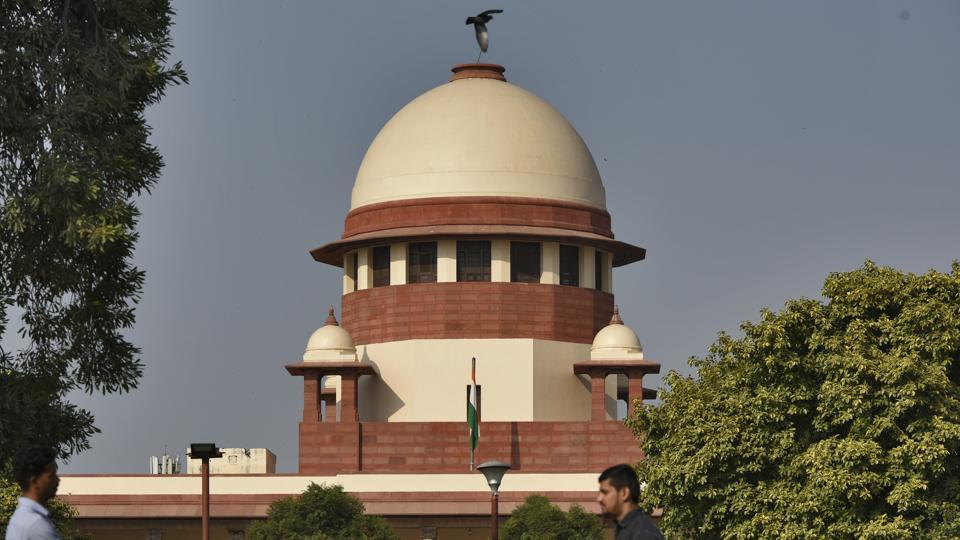
Daughters’ rights: In August last year, the apex court ruled that daughters will have equal rights to the ancestral properties, irrespective of whether their fathers were alive or not on September 9, 2005, which is when the amendment came into existence.The judgment came in the case of Vineeta Sharma v. Rakesh Sharma.Before the 2005 amendment, only sons were eligible to claim their share in Hindu undivided family property “as a matter of right,” however a daughter did not have any right post marriage as she was taken as a part of her husband’s family.
Protection at workplace: In 1997, in the case of the Vishaka v State of Rajasthan, the court framed guidelines for employers for a mechanism to redress the grievances of their female employees. In the “absence of domestic law occupying the field,” the court felt the need to formulate guidelines to “check the evil of sexual harassment of working women at all workplaces”. Later, the Sexual Harassment of Women at Workplace (Prevention, Prohibition and Redressal) Act was also passed in 2013.
Also Read | SC publishes 9 names shortlisted by collegium for appointments
Triple talaq: The apex court in 2017, in the Shayra Bano vs Union of India case, held that the practice of triple talaq -- whereby a Muslim man can divorce his wife by uttering Talaq thrice -- was not a part of the Quran. The court said the practice (Talaq Bidah) was against the basic tenets of Islam and the Quran and thereby banned it.
Participation in defence: In the 2020 judgment in the case of the Ministry of Defence v Babita Puniya, the court made women eligible for a permanent commission in commanding roles of the defence forces. This made them equal to their male colleagues in terms of promotion, pensions, and more.
The court also slammed the Indian Army on August 18 this year for disallowing women to appear in National Defence Academy (NDA) examination. It allowed women candidates to take the examination and said the army’s policy for women was based on “gender discrimination”.
Lata Singh vs State of Uttar Pradesh (2006): The Supreme Court held live-in relationship to be legal by referring to Article 21 (Right to life and personal liberty) of the Constitution. The apex court declared that for a man and a woman to live together is part of their right to life and it does not amount to a “criminal offence” even though it may be viewed as immoral by a section of the society.
Budhadev Karmaskar Vs State of West Bengal (2011): The Supreme Court stood for the rights of sex workers, holding they also have a right to live with dignity under Article 21 of the Constitution of India. It directed that the Central and the state governments, through social welfare boards, should prepare schemes for rehabilitation all over the country for physically and sexually abused women.
Laxmi Vs Union of India (2014): In this PIL brought about by Laxmi, an acid attack survivor, the Supreme Court issued guidelines for welfare of acid attack survivors, besides imposing a country-wide restriction on the sale of acid and compensation to the victims. The judgment led to an amendment in the criminal law, making acid attack a specific offence and framing of a victim compensation scheme for the survivors.
ABC Vs NCT of Delhi (2015): The Supreme Court ruled that an unwed mother can be appointed as the sole legal guardian of her child without the consent of the father. The court held that it is not required of the mother to disclose the identity of the father and include him as a party to the guardianship petition in certain cases.
Joseph Shine vs Union of India (2018): Decriminalising adultery, a five-judge bench read down Section 497 of the Indian Penal Code, claiming it to be a vestige of the Victorian era. The bench declared the law to be unconstitutional as it was antithetical to liberty, dignity and equality. The court held woman cannot be treated as the chattels of their husbands. The act of adultery thus remains a civil wrong but not a criminal wrong.
A Vs B (2020): “The progress of any society depends on its ability to protect and promote the rights of its women,” the Supreme Court said Thursday while ruling that a woman is entitled to claim right to residence in a “shared household” where she has been living with her husband even if the said premises belongs to his relatives. (Names of parties withheld to protect identities)
With inputs from Utkarsh Anand


