E-Paper



US deported 3,258 Indians in 2025, highest in 16 years, govt tells Rajya Sabha
The total number of people deported since 2009 touching 18,822, according to figures provided by the government

 Prefer HTon Google


New Delhi: The United States (US) has deported 3,258 Indian nationals so far this year, the highest number in the past 16 years, with the total number of people deported since 2009 touching 18,822, according to figures provided by the government in Rajya Sabha on Thursday.
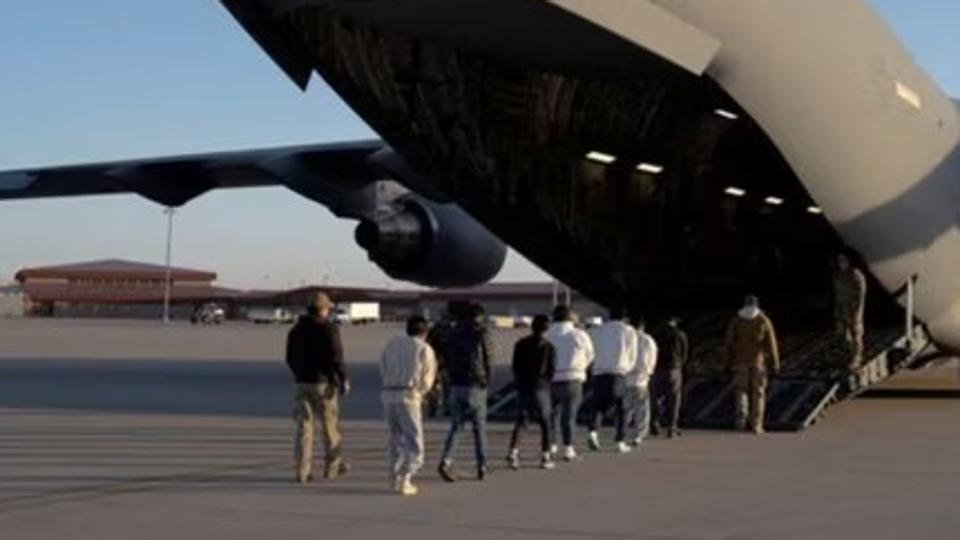
The government has engaged US authorities to ensure that people being deported are not ill-treated and that women and children on deportation flights are not restrained with handcuffs and chains, external affairs minister S Jaishankar said while responding to questions from MPs. A protest was lodged with the US after 73-year-old Harjit Kaur was maltreated before her deportation in September, he said,
Indian authorities, both at the central and state levels, have taken action against illegal recruitment agencies and travel agents involved in human trafficking, and the National Investigation Agency (NIA) has investigated 27 human trafficking cases and arrested 169 people, Jaishankar said. The NIA, which has set up an anti-human trafficking division, arrested “two important traffickers” in Haryana and Punjab this year.
According to figures provided by Jaishankar in a written reply to a question from Ramji Lal Suman of the Samajwadi Party, a total of 3,258 Indian nationals were deported by the US between January and November 28. Of these, 2,032 people were deported on regular commercial flights, and the remaining 1,226 on charter flights operated by the US Immigration and Customs Enforcement (ICE) or Customs and Border Protection (CBP).
The number was the highest since 2009, when 734 Indians were deported from the US. The figure rose to 1,303 in 2016 and to 2,042 in 2019. After declining in subsequent years, the figure again rose to 1,368 in 2024. The latest rise corresponded with the Donald Trump administration’s crackdown on illegal migration since the start of the year.
Jaishankar said the US deports individuals who illegally entered the country, overstayed their visa, were found in the US without documentation, or have criminal convictions against them. The Indian government works closely with US authorities on deportation, which is agreed to after “unambiguous verification” of the Indian nationality of those being deported.
Responding to supplementary queries from Suman, Jaishankar said no instance of the shackling of women and children had come to the notice of the external affairs ministry since a deportation flight on February 5. Immigration officials and Harjit Kaur’s lawyer had confirmed that she was not handcuffed or restrained. However, Kaur was “maltreated in detention before she was put on the flight”, Jaishankar said.
“On September 26, we have officially, through a note verbale, taken up her maltreatment with the American embassy. We have made clear our very strong concern about the manner of her treatment and asked the embassy and the American authorities to look into this matter,” he said.
The restraining policy for US deportation flights has been in place since November 2012, and it is followed because there were instances of violence by deportees against fellow deportees and crew members on flights. Wanted criminals and gangsters accused of crimes such as terrorism and homicide have been removed on deportation flights. Absconding criminals such as Lakhwinder Singh and Anmol Bishnoi too were brought back on such deportation flights, he said.
Referring to action taken against those involved in human trafficking, Jaishankar said the NIA has registered and investigated 27 human trafficking cases, arrested 169 people and filed chargesheets against 132 people. The NIA arrested “two important traffickers” in Haryana and Punjab on August 7 and two more people on October 2.
While maximum trafficking was reported from Punjab, the state government there set up a special investigation team (SIT) and a fact-finding committee, registered 25 first information reports (FIRs) against 58 illegal travel agents, and arrested 16 people, he said. The government of Haryana filed 2,325 cases and registered 44 FIRs, and arrested 27 people. A significant trafficker was also arrested by the Gujarat government, he said.
Jaishankar responded to another supplementary question by Haris Beeran of the IUML regarding the revocation of visas of Indian students who participated in pro-Palestine protests by saying the cancellation or revocation of student visas began in April, when the US secretary of state unveiled a new policy. “Even for relatively minor offences, we saw the cancellation of visas of students and in many cases, there was pressure on them to self-deport,” he said.
Indian authorities intervened where possible in these cases and “tried to get the American system to understand that minor offences should not be a reason for such action”, he said. “However, I also want to say that the issuance of visas is a sovereign right of a government. The US government [reserves] the right to take a decision on a visa which is based on their assessment of the national security implication of a particular individual’s position,” he said.