E-Paper



US, UK back Canada on diplomatic presence, ask India to cooperate
The US State Department expressed concern at the departure of Canadian diplomats from India, while Britain’s Foreign, Commonwealth and Development Office (FCDO) said it didn’t agree with the decisions taken by the Indian government

 Prefer HTon Google


The US and the UK have backed Canada’s contention that India’s actions for ensuring parity in diplomatic presence went against the Vienna Convention on diplomatic relations and said diplomats are required to be on the ground to resolve differences.
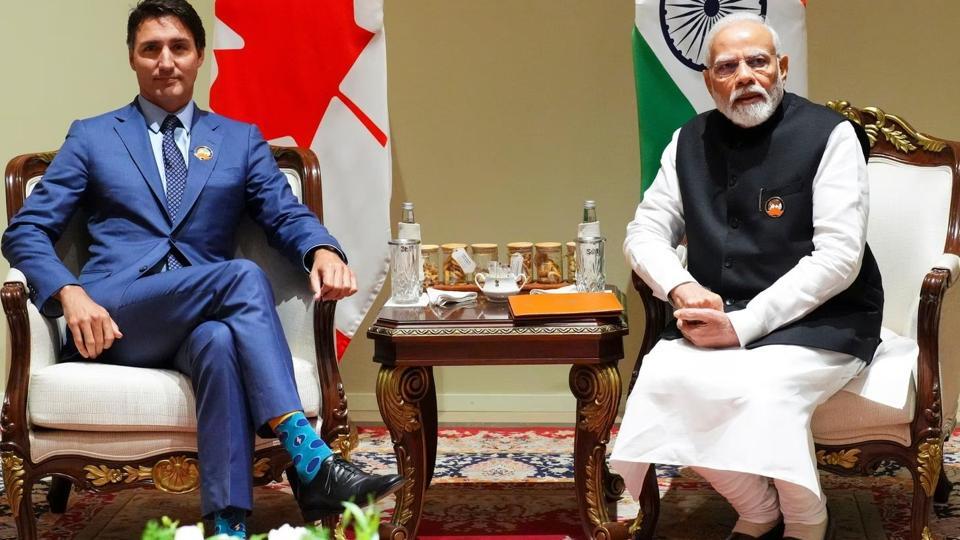
The support from the US and the UK, which are part of the Five Eyes intelligence sharing alliance that includes Canada, came a day after Ottawa confirmed on Thursday that it had withdrawn 41 Canadian diplomats and their families from India as they stood to lose their diplomatic immunity.
Canada described India’s actions as a violation of international norms and the Vienna Convention, the 1961 international treaty that creates a framework for diplomatic ties between countries. India rejected this characterisation and said its actions were fully in line with the Vienna Convention.
The US State Department expressed concern at the departure of Canadian diplomats from India, while Britain’s Foreign, Commonwealth and Development Office (FCDO) said it didn’t agree with the decisions taken by the Indian government. Both countries emphasised that communication and diplomats on the ground are essential for resolving differences.
Both the US and the UK also reiterated their call for India to cooperate in Canada’s investigation into the killing of Khalistani leader Hardeep Singh Nijjar. Canadian Prime Minister Justin Trudeau’s allegation last month about the involvement of Indian government agents in the murder of Nijjar triggered the ongoing diplomatic row. India rejected the accusation as “absurd” and sought parity in diplomatic presence soon after.
There was no immediate response from Indian officials to the statements by the US and the UK.
“We have urged the Indian government not to insist upon a reduction in Canada’s diplomatic presence and to cooperate in the ongoing Canadian investigation,” US State Department spokesperson Matthew Miller said in a statement.
“We expect India to uphold its obligations under the 1961 Vienna Convention on Diplomatic Relations, including concerning privileges and immunities enjoyed by accredited members of Canada’s diplomatic mission,” he said.
“Resolving differences requires diplomats on the ground,” Miller added.
An FCDO spokesperson said: “We expect all states to uphold their obligations under the 1961 Vienna Convention on Diplomatic Relations. The unilateral removal of the privileges and immunities that provide for the safety and security of diplomats is not consistent with the principles of the effective functioning of the Vienna Convention.”
The spokesperson said resolving differences “requires communication and diplomats in respective capitals”. The spokesperson added, “We continue to encourage India to engage with Canada on its independent investigation into the death of Hardeep Singh Nijjar.”
The Indian side has defended its actions for diplomatic parity by saying they are fully consistent with Article 11.1 of the Vienna Convention. This article states: “In the absence of specific agreement as to the size of the mission, the receiving State may require that the size of a mission be kept within limits considered by it to be reasonable and normal, having regard to circumstances and conditions in the receiving State and the needs of the particular mission.”
People familiar with the matter said India’s decision to seek parity in diplomatic presence was conveyed to Canada about a month ago, with a target implementation date of October 10. This date was extended till October 20 as details and modalities of implementation, including the list of Canadian diplomats who would continue to be accorded immunities and privileges, were being worked out in consultation with the Canadian side, the people said.
Parity was sought in diplomatic representations in the high commissions in Ottawa and New Delhi and there was no impact on Canada’s diplomatic strength in consulates in Bengaluru, Mumbai and Chandigarh. Canada’s decision to cease operations of the three consulates was unilateral and not related to the implementation of parity, the people said.
In a separate development, Australia’s domestic intelligence chief has said he has no reason to dispute Canada’s claims of a possible link between the Indian government and the killing of Nijjar. Asked by Australia’s ABC News for his assessment of Canada’s allegations, Australian Security Intelligence Organisation (ASIO) director general Mike Burgess said he would have “no reason to dispute what the Canadian government has said in this matter”.
“There’s no doubt any allegation of any country being accused of carrying out an execution of a citizen in that country, it’s a serious allegation, and something that we don’t do and something that nations should not do,” Burgess said, speaking in California on the sidelines of a public gathering of the Five Eyes intelligence partners this week.