"Vande Mataram," the national song, was sung for the first time at the Independence Day celebrations at Delhi's Red Fort since 1947, days after legislation elevating it to the same status as the national anthem was passed. The Union government made the rendition of all six stanzas of the song mandatory this year amid the 150th-year "Vande Mataram" celebrations. It ended the decades-old practice of singing its first two stanzas that were adopted as the national song in 1950.
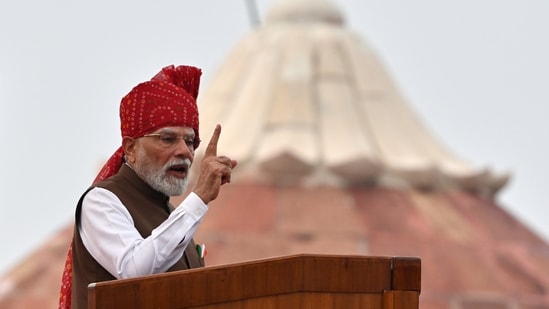
Prime Minister Narendra Modi, who led the 80th Independence Day celebrations, referred to the 150 years of "Vande Mataram". “Today, on 15th August, for the first time, Vande Mataram is echoing at the Red Fort. Today, as we, the people of the country, celebrate 150 years of Vande Mataram, what could be a better opportunity than this?” said Modi.
Follow live updates related to Independence Day celebrations here.
In the revised sequence of the ceremony, the national song was rendered before the flag hoisting, and Modi's address from the historic Red Fort for the 13th consecutive year. “Today, every heart is resounding with the chant of Vande Mataram. Today the tricolour is in every home, and the tricolour is in every heart,” he said.
Bankim Chandra Chattopadhyay composed "Vande Mataram" in 1875. It first appeared in print in his novel Anandamath. The song blends Bengali and Sanskrit, personifying India as a mother goddess and celebrating its rivers, forests, and natural abundance. In 1950, the Constituent Assembly accorded it the status of national song, distinguishing it from the national anthem "Jana Gana Mana".
{{/usCountry}}Bankim Chandra Chattopadhyay composed "Vande Mataram" in 1875. It first appeared in print in his novel Anandamath. The song blends Bengali and Sanskrit, personifying India as a mother goddess and celebrating its rivers, forests, and natural abundance. In 1950, the Constituent Assembly accorded it the status of national song, distinguishing it from the national anthem "Jana Gana Mana".
{{/usCountry}}In a special Lok Sabha discussion in December 2025 on its 150th anniversary, Modi said the mantra and the slogan "Vande Mataram" gave energy and inspiration to the country’s freedom movement. He added that it showed the path of sacrifice and penance.
ALSO READ | Free coaching classes, AI training: PM Modi's big Gen Z outreach in Independence Day speech
Lawmakers recited "Vande Mataram" after Parliament's monsoon session was adjourned sine die on Thursday, days after the Prevention of Insults to National Honour (Amendment) Bill, 2026, was passed, giving it equal status with the national anthem.
The legislation makes any obstruction or insult to the national song a criminal offence, providing for a jail term of up to three years and a fine. The law previously safeguarded the national flag, the national anthem and the Constitution.
Dravida Munnetra Kazhagam lawmaker K Kanimozhi criticised the passage of the bill, saying a Hindutva agenda was being brought in under the guise of nationalism. "It has been brought against the people of this country, against the citizens of this country, and against federalism. You cannot impose nationalism by bringing a law. This bill is against federalism. This song goes against secularism,” Kanimozhi said.
Kanimozhi argued the founding fathers had the wisdom to limit the song to only two stanzas. She accused the government of trying to polarise the country by making it compulsory and imposing criminal charges. "This is not nationalism. It is undemocratic to pass the bill amid din and without discussion."