
 E-Paper



Verdict sealed as voting concludes across India
Over 60 million people voted in the final phase of India's general elections across 57 constituencies, with an overall turnout of 61%.

 Prefer HTon Google


More than 60 million people voted on Saturday in the seventh phase of Lok Sabha polls as 57 parliamentary constituencies across eight states and Union territories recorded a turnout of 61%, compared to 65.2% from five years ago — bringing India’s gargantuan general elections to a close.
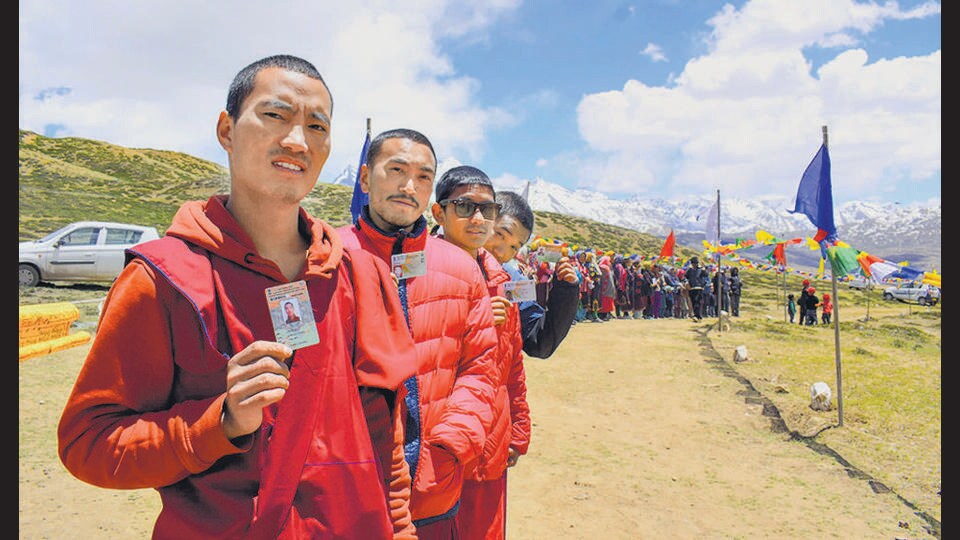
The final phase — which ended India’s 78-day voting exercise — saw a string of high-profile seats including that of Prime Minister Narendra Modi in Varanasi, TMC general secretary Abhishek Banerjee from Diamond Harbour in West Bengal, Misa Bharati, daughter of RJD chief Lalu Prasad in Patlipura among others going to the polls.
In 2019, the voting in these parliamentary seats was 65.2% and in 2014 the turnout was 65.1%.
In the first six phases of the national elections, 66% of total 875 million eligible voters in 485 Lok Sabha constituencies participated, meaning that 577 million people exercised their franchise in the first-past-the-post ballot system.
On Saturday, largely peaceful polling was held in all 13 seats of Punjab and four of Himachal Pradesh, 13 constituencies in Uttar Pradesh, nine in West Bengal, eight in Bihar, six in Odisha and three seats in Jharkhand besides Chandigarh. Polling also took place simultaneously for 42 assembly constituencies of Odisha and bypolls to six assembly seats in Himachal Pradesh.
In Punjab, 57.1% of the registered voters cast their ballots on Saturday compared to 67.6% in 2019. The polling, which started at a slow place, was largely peaceful barring a few incidents of clashes, according to the state’s chief electoral officer Sibin C. A total of 328 candidates, including 26 women, were in the fray in Punjab.
All voting figures for the seventh phase are from ECI’s Voter Turnout App, as of 11pm on Saturday, and are likely to rise further by the time final turnouts are calculated.
For Chandigarh seat, where Manish Tewari of Congress is pitted against Sanjay Tandon of the Bharatiya Janata Party (BJP), 67.9% voting was recorded as compared to 70.6% in 2019.
The voter turnout was 69.4% in the four seats voting in Himachal Pradesh, compared to 72.2% in 2019. Polling for six assembly by-polls also took place, which can decide the fate of Sukhwinder Singh Sukhu-led Congress government in the state.
In West Bengal, where voting was held for nine Lok Sabha seats, the turnout was 71.3% compared to 78.8% in 2019. The state, however, saw sporadic instances of violence were reported in some locations such as Bhangar in South 24 Parganas and Sandeshkhali in North 24 Parganas in which six people were reported wounded, according to local officials.
“Voting was held by and large peacefully with sporadic incidents of violence. There were no major untoward incidents,” said a poll panel official in Kolkata. Locals, however, claimed that clashes broke out between workers of the ruling Trinamool Congress (TMC) and Indian Secular Front (ISF).
The voter turnout for the eight seats in Bihar voting in the seventh phase was 51.9% as compared to 51.3% in 2019. For 13 Lok Sabha seats in Uttar Pradesh, the voting percentage was 55.6% as compared to 70.5% in 2019.
For six Lok Sabha and 42 assembly seats that polled in Odisha on Saturday, the voting percentage was 70.5% as compared to 74.5% in 2019. In three parliamentary seats in Jharkhand, 70.6% voters participated as compared to 71.5% in 2019.
Among other prominent candidates in fray in the seventh phase were former Union law minister and BJP leader Ravi Shankar Prasad from Patna in Bihar, former Union minister and Congress leader Anand Sharma from Kangra, Union broadcasting minister Anurag Thakur from Hamirpur, and BJP’s Jay Panda from Kendrapada, and Congress leader Srikant Jena from Balasore in Odisha.
Voting started on April 19 at a slow pace with about three percentage point difference between voting as compared to 2019. The first phase recorded 66.16% voting. Voting, however, picked up in the subsequent phases even though it was still slightly less than the polling trends in 2019. The highest voting percentage of 69.16% was recorded in the fourth phase and lowest of 62.22 in fifth phase. In all, 970 million voters were enrolled, making it the biggest electoral exercise in the world.
Even though 8,360 candidates from 744 political parties and independents are contesting, the election was seen as a bipolar contest between the ruling BJP-led National Democratic Alliance (NDA) of 38 parties and Congress-led India National Developmental Inclusive Alliance (INDIA) bloc of 28 parties. The NDA contested 540 seats with BJP contesting on 441 seats and INDIA bloc fielded candidates in 543 seats with Congress contesting on 328 seats. The NDA did not contest three seats in Kashmir.


