Thayil Jacob Sony George, widely known as TJS George, a leading voice in Indian journalism whose career spanned more than seven decades, passed away on Friday at the age of 97. Celebrated for his incisive reporting and commentary, George earned a reputation as one of India’s most respected journalists and public intellectuals.
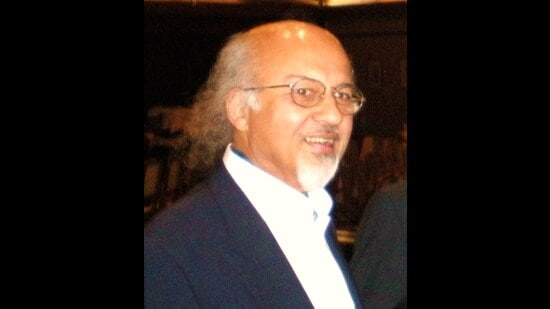
Born on May 7, 1928, in Kerala, George was the fourth of eight children in a family led by Thayil Thomas Jacob, a magistrate, and Chachiamma Jacob, a homemaker. He later settled in Bangalore and Coimbatore with his wife, Ammu, and is survived by his children Sheba Thayil, and acclaimed writer Jeet Thayil.
George graduated with honours in English Literature from Madras Christian College before beginning his journalism career in 1950 at The Free Press Journal in Mumbai. Over the years, he contributed to numerous national and international publications, including the International Press Institute, The Searchlight, and the Far Eastern Economic Review, and became the founding editor of Asiaweek in Hong Kong.
Returning to India, he joined The New Indian Express as editorial advisor, where he became a persistent critic of corruption, social injustice, religious intolerance, and threats to democratic institutions. His weekly column, “Point of View,” ran for more than 25 years, concluding in June 2022.
In 1965, George was jailed for opposing Bihar chief minister K B Sahay, becoming one of the first newspaper editors imprisoned in independent India. Defence minister VK Krishna Menon appeared in court on his behalf. George later recounted these experiences in his memoir, Ghoshayatra.
{{/usCountry}}In 1965, George was jailed for opposing Bihar chief minister K B Sahay, becoming one of the first newspaper editors imprisoned in independent India. Defence minister VK Krishna Menon appeared in court on his behalf. George later recounted these experiences in his memoir, Ghoshayatra.
{{/usCountry}}He authored influential works including The First Refuge of Scoundrels: Politics in Modern India, a compilation of his columns, and M.S.: A Life in Music, a biography of the Carnatic musician M.S. Subbulakshmi. A lifelong observer of global affairs, he closely followed China’s transformations and reported extensively on the country.
George’s contributions earned him the Padma Bhushan in 2011.
Karnataka Chief Minister Siddaramaiah remembered him as “a true public intellectual who made readers think, question and engage.” Remembering him, Siddaramaiah said, “With his sharp pen and uncompromising voice, he enriched Indian journalism for over six decades. He was a true public intellectual who made readers think, question and engage. My heartfelt condolences to his family, colleagues and countless admirers.”
Congress MP Shashi Tharoor called him “a true giant of Indian journalism” whose columns and books “leave an indelible mark.” “Saddened to hear about the passing of veteran journalist T.J.S. George. A true giant of Indian journalism, his sharp wit and powerful ‘Point of View’ columns will be deeply missed. His contributions to literature and fearless commentary leave an indelible mark. His books, including a memorable Treasury of Indian Quotations, will live long,” Tharoor wrote.
Kerala chief minister Pinarayi Vijayan said TJS was the state’s ‘proud contribution to Indian and global media landscape.’ “TJS was a prominent editor who stood for fearless and impartial journalism. He was a courageous advocate of liberal journalism and took a stand for democratic values, especially during the Emergency. He has a track-record of reacting strongly against all trends that threaten freedom and democratic consciousness,” said CM Vijayan.
Leader of the opposition VD Satheesan said TJS always believed that the pen in his hand was a ‘sharp weapon.’ “His profound writing skill and ideas had a significant impact on society,” he said.