
 E-Paper



What CAG report on Delhi's liquor policies claims: 10 key takeaways
The report, one of the 14 pending CAG documents, was tabled by BJP leader and CM Rekha Gupta in the Delhi assembly on Tuesday.
Updated on: Feb 25, 2025, 22:17:24 IST

 Prefer HTon Google
Share via


Copy link

The CAG's audit report of Delhi's liquor sector has claimed that the 2021-2022 excise policy framed by the previous Aam Aadmi Party (AAP) government resulted in a cumulative loss of over ₹2000 crore to the national capital's exchequer.
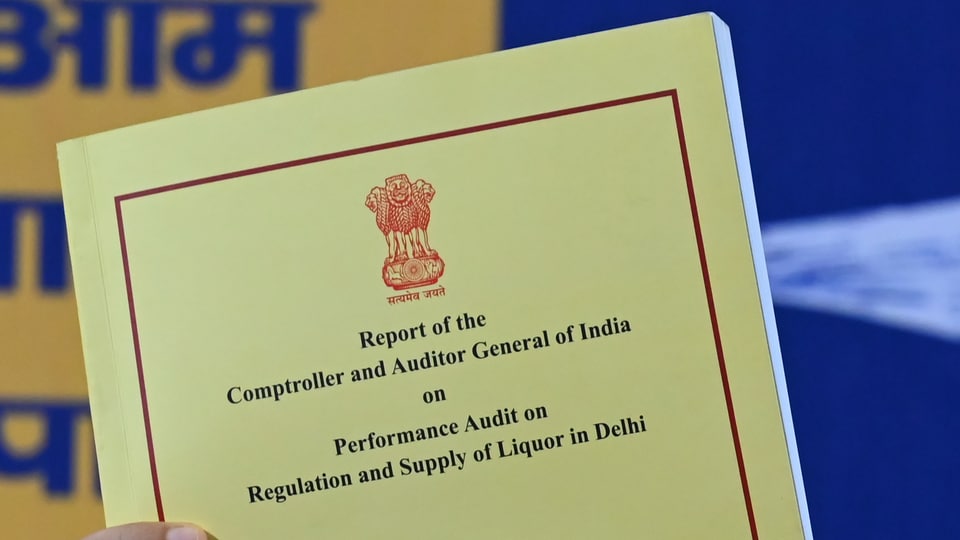
The report, one of the 14 pending CAG documents, was tabled by BJP leader and CM Rekha Gupta in the Delhi assembly on Tuesday.
Also read: CAG report: Atishi blames old policy for corruption; BJP takes 'black deeds' dig
Here are the key takeaways from the 208-page CAG report.
- The CAG report claimed that the recommendations of an expert panel, which was formed to suggest changes for the formulation of the new excise policy, were discounted by former deputy chief minister Manish Sisodia.
- The report claimed that because timely permissions were not taken for opening the liquor vends in "non-conforming municipal wards", a loss of revenue of ₹941.53 crore was incurred. Non-conforming areas are those which do not conform to land use norms for opening liquor vends.
- The report claimed the excise department suffered a loss of approximately ₹890.15 crore on account of license fee from these zones owing to their surrender and failure of the department in re-tendering.
- There was a loss of revenue to the tune of ₹144 crore due to an "irregular grant" of waiver to the licensees because of the Covid pandemic-related closures.
- The CAG report also pointed out that several liquor wholesalers failed to submit mandatory quality tests verifying compliance with the Bureau of Indian Standards (BIS) norms while reports of water quality, harmful ingredients, heavy metals, methyl alcohol, microbiological were not submitted by various brands. The report added that ensuring the quality standards of liquor is the responsibility of the national capital's excise department.
- The report has flagged financial irregularities in the Excise Supply Chain Information Management System (ESCIMS), claiming that an undue benefit of ₹24.23 crore was given to the implementing agency. It revealed that payments were made for liquor bottles that were not authenticated through barcode scanning at the Point of Sale (POS). According to the contract, the IA was entitled to payments only for barcodes authenticated at POS during sales. However, the audit found that between December 2013 and November 2022, barcode authentication amounted to ₹65.88 crore, whereas the actual payment liability created was ₹90.11 crore, reported PTI.
- Issues in the Excise Policy (2017-21): Licenses were issued without verifying solvency, financial statements, wholesale price data, and criminal antecedents. Multiple licenses were issued to related parties with common directorships, violating rules.
- Non-Transparent Pricing of Liquor: Wholesalers (L1 licensees) had excessive discretion to set Ex-Distillery Price (EDP), leading to manipulated prices. Higher EDP in Delhi led to lower sales and excise revenue losses.
- The Excise Intelligence Bureau (EIB) failed to curb liquor smuggling, with country liquor being the most seized (65%). Enforcement process was weak, with no standard procedures for inspections.
- Issues in the New Excise Policy (2021-22): The Expert Committee's recommendations were ignored, favoring private wholesalers instead of a government-controlled entity. Key decisions were taken without necessary cabinet and Lieutenant Governor approvals. Retail licenses were limited to 22 entities, enabling market control.
With inputs from agencies


Get the latest India News, breaking headlines, and real-time updates from across the nation. Stay informed on politics, government policies, crime, weather, and CEC Gyanesh Kumar row Live.


