
 E-Paper



What the G20 Summit success means for India and the world
The summit's declaration will have implications for bilateral ties, India's global influence, and efforts to revive multilateralism.

 Prefer HTon Google


New Delhi As the Indian Presidency of G20 begins wrapping up, after a weekend which brought the world to Delhi for an extraordinarily successful leaders’ summit, New Delhi can breathe a sigh of relief that all went well. And it can take justifiable pride in its achievements.
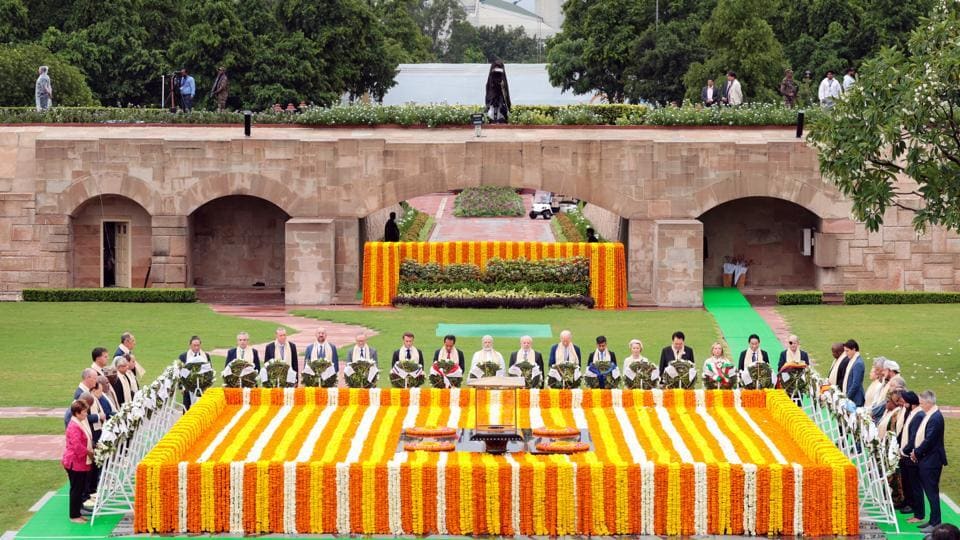
The summit and its declaration, as well as the bilateral and plurilateral meetings on the sidelines, reflected Indian foreign policy priorities and the nature of its relationships with key actors. The declaration will also have implications for bilateral ties, particularly with the US, Russia and China, India’s quest to be the voice of the Global South, and efforts to revive reformed multilateralism at a particularly bleak time in the international system.
Also Read: G20 will use a mix of renewable energy, low carbon, and clean tech to achieve carbon neutrality
In his book, The India Way, external affairs minister S Jaishankar wrote: “This is a time for us to engage America, manage China, cultivate Europe, reassure Russia, bring Japan into play, draw neighbours in, extend the neighbourhood, and expand traditional constituencies of support.” On each of these fronts, India succeeded in meeting its objective.
Engaging America
If Prime Minister Narendra Modi’s state visit to the US in June represented a Great Leap Forward, President Joe Biden’s visit to India represented consolidation and deepening of trust. Think of the two visits as a blistering opener setting the stage for a big score, to be followed by a solid middle-order knock to consolidate the innings. This was reflected in cooperation at the global, regional, and bilateral levels.
Also Read: G20 has stood up for Ukraine’s territorial integrity and sovereignty: Blinken
India owes the US a debt for Washington’s flexibility on the text of the Delhi declaration. There is little doubt that Biden, who has arguably been the most committed Democratic president to the India relationship in history, signed off on dropping a specific reference to Russia’s aggression, in the context of UN resolutions, and allowed for a more generic and broader formulation. The Europeans then followed suit, for despite all their bravado, it is the US that has rescued Ukraine from Russian aggression so far. American flexibility also gave India the room to mobilise the Global South and bring collective pressure on Moscow on board. But even beyond Ukraine, the Delhi-DC synergy on multilateral development banks (MDBs) or DC’s acceptance of India’s digital public infrastructure (DPI) as a possible global template or collaboration in the Global Biofuels Alliance shows how India and US want to shape the world together.
On the regional front, the significance of the India-Middle East-Europe corridor announcement cannot be overstated. Yes, the project will take decades to complete. But rarely have such a diverse set of actors, across four regions (North America, the European continent, West Asia and South Asia) collaborated on a project of this scale for common good. Not only can this present a concrete alternative to the predatory model of Chinese infrastructure financing, it can open up tremendous commercial opportunities for India.
And bilaterally, Biden and Modi reviewed the speedy implementation of a range of their agreements signed last June and made a set of new announcements. The GE jet engine and MQ-9B deals are moving along smoothly. Under the initiative on critical and emerging technology (iCET), the space, semiconductor, defence innovation, education, quantum, biotech and telecom collaboration has seen tangible action. All trade disputes between India and the US at WTO now stand resolved. And there are real financial partnerships emerging in the domain of climate.
Put it all together. The summit shows that Delhi and DC are closely engaged. Their friendship is deepening. The collaboration is both public and private. And they are talking about issues way beyond the traditional box of the bilateral relationship.
Reassuring Russia
The weekend also illustrated the complexities that mark the India-Russia relationship, where the public and private, short-term and medium-term, and past and future have to viewed differently.
In terms of the public projection of the relationship, the summit showcased that the old bonds of friendship between Delhi and Moscow persist in the short-term. It is unlikely that any other country would have been able to create a context which offered Russia a face-saver on the international stage, at a time when Moscow has invaded another country.
India, however, ensured that the declaration dropped the specific reference to Russian aggression in the text to accommodate Vladimir Putin’s demand. But in doing so, it won over the space to insert a set of paragraphs that are clear criticisms of Moscow’s positions and actions, from its threat of using nuclear weapons to halting the implementation of the Black Sea Grain deal, from attacking civilians and infrastructure to the second-order consequences of its actions in terms of destabilising the global economic environment, from the violation of territorial integrity and sovereignty of another state to embarking on a war in an era which is not one of war.
But this mix of accommodation and criticism isn’t the story. The story, as Russian foreign minister Sergei Lavrov’s praise for the Indian presidency on Sunday showed, is that Moscow feels good about what happened in Delhi. If the aim was to reassure Russia of India’s commitment to the relationship, and that Delhi retains its autonomy despite getting closer to the west, India has done that yet again.
This reassurance is needed in the first place because privately, Indian policymakers know that the future of the strategic partnership isn’t as bright and, for its own national security, Delhi has no choice but to diversify its relationship and dependencies. India may or may not say it, but it knows that Moscow was wrong in attacking Kyiv. It knows that Moscow today is weaker, in terms of comprehensive national power, than it was before February 2022. It knows that Moscow’s dependence on Beijing has complicated how India thinks of its foremost security challenge, China. It knows that the Indian military is struggling to meet its requirements because of the dilution in the Russian military-industrial base. And it knows that deeper ties with the rest of Europe are essential.
And if India knows all of this and is acting accordingly, Moscow knows that Delhi knows it. Which is why the actions with medium-term implications have to be distinguished from the posture in the short term. The weekend highlighted both this disconnect but also India’s ability to pursue both tracks simultaneously.
Managing China
The G20 weekend showed the incredible challenge India faces in managing the China relationship and how this will persist. Take three specific forms in which this played out.
The first was Chinese president Xi Jinping’s decision to skip the summit, the first time he was absent from a G20 gathering since taking over. For the Indian political leadership, in terms of domestic optics, this was probably a good thing, for a Modi-Xi handshake or a Modi-Xi bilateral meeting may well have invited criticism from the Opposition, which would have alleged this was a sign of India’s weakness given the situation at the border. But in terms of strategic signals, it was yet another sign that China’s political leadership wanted to steer clear of seeming to endorse India’s success on the global high table or even, it appeared before the summit, block it. It is also a possible warning that things aren’t going to get better and may even get worse at the border.
The second was the Chinese stance during the negotiations on the text. While backing Russia on Ukraine, it did support the other elements of the outcomes at the ministerials. But it stepped up its obstructionism in recent weeks on a range of other items, in a clear attempt to unsettle the Indian side. Delhi figured that the only way to get Beijing on board was by creating a situation where China would either have to be the last one standing resisting a common text or come on board due to the risk of being seen as isolated and as a spoiler. Through adroit diplomacy, including by convincing Moscow and mobilising the Global South in its favour, Delhi did that. Beijing shed its resistance.
The third form this took was in specific geopolitical actions which weren’t directly related to China but will impact the Delhi-Beijing bilateral axis. In the past, Indian policymakers have been cautious in being seen as moving too close to the West for the fear of China interpreting it as an aggressive move directed at it. But Beijing helped resolve that dilemma for Delhi with its aggression. India is now clear that it will do what is in its interest with the US, irrespective of how Beijing may interpret it. Both Quad, for which Biden may visit India again next January, and intensified engagement with the US in West Asia through the infrastructure corridor, are instances of this approach.
Put it together, and the big takeaway from the episode is that India-China ties are fragile and will remain so. But given the asymmetries of power, India needs time to strengthen its capabilities. It also needed China to play ball on a set of multilateral issues. And therefore it managed China, without any illusion that this management is anything close to a resolution of the structural issues that haunt the relationship.
Traditional constituencies
Finally, this weekend illustrated how India is bringing its neighbours in (think of how Bangladesh was a guest country at G20 and got an unprecedented networking opportunity with the world’s political elite); working in the extended neighbourhood (the infra corridor with the UAE and Saudi Arabia reflects this); and expanding its transitional constituencies of support (think of the entire discourse around the Global South).
Of these dimensions, the return of the Global South was the most prominent takeaway from the weekend. There is a view which sees this as a return to the old anti-West, third-worldism rhetoric that dominated Indian foreign policy for long. But India’s current approach is different because it is based on using New Delhi’s unique position in the global hierarchy to bridge the divide between West/North and the South. And this took four specific forms over the weekend.
The first was the inclusion of African Union (AU) in G20. Think about it. The world’s premier forum for international economic cooperation had a single African member: South Africa. Few data points illustrate the inequities in the global power structure better than this shocking lack of representation of an entire continent. While there had been discussions of bringing in AU, the fact that this happened under the Indian Presidency will now be etched in history books. And the western bloc fully supported the initiative.
The second was the inclusion of the most pressing concerns of the Global South in the text. Think of food security and there is a demand to implement the Black Sea Grain Initiative which has been so critical to meeting requirements in Africa. Think of climate and there is a clear recognition that the crisis is here, the world is failing to meet temperature goals, but that it is according to common but differentiated responsibilities that the crisis needs to be managed. The declaration even has a figure in terms of financing requirements for the developing world to meet emission targets. Think of sustainable development goals and the setbacks in recent years in meeting these goals, and there is talk of a new road map with adequate financing needed to achieve them. Think of the acceptance of the idea of DPI and financial inclusion, which will help the poorest citizens in the poorest parts of the world. Every section of the declaration is imbued with a spirit of inclusion of the most marginalised voices in the international order.
And finally, the idea of reform of multilateral development banks (MDBs) has to be seen in the context of India prioritising the Global South. It used its presidency to make clear to the West that the expansion in the mandate of the World Bank to include battling the climate crisis cannot happen at the cost of the aims of ending extreme poverty. It pushed for newer ways to mobilise finances to enable MDBs to meet these expanded goals.
Put all this together, and it’s clear that India is now not just at the high table, but actually shaping conversations on the concerns of the Global South and finding ways to address them in specific ways, not in opposition to the West but in conjunction with the West. No picture illustrated this better than the one that had the leaders of India, South Africa, Brazil, US and World Bank together. There was of course a strategic subtext to this. China’s hopes of becoming the champion of the Global South will not go uncontested — and India will compete on its own terms and with its own partners, but while listening carefully to what its partners want.
From the bilateral to the global, India had its best foreign policy weekend ever in Delhi. But in geopolitics, there is no full stop. What has happened will inaugurate a new chapter as India navigates the next set of challenges in the global order. The experience, however, must have made policymakers both more confident in their skills – and acutely conscious of the challenges that lie ahead.


