E-Paper



Who is Neha Bora? Activist in focus over Jharkhand protest sat on hunger strike next to Wangchuk at Jantar Mantar
Neha Bora shot to fame during the Jantar Mantar protests, where she spent 23 days on hunger strike alongside AISA leaders and Sonam Wangchuk.

 Prefer HTon Google


From a 23-day hunger strike at Delhi’s Jantar Mantar to the latest ink attack in Ranchi during a student protest, Neha Bora has emerged as one of the prominent faces representing students' frustration against exam irregularities.
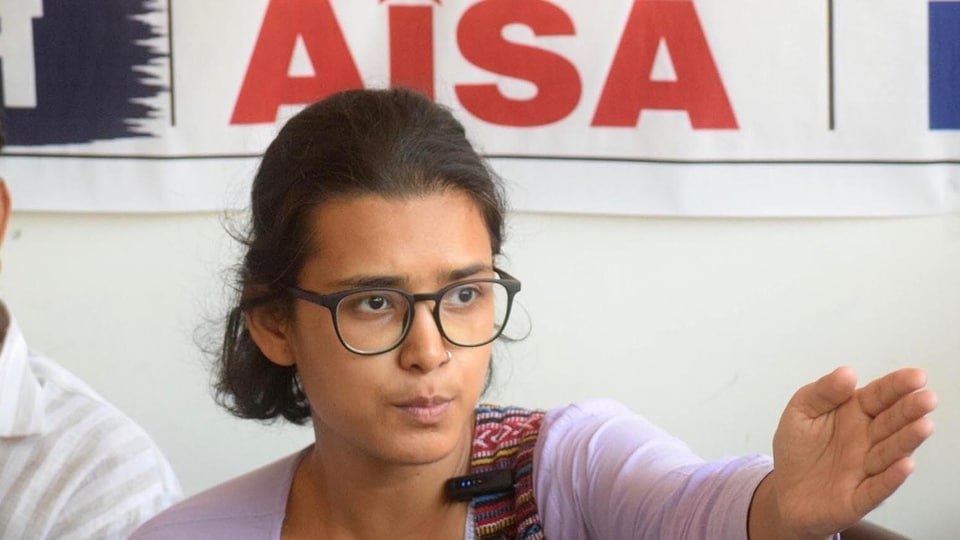
The 29-year-old PhD scholar at Jawaharlal Nehru University (JNU) and national president of the All India Students’ Association (AISA) was among three student leaders who joined education reformer Sonam Wangchuk in an indefinite hunger strike at Jantar Mantar, as part of the wider student-led protests spearheaded by the Cockroach Janta Party (CJP) over alleged examination irregularities.
She recently gained attention at the ongoing student protest in Ranchi after an unidentified man allegedly threw ink at her during a demonstration by students and job aspirants over alleged irregularities in the Jharkhand Public Service Commission and Jharkhand Staff Selection Commission examinations.
Bora said the incident would not intimidate her.
Sharing pictures of herself with ink splashed across her face and clothes, she said she wore the ink “with pride” and vowed that the protesters would “write the future with ink”.
Also Read: Still recovering from 23-day hunger strike, AISA's Neha Bora recalls July 20 violence
From JNU to Jantar Mantar
Originally from Uttarakhand, Bora is a research scholar at JNU’s School of Arts and Aesthetics and has been involved in student politics on campus. She completed her undergraduate studies at Delhi University before pursuing a master’s degree at Ambedkar University Delhi, according to reports.
She remained in focus during the Jantar Mantar protests, where she spent 23 days on hunger strike alongside AISA leaders Manish Kumar and Aameen mitoj and Wangchuk. She ended her 23-day indefinite hunger strike on July 20 alongside other student activists.
The student movement led by CJP eventually grew far beyond its original demand, drawing in Gen Z protesters and broadening its focus to questions of examination transparency, government accountability, and the treatment of protesters.
Her fiery speeches
Bora’s speeches have become a significant part of her public image. In one of her addresses at Jantar Mantar following the police crackdown on protesters, she sharply criticised the alleged use of force against students. She accused police of using tear gas and batons against protesters and said the movement represented a collective struggle rather than that of any one leader. Her remarks were widely circulated on social media.
In Ranchi too, she used the ink attack to turn the incident into a political message, telling protesters that attempts to silence the student movement would not work.
“Those who think that they can cool the anger of students and youth rising across the country with ink are openly challenged,” she said, according to reports.
A BJP-supporting family
Bora’s political views have also been notable for differing sharply from those of her family.
In an interview with Frontline, Bora said, “My family is staunch BJP supporters, and we have had very big disagreements in my house,' she told Frontline.
She said her mother, who had initially opposed her participation in the protests, later visited Jantar Mantar and witnessed the police action against the students. Bora told Frontline that after Dharmendra Pradhan’s resignation, her mother called her and asked her to congratulate the AISA members, saying they had done a good job.
What next for Neha Bora?
For now, Bora remains firmly rooted in student politics. In an interview with Frontline, Bora said the protests had shown young people “what it is to fight for one another and not against one another”.
(With inputs from agencies)