
 E-Paper



Why are JD(U), RJD rushing to claim Karpoori Thakur's legacy? Explained
Karpoori Thakur implemented quotas in jobs for other backward classes (OBCs) a decade before any national initiative in that direction.

 Prefer HTon Google


Soon after the Centre announced its decision to award Bharat Ratna to former Bihar chief minister Karpoori Thakur, there was a palpable rush among the regional parties, particularly the Janata Dal (United) and Rashtriya Janata Dal (RJD), to claim the legacy of the socialist stalwart.
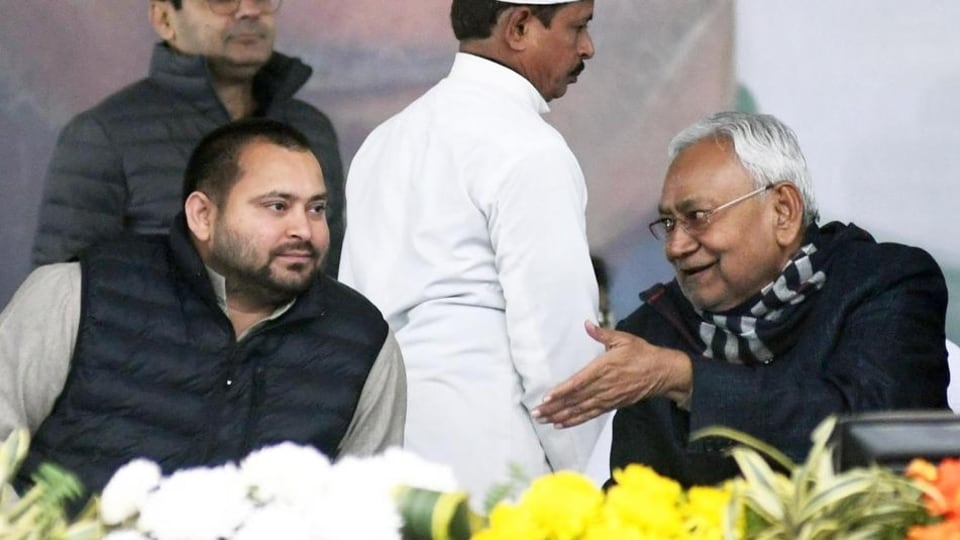
Bihar chief minister and JD(U) chief Nitish Kumar expressed delight over the announcement and asserted that it would send a positive message to the deprived sections, including Dalits and backward classes. Kumar has always projected himself as a huge admirer of Thakur and makes it a point to visit the late leader's ancestral village, re-named "Karpoori Gram", on his every birth anniversary.
Kumar's close aide Sanjay Kumar Jha, a minister in the Bihar government, posted on social media highlighting the number of times the JD(U) supremo had earlier raised the demand for "Bharat Ratna".
Bihar deputy CM Tejashwi Yadav also spared no time in highlighting that his party has been demanding the country's highest civilian honour for the late socialist leader for a long time. He even shared his old speeches on X in which he was seen demanding Bharat Ratna for Thakur.
“We have been demanding Bharat Ratna for socialist icon Karpoori Thakur for the last several years. He fought for the cause of weaker and marginalised sections of society throughout his life. He was deeply concerned with the upliftment of the weaker sections. I thank the central government for announcing this award to the great socialist leader”, Yadav posted on social media platform X.
Why the two parties are rushing to claim Thakur's legacy?
A stalwart leader known for championing social justice and the cause of the marginalised, Thakur implemented quotas in jobs for other backward classes (OBCs) a decade before any national initiative in that direction.
Both JDU and RJD recognise the enduring appeal of Thakur's commitment to social justice. By aligning themselves with his legacy, these parties aim to project an image of being steadfast advocates for the underprivileged, appealing to a wide voter base that values social justice, especially at a time when the Bharatiya Janata Party has been able to garner votes from across class and caste lines under its nationalist Hindu credentials.
The JDU, led by Nitish Kumar, and the RJD, led by Lalu Prasad Yadav, associate with Thakur's legacy to strengthen their appeal among backward castes. Thakur's legacy is seen as a symbol of empowerment for these communities, and political parties want to leave no stone unturned to leverage this connection to consolidate support.
The rush to claim Karpoori Thakur's legacy is also seen as a strategic move to counter the narratives put forth by the BJP, which is riding on the popular support Prime Minister Narendra Modi enjoys. Both JD(U) and RJD have been calling for a nationwide caste census and even conducted a caste survey recently in Bihar in an apparent attempt to rejuvenate the Mandal politics which had neutralised the impact of the Ram Mandir movement in the early 1990s.
As Bihar continues to be a key battleground in Indian politics, the battle for the legacy of leaders like Karpoori Thakur will likely remain a recurring theme.


