The National Tiger Conservation Authority’s action plan for tiger conservation released last month is different from other government action plans on environmental issues for two reasons. It states that indigenous people living in or near forests are primary stakeholders in tiger conservation, and doesn’t mince words on how core or critical tiger habitats need to be made inviolate even for infrastructure projects. If accepted, these recommendations will make help reduce human-animal conflict and help afforestation.
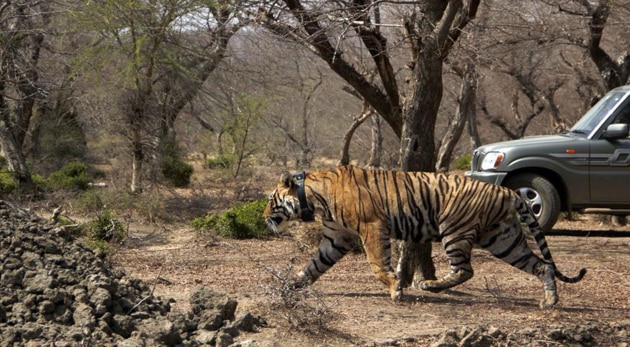
In June, 20 scientists from the National Centre for Biological Conservation, Centre for Wildlife Studies, University of Chicago and others, including leading conservationists like Krithi K Karanth and Vinod Mathur, reviewed the status of 104 national parks and 551 wildlife sanctuaries concluded that local support is key in ensuring survival of species and improvement of the reserves.
This is because “… in India, many millions of people live within a few kilometres of protected areas and perhaps 4 million reside within them,” the study said, adding that the situation in India is very different from USA, Brazil and China where protected areas are in sparsely populated regions, in USA and China the protected areas are also of relatively low biodiversity value. While globally about 15% of the land is protected, in India its only 5%. So the stakes are high.
Both to prevent conflict or even retaliatory killings, the NTCA and reserves need to have people on board. In this context, NTCA’s action plan is a welcome move compared to the high-handed approach laid down in the leaked draft of zero draft amendment to the Indian Forest Act, 1927. The draft was described to be draconian by several forest-rights activists because it gives major powers to forest officers, including the use of firearms and greater immunity from prosecution. Environment minister Prakash Javadekar, however, recently told HT that it was not a government approved draft.
{{/usCountry}}Both to prevent conflict or even retaliatory killings, the NTCA and reserves need to have people on board. In this context, NTCA’s action plan is a welcome move compared to the high-handed approach laid down in the leaked draft of zero draft amendment to the Indian Forest Act, 1927. The draft was described to be draconian by several forest-rights activists because it gives major powers to forest officers, including the use of firearms and greater immunity from prosecution. Environment minister Prakash Javadekar, however, recently told HT that it was not a government approved draft.
{{/usCountry}}A wiser move would be to adopt the NTCA’s model of benefit-sharing with indigenous people living on the fringes of reserves, as laid down in the forest rights act (FRA). The community forest rights if recognized give the community the rights to protect, regenerate or conserve or manage community forest resources which they have been traditionally protecting and conserving for sustainable use.
The NTCA, in its action plan, has recommended “a multi-stakeholder consultation at the project planning stage near tiger habitats and corridors which will be with ministries of road transport and highways, mines, power, and railways and other relevant stakeholders, for evolving a gainful portfolio to indigenous people who are the primary stakeholders.” This recommendation is timely considering there is a polarised debate on whether FRA is aiding or destroying forests.