
 E-Paper



Why resolving India’s farm crisis is important
Economic reforms have failed to address the asymmetry between agriculture’s high share in employment and low share in GDP.

 Prefer HTon Google


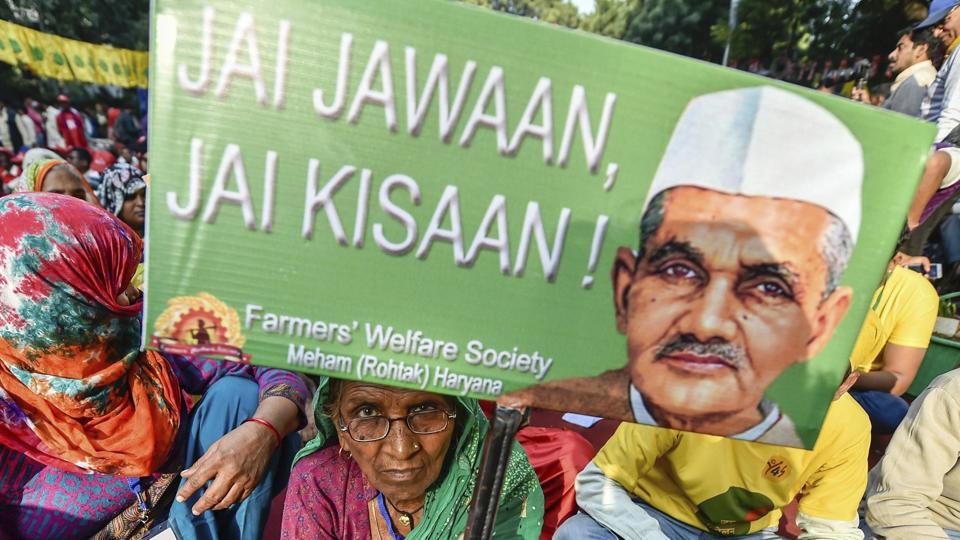
Thousands of farmers marched to Parliament Street on Friday to press demands including debt waivers and procurement of their produce at remunerative prices. Opposition parties, especially Left-affiliated peasant organisations, played a key role in the mobilisation. Politics notwithstanding, India’s rural distress has systemic roots, which need to be addressed at the policy levels. Here are four reasons why farmers’ protests need to be taken seriously.
Economic reforms have failed to address the asymmetry between agriculture’s high share in employment and low share in gross domestic product (GDP). This has led to a squeeze in agricultural incomes, which continues to be the biggest source of employment in the Indian economy. Markets have failed to provide relief in either boosting farm incomes or generating enough non-farm jobs. This is the biggest challenge for India’s structural transformation.

There is a fundamental contradiction between farm incomes and inflation in India. Food items account for 40% of the Consumer Price Index (CPI) basket. Inflation targeting is now the guiding framework of India’s monetary policy. Low inflation under the present government has also led to a worsening of the terms of trade for farmers. This means that non-farm prices have been rising at a faster rate than farm prices. Farm incomes cannot be squeezed indefinitely to keep inflation under check and vice versa. This is the biggest political-economy conundrum facing India’s policy makers.

Low prices are not the only cause of worry. Extreme weather events and skewed rainfall have been adversely affecting yields. Farmers are the first group facing the consequences of climate change. Responding to the adverse affects of climate change on agriculture is crucial for safeguarding food security and livelihoods.

Unrest in India’s farm economy is bound to percolate to the larger society. The rural crisis is forcing traditional peasant communities to take up demands such as reservations, which cannot be long-term solutions to their livelihood concerns. Healthy growth in farm incomes is conducive to India’s quest for social justice too. Statistics from the National Sample Survey Office (NSSO) show that Other Backward Classes have the biggest relative share in agricultural investment. A continuing crisis in agriculture is bound to intensify India’s caste wars.


