
 E-Paper



Why the third stage in ISRO rockets is tricky
ISRO's PSLV missions faced back-to-back failures in the third stage, but the overall track record remains strong despite these anomalies.


In back-to-back failures, two of ISRO’s PSLV missions have malfunctioned during the third of four stages. In May last year, PSLV-61 experienced a drop in pressure in the propulsion chamber during the third stage, leading to a deviation from the intended course. And last week, PSLV-62 too deviated off course towards the end of the same stage.
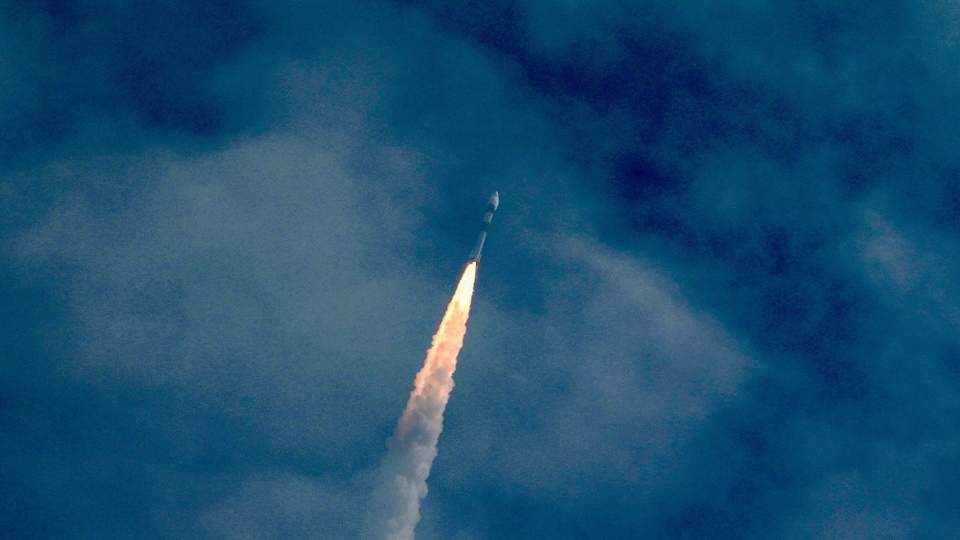
The third stage can be challenging because it uses a solid propellant, which does not allow the precise control that liquid propellants provide in the second and fourth stages. And although the first stage too uses a solid propellant, the third is fired high in space, in conditions very different from the near-Earth environment where the first one ignites.
The two failures should be seen less as a trend than as an aberration, because PSLV’s track record has been outstanding over the decades. ISRO’s workhorse had succeeded in most of its previous missions, demonstrating that all four stages can operate reliably. It is not yet clear whether a new factor has introduced uncertainty into the third stage.
The four stages
PSLV, in all its versions is a four-stage rocket with an alternating pattern of solid and liquid propulsion systems. In rocketry, each stage comes with its own propulsion system, fuel and structural elements, chosen to provide what the vehicle needs during various segments of its trajectory. PSLV rockets use solid propellants — easier to store and ignite — in the first and third phases, and liquid propellants — better for precise orbital insertion and restarts —in the second and fourth.
The first stage lifts the rocket and pushes it through the lower atmosphere. It uses a solid propellant, producing very high thrust that allows the rocket to accelerate rapidly and climb through the atmosphere in about two minutes. Once the propellant is exhausted, Stage 1 separates.
In the second stage, the vehicle continues accelerating and stabilising its flight in preparation for Stage 3. The thrust is provided by a liquid-fuel engine, which allows precise control of thrust and direction. By this point, heating is low, so the heat shield is jettisoned. When the liquid propellant is depleted, Stage 2 separates. This phase lasts roughly 2-3 minutes
The third stage switches back to a solid propellant, providing a strong but short burst of thrust. This is meant to increase the vehicle’s horizontal velocity, which is essential for achieving orbit. This stage should ideally burn less than 2 minutes before separating.
After Stage 3 separation, the fourth stage is responsible for precise orbital insertion. It uses liquid propellant to fine-tune the vehicle’s velocity, altitude, and inclination. The payload satellites are then deployed into their intended orbits. The duration of this stage can vary depending on mission requirements, including possible coasting phases.
Twin glitches
An ISRO fault assessment committee has probed the PSVL-61 failure. Although its findings have not been made public, what is known was that the thrust required in the third stage could not be maintained. This resulted in a drop in pressure in the propulsion chamber, throwing the rocket off trajectory.
ISRO has not divulged any preliminary findings about what happened on PSLV-62 either. “Discussions are going on and we will come back to you once the analysis is over,” ISRO chairman V Narayanan told HT. On the day of the malfunction, Narayanan had cited disturbances in the vehicle, leading to a deviation in its path.
The glitch happened when motors were providing thrust to propel the vehicle to the intended altitude during the third phase. The rocket had performed as intended through the first two phases and almost the entire third phase before the upper stages — the parts remaining after the jettisoning of the first and second stages — started “rolling in orbit”.
“We call it loss of attitude control,” said Manish Purohit, a space scientist formerly with ISRO. “As the rolling rate of the upper stages increased, the fourth phase ignited and separated, but its direction was no longer in control.”
Fifteen of the 16 satellites on the payload were lost immediately. One sent signals briefly, but that too ended.
Looking for a fix
ISRO has initiated an analysis of the latest failure. With the findings of the previous analysis not made public, it remains to be seen if the causes were similar.
“We do not know if any changes were proposed, or if any were incorporated,” Purohit said.
Although no design changes to PSLV’s basic structure have been announced, it should be remembered that each rocket is made for one-time use only. The components are expendable, and new hardware, often with variations, come into every new launch.
“The process is well laid out. These two were PSLV’s 63rd and 64th flights, but failure has been extremely rare over the previous 62 missions,” Purohit said.
Rockets of the PSLV series have been involved in Chandrayaan-1 (PSLV-C11, 2008) to the Moon, Mangalyaan (PSLV-C25, 2013) to Mars, and a 104-satellite world record (PSLV-C37, 2017) in a single flight. PSLV has launched hundreds of satellites for several other countries.
 ABOUT THE AUTHORKabir Firaque
Puzzles Editor Kabir Firaque is the author of the weekly column Problematics. A journalist for three decades, he also writes about science and mathematics.


