
 E-Paper



Coronavirus update: Woes mount, migrants stare at long road to normalcy
The decision to extend the lockdown has led to another exodus of migrant workers, though fewer than in the first wave some weeks ago. At least three groups were stopped in Hyderabad, one in Tamil Nadu, two in Kerala and several others in the Hindi heartland by police since April 15.


After the government announced an extension of the national lockdown till May 3, distress among stranded workers and the unemployed is rising. State governments have been asked to provide relief to stranded workers but not allow them to move back across state borders to their villages.
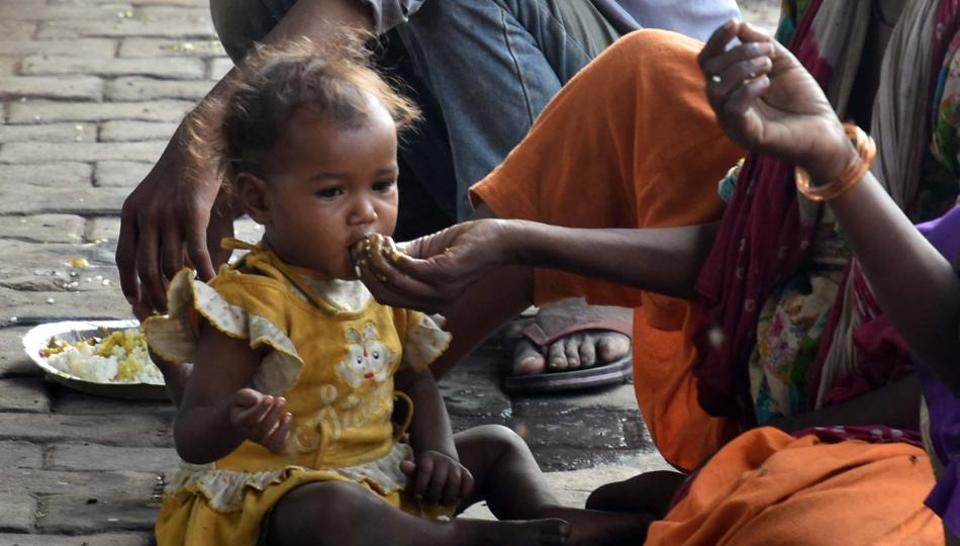
Here are some snapshots from the margins
Yearning for home
“My wife suddenly gets up from sleep around midnight and starts crying. She is missing our daughter and two sons who are with my parents in my village,” said Vishal Misare, 28, a migrant worker from Balaghat town in Madhya Pradesh.
Misare is one of 48 construction workers from Madhya Pradesh now living at a wedding venue at Miyapur Cross Roads on the outskirts of Hyderabad. They tried to leave the camp on Monday night but were brought back by the police.
Misare has exhausted the money he had earned from February through the middle of March. “I am penniless,” he said, claiming that the Rs 500 promised by authorities (Central government) has not been given. “We were given 5 kg of rice and a kg of dal last month.” Ludhiana district officials said they were providing best possible facilities in these “tough” conditions.
Like Misare, a landless labourer, there are hundreds in labour camps across India, who are yearning to go back to their villages, as they can get work in agriculture fields or under the MGNREGA, both allowed from April 15.
Sunil Kumar, 24, from Patna, wants to leave the camp at Jeedimetla in Hyderabad. “I will get married on May 20. I want to go back, but I am not being allowed to step out,” said Kumar, who worked in a gas welding unit in Jeedimetla industrial estate, which is shut due to lockdown.
Last week, Telangana chief minister K Chandrasekhar Rao asked migrant workers to not worry as the state government would not allow anybody to suffer from hunger. “It is for their benefit that we are asking them to stay back wherever they are. If they have any issues, they can bring it to the notice of the authorities and they will solve them,” he said.
Pending wages
For one week, Rajkumar, 28, a steel factory worker in Punjab’s Ludhiana has been entreating his employer to pay his wages. His brother is suffering from tuberculosis and he needs money to support his family.
“After a week of struggle, harassment and making repeated rounds, my employer paid me one month’s wages while two month’s pay was pending. He did not even pay me for overtime,” he said.
Possible to ask employer?
For the past three days, labourers in Sahnewal, Machhiwara and Sherpur Kalan in Ludhiana have hit the streets, demanding to go back to their villages, and protesting against the administration.
Ludhiana deputy commissioner Pradeep Kumar Agrawal said thousands of ration kits were distributed and meetings held with factory owners to push them to not slash wages. “The helpline numbers are ringing 24 hours, food and ration are being provided to the needy and all efforts are being made to see the migrants do not suffer,” he said.
Rental Demand
Ghaneswar Behera, 29, an assembly line operator working with a Gurugram auto major, paid whatever money he had as pending rent for single room in the national capital region on Friday and is now wondering how he will feed his family if the auto company does not start operations from April 20.
Behera left his home in Amartya in Odisha’s Mayurbhanj district with his wife and 20-month-old son about six months ago. A village acquaintance helped him to get a job with an auto company in Gurugram. Having no work for 21 days, he, with four other families, booked railway tickets to return to Odisha, thinking that the lockdown will be lifted on April 15.
As the lockdown was extended, the landlord came knocking.
“The house-owner asked me to pay or leave,” said Behera, leaving with no option but to give Rs 5,000 of the Rs 7,000 he had to the landlord. When Behera told his landlord about the government moratorium on such payments, he did not listen. Behera paid up.
Behera is left with just Rs 2,000 to run his household of five people, and little certainty of employment. The employers have asked workers to submit their body temperatures daily to the contractor. “We don’t have enough money to buy vegetables, how will we buy a thermometer?” Behera asked.
Walking Back
“We walked for over 12 hours before we got a lift from a truck driver who dropped us here. I hope for another lift, otherwise we will cover the journey on foot,” said Naushad Sheikh, a daily wage worker in Ghaziabad, who has walked from Delhi to Lucknow. His destination is Bhadohi in eastern Uttar Pradesh, still 280km away.
The 19 year old, having just Rs 1,500 with him, had decided to stay put in Ghaziabad but changed his mind when the lockdown was extended.
On April 14, when Prime Minister Narendra Modi extended the lockdown till May 3, Sheikh packed his belongings -- three pairs of trousers, two shirts, some toiletries, a shoe, a sandal, a speaker and documents -- in a backpack, covered his face with a handkerchief and left Ghaziabad.
The decision to extend the lockdown has led to another exodus of migrant workers, though fewer than in the first wave some weeks ago. At least three groups were stopped in Hyderabad, one in Tamil Nadu, two in Kerala and several others in the Hindi heartland by police since April 15.
On his way, Sheikh met seven other daily wagers and the group reached Lucknow together after 24 hours on foot on Wednesday evening. Tired and without a proper meal, the group stretched themselves out on the grass alongside the state highway leading to Varanasi, before starting to walk again.
“We saw many labourers returning home,” said Shyam Gautam, 24, a mason, returning to Sultanpur with Sheikh. “Around 50 labourers, who lived in my locality, also left on April 15. Many more will do the same. We can’t survive in cities anymore.”
Finally Home
“Walking 250 km on an empty stomach was arduous,” said Ram Achal, 25, sitting outside his home in his village in Bahraich district, recalling his travel from a construction site in Kanpur soon after the lockdown was announced.
He completed the 14 day quarantine period before he was allowed to enter the village, a protocol implemented by states to isolate migrant labourers. Thousands of others were quarantined at government run institutions, including schools. Despite the trauma and pain, Achal, a landless labourer, said the village was like “heaven” as he can play with his children and mingle with other people in the village.
Manna Lal, 48, who had led them on the walk, was not nearby. “He is now obsessed with swimming in the river. He eats, swims, stays home and does nothing. All of us are just idling around.
“We became migrant labours because we get Rs 450 per day against Rs 250 per day as farm labours,” he said. But, if the fear of Covid-19 continues, he and other villagers will have to take up farm work. “Surviving here is also not easy.”
(With inputs from Srinivasa Rao Apparasu, Aneesha Sareen Kumar, Debabrata Mohanty, Pankaj Jaiswal, Chandan Kumar)


