
 E-Paper



'Won't let anyone threaten India's security': Sri Lankan president's promise to PM Modi
Sri Lankan President Anura Kumara Disanayaka is on a three-day visit to India till December 17.

 Prefer HTon Google


In a powerful display of commitment to defence cooperation, Sri Lanka on Monday officially assured New Delhi that it will not permit any force to use its territory to “threaten India's security” in any manner.
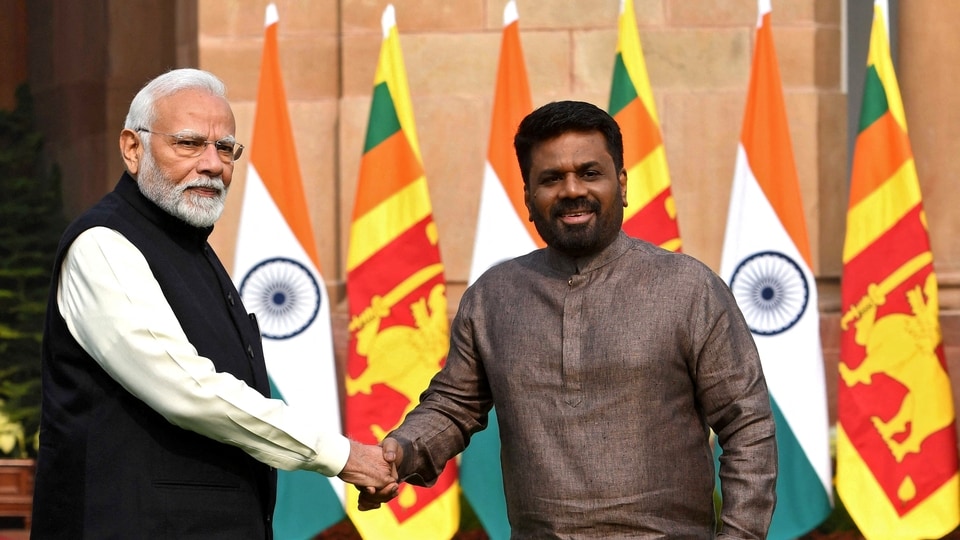
This pledge was reiterated by newly elected Sri Lankan president Anura Kumara Disanayaka in a joint statement, solidifying the ties between India and Sri Lanka. The Sri Lankan leader is on a three-day visit to New Delhi till December 17.
READ | ‘Helped us immensely’: Sri Lankan President Dissanayake thanks India for $5 billion economic support
“The cooperation with India will certainly flourish and I want to reassure our continued support for India,” Disanayaka said at a press briefing attended by both leaders.
Sri Lanka's statement holds great significance as it comes against the backdrop of China’s aggressive "Mission Indian Ocean," which directly targets Indian interests after the situation became extremely sensitive following China’s takeover of Sri Lanka's Hambantota Port due to Colombo's failure to repay debts.
Chinese naval surveillance and spy ships, particularly the 25,000-ton Yuan Wang 5, have been docking at Hambantota, raising alarms for New Delhi given Sri Lanka's proximity.
READ | ‘Never sought refuge’: Syria's Bashar al-Assad in first statement since ouster
India raised concerns regarding the presence of Chinese vessels in the region in August 2022 following which Sri Lanka initially requested Beijing to postpone the arrival of these ships. However, the Chinese vessel was later permitted to dock triggering an increased Chinese naval presence in the Indian Ocean.
India has been expanding its economic and defence ties with Sri Lanka amid concerns over China’s growing hold on the island nation.
PM Modi holds talks with Sri Lankan President
Earlier in the day, PM Narendra Modi held talks with Disanayaka to discuss a range of issues including border security, China's growing presence in the Pacific region, and more.
Modi said India and Sri Lanka will establish electricity grid connectivity and a multi-product petroleum pipeline that will further boost investment and commercial links between the nations.
Sri Lanka is emerging from its worst economic crisis in decades, which led to political upheaval and finally paved the way for Dissanayake’s party to win power.


