Kashmir isn’t a question of Hinduism. It’s a question of secularity. India’s claim on the disputed territory rests on its status as a non-denominational secular state.
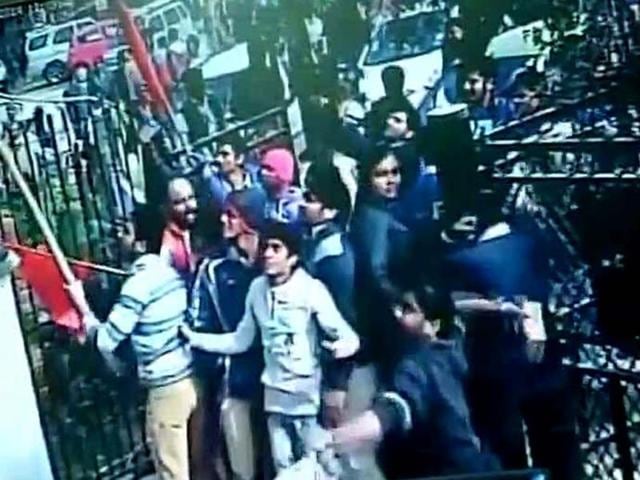
Self-styled defenders of Hindu interests that attacked the Aam Aadmi Party’s Kaushambi office — in retaliation of Prashant Bhushan’s remarks on Kashmir — seem to lack the intelligence quotient or the sense of history to understand that. Genuine secularism, and not theocratic Hinduism, is the right antidote to Pakistan’s claim on Kashmir.
The secular argument that there’s space for a Muslim majority province in a state that has no religion — but where all religions are equal and can be freely practised — could lose traction when the people it seeks to address are unconvinced. It’s on this score that one must judge the validity of Bhushan’s averment that seemed to accord precedence to Kashmiri aspirations and grievances over security imperatives.
One might not agree with the lawyer-politician’s prescription of a public poll in Kashmir on whether to deploy troops under the cover of the Armed Forces Special Powers Act (AFSPA) that is despised as much by people in the north-eastern states. But the absence of a national consensus on the issue does not dispossess him of the right to hold and articulate a view.
A fact that’s well known but hardly deployed to reaffirm New Delhi’s historical position on Kashmir is that on the Pakistani side, the disputed state’s subjects are denied freedoms that are available even to the separatists in India. There is much consternation and loud protestations from ultra-nationalists each time a visiting Pakistani delegation is given access to groups professing freedom or pro-Pak positions.
But in practice, these very freedoms make secular India shine in comparison with the Islamic republic next door. The distinction is recognised by the Kashmiri youth who took to the gun and crossed over at the peak of troubled times in the Valley.
{{/usCountry}}But in practice, these very freedoms make secular India shine in comparison with the Islamic republic next door. The distinction is recognised by the Kashmiri youth who took to the gun and crossed over at the peak of troubled times in the Valley.
{{/usCountry}}Separatist hero Maqbool Bhatt’s brother said it in as many words to this writer in 2004 when asked about his demand for amnesty and return to the Indian side. “I had greater freedom to press for azadi while I was on the Indian side of Kashmir,” he confessed. Several others who interacted with a group of Indian journalists underscored the hiatus between the ground reality and the dream that drove them to wage militancy against India from Pakistan-occupied Kashmir.
Unfortunately, there is no forceful advocacy of India’s position on the issue between two elections; the public discourse in the Valley getting hijacked by anti-India elements once the new government is in place. It’s against this backdrop that Bhushan’s AAP should look for an opening in Kashmir.
The question begs a balanced approach, not a radical onslaught. The people of the Valley need to educated about the choices they have: the relative freedoms, the quality of life and livelihood opportunities available on either side of the Line of Control. Religion sways people. But aspirations sway them more.