
 E-Paper



Children of mothers exposed to indoor pollution have less birth weight
Children born to mothers who spend long hours in traditional wood fire kitchens have low body weight and are more prone to catching pneumonia. These are the findings of a yet-to-be-released international study that has pushed the government to come out with new clean cooking options for the poor under its Swachh Bharat campaign.


Children born to mothers who are exposed to high concentration of smoke from cooking may have low body weight and could be more prone to catching pneumonia.
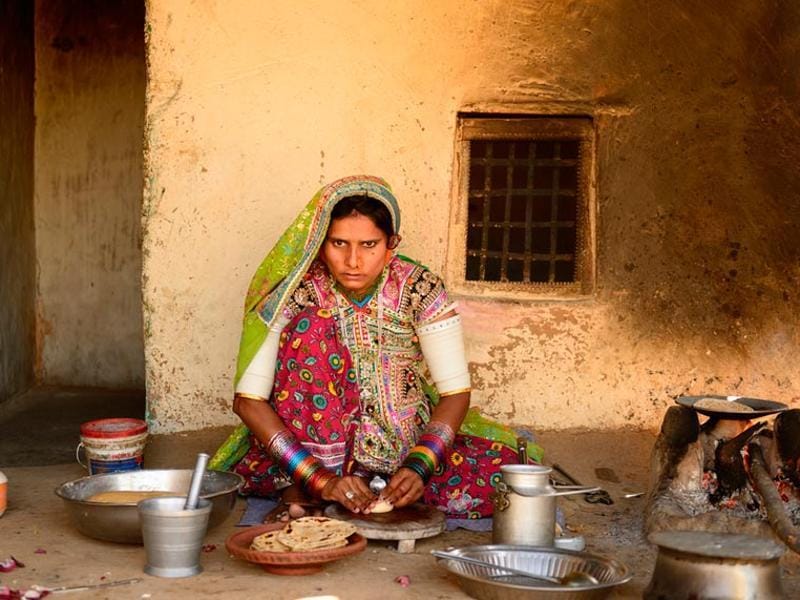
These are the preliminary findings of a yet-to-be-released international study. Similar studies have been a reason for the government’s push to come out with new clean cooking options for the poor under its Swachh Bharat campaign. Preliminary findings of the study by John Hopkins University, likely to be published by the medical journal Lancet in early 2016, may show impact on birth weight of a child born to a mother exposed to high indoor air pollution. The weight loss is significant considering a majority of children in poor households are already born malnourished.
Such children are also more prone to catching diseases like pneumonia after birth because of a weak immune system. Indoor air pollution kills about a million people in India every year, a 2012 Lancet study said. Indian government sources said the prime minister’s office has asked the ministry of new and renewable energy to explore scaling up manufacture of clean stoves in order to make these available to 100 million homes by 2020. “We may soon commission a study for scaling up,” a MNRE official said.
The market for these stoves hasn’t quite picked up due to lack of awareness and availability. “Cost is another deterrent as most families that use firewood are very poor,” said a representative of one company that manufactures these stoves. But the government believes scaling up production will result in easy availability and cost reductions, and have an added benefit — it will create employment for rural youth.
“We will soon have research evidence to show that switching to cleaner cooking options results in saving precious little lives and also empowers women,” Radha Muthiah, head of the Global Alliance for Clean Cookstoves, told HT. Long-term studies in South Asia and Africa have already shown “significant” improvements in child health in cases of switching to cleancooking options.
A study by civil society group Practical Action shows that on average, a rural Indian woman spends 374 hours a year collecting firewood. Added with the time taken to collect water, she loses up to three hours a day just collecting water and firewood to feed her family.
Muthiah said opting for clean cooking saves women time, which can be put to better use. “Households with clean stoves reported sending their children to schools more often.” The switch to clean stoves has larger environmental benefits too since cooking makes up for 25% of black carbon emission and 17% of deforestation.
.


