Cricket is a religion — a mere sentence for a few, but a fact as one traverses the cities, towns and streets of India. And, the Indian cricket fan is the reason for this transcendence.
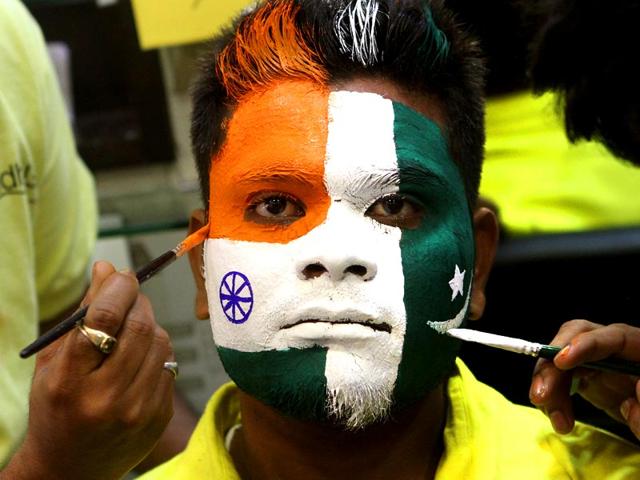
Nothing unites like cricket in India. It is the most loved sport in the country; entertainment for some and an escape route from vexing troubles and issues for many.
The Latin word "Fanaticus" meaning "insanely but divinely inspired" is aptly the origin of the word fan. The Indian cricket fan is the perfect match for this description.
Cricket may unite as nothing else can; but it also divides opinion as sharply.
The typical Indian cricket fan comes in extremes. On one hand, victories, centuries, records and milestones are joyous moments that alleviate the miseries of a mundane life, on the other; defeats and individual failures trigger irrational anger and mindless criticism, bordering on the insane.
Some ardent fans will hold on to the passion for their team no matter what. But, even the most die-hard fan may find this faith wavering when things don’t go as expected; like the string of defeats that India raked up in the Test series and the Tri-series leading up to the World Cup.
Now coming to the question itself. Who is a fan? Is he or she a logical follower of a person or a team or an insanely blind worshipper? Social psychologists have over the time identified reactions of sports fans on two patterns.
First, let us look at BIRGing — "Basking In Reflected Glory”.
Now coming to the question itself. Who is a fan? Is he or she a logical follower of a person or a team or an insanely blind worshipper? Social psychologists have over the time identified reactions of sports fans on two patterns.
First, let us look at BIRGing — "Basking In Reflected Glory”.
This is what we experienced after our World Cup wins against Pakistan and South Africa. When our team is doing well we feel great and feel much better about ourselves which translates into a smug look on our faces and all of us claiming a part in that victory — from wearing a particular jersey, to a favourite chair, predicting the outcome etc.
Cricket talk is where we focus our energy. Aided by social media, Indians have channelled this energy and turned ardent crusaders on cyberspace.
Now, let us look at the contrast, CORFing — “Cutting Off Reflected Failure”.
Take for instance Team India's recent losses. What were some of the reactions? Not watching the highlights, not discussing cricket, skipping reading the sports pages and the Team India jersey being relegated to the bottom rung of the wardrobe were some of the immediate ones.
CORFing is quite prevalent in today’s youth because their tolerance towards failure is poor. They are fickle enough to vilify the very people they worship after a couple of failures.
Those beyond BIRGing and CORFing
True fans might feel dejected, but their heroes remain their heroes, even if somewhat tarnished by defeat.
Now, the pessimistic group. This segment, even after two comprehensive victories in the World Cup, sees them as flukes and does not shy away from saying so. All talk from this section of fans is negative.
They have a sort of cognitive distortion and will seek out unhappiness. This is a cause for worry.
Criticising for the heck of it and trying to seek attention by being different, such people are searchers of blame and have external fault-finding traits.
It enters extreme territory for some who would rather see India lose than get their predictions wrong.
These people might be identifying too much with the team, projecting their own dissatisfied self and faults onto the team.
In their defence, they may be preparing to withstand the emotions that would overwhelm others if India were to lose. Or in a sense, it might be that they are warning against complacency and overconfidence creeping in. They are as much a fan as you and I, desperate to see us win. Their expression, however, is cynical.
The human mind is truly complex. What one thinks and what one speaks can be quite often opposite.
India are off to a rollicking start in the World Cup. So, how are you, the fan, responding to it?