The Bombay high court on Friday stayed the implementation of the state government’s decision to provide 16% quota in government jobs and educational institutes for the Maratha community.
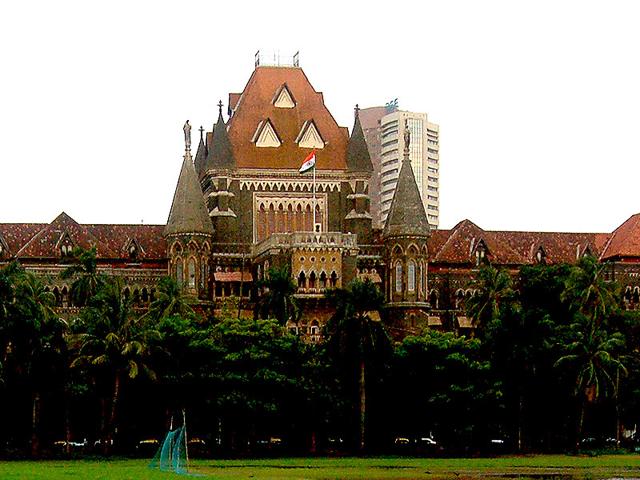
The division bench of chief justice Mohit Shah and justice MS Sonak also stayed the 5% reservation for 50 Muslim communities in public employment, but allowed them to avail of the quota in educational institutes run and aided by the government.
The state government, however, has decided to challenge this decision in the Supreme Court, with chief minister Devendra Fadnavis saying he will take all possible steps to remove the stay on the Maratha reservation. While he did not comment on reservation for Muslims, the BJP has been opposed to it.
While hearing a bunch of public interest litigations, challenging the June 25 decision of the previous Congress-NCP cabinet, the bench concluded it was not up to the state to treat the Maratha community as a ‘backward class’.
“Rather, the National Commission for Backward Classes and the Mandal Commission has concluded the Marathas are a socially-advanced and prestigious community,” the court said, citing the findings of the Mandal Commission (1990), the National Commission for Backward Classes in February 2000 and a July 2008 report of the Maharashtra State Backward Class Commission (Bapat Commission).
The bench noted several flaws in the report of the Narayan Rane Committee that had recommended the inclusion of the Maratha community in the socially- and economically-backward class, and which forms the basis of the 16 % reservation in favour of the community. The bench observed that the Rane committee did not refer to important rulings of the Supreme Court and findings of other commissions.
{{/usCountry}}The bench noted several flaws in the report of the Narayan Rane Committee that had recommended the inclusion of the Maratha community in the socially- and economically-backward class, and which forms the basis of the 16 % reservation in favour of the community. The bench observed that the Rane committee did not refer to important rulings of the Supreme Court and findings of other commissions.
{{/usCountry}}Further, constitutional benches of the Apex Court have laid down a law that the percentage of reservation for public employment cannot exceed 50%, the bench said, adding that the state did not have the power to breach that ceiling limit.
However, while refusing to stay the 5% reservation in education for backward Muslims, the bench said the material the state had relied on, to determine the backwardness of these 50 communities, makes a case for the existence of an extraordinary situation. “The material suggests the dire necessity to draw youth belonging to these communities to secular education,” the bench observed. “The material refers to an abysmally-low level of educational achievement, which ails the community, and a high dropout rate.”
Fadnavis has called for a meeting of group leaders of all political parties on Saturday morning. “The state is fully supportive of the Maratha reservation. We will appeal in SC. We will take measures to ensure that the quota remains. We will amend the existing law,” the CM told mediapersons.
Congress leader and former-CM Prithviraj Chavan, under whose leadership the quota was passed early this year, said his party would cooperate with the government to represent its case in the Apex Court. “The Congress will study the interim ruling and discuss it with legal experts. We will also check if the Congress can be a party to the petition,” he said.
‘NOT A BACKWARD COMMUNITY’
Commenting on the status of Marathas, the court observed, “Early historical and social documentation suggests that although Marathas originated from the Kunbi (farmers) caste, from the 14th century onwards, they evolved into a separate community with high social, educational and political status.”