Prime Minister Narendra Modi used his own oath-taking ceremony to signal the direction of his foreign policy. His unprecedented invitation to eight heads of state and government from the neighbourhood has raised expectations, silenced his critics but also left some questions.
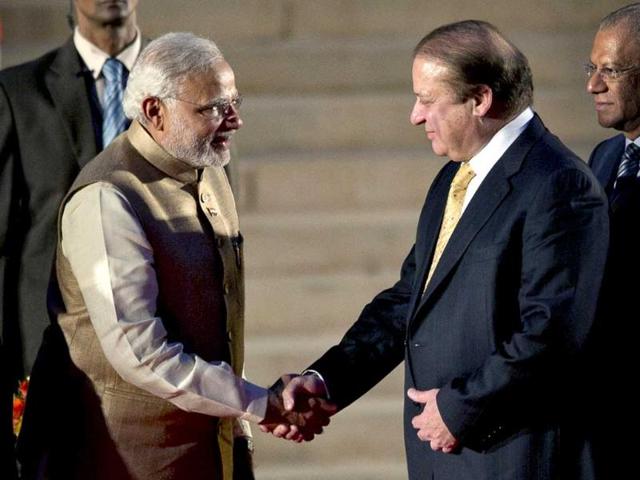
Modi has privately spoken about the need to focus on India’s neighbourhood. He sees the promotion of India’s economic integration with these countries as the foundation towards stability in the security sphere. “South Asia remaining world’s one of the least-integrated regions has to change,” says Hardeep Puri, a former career diplomat, who is a Bharatiya Janata Party member.
Pakistan is the trickiest part of this. Modi has taken a gamble by inviting Prime Minister Nawaz Sharif. If India suffers a terrorist strike or a spike in violence along the Line of Control in coming months, he will have left himself to criticism about the invitation.
One argument is that by keeping Sharif’s meeting restricted to the symbolic, Modi has won points without getting lost in the policy labyrinth of terror and territory. Liberal left critics who argued his election meant a decline in India-Pakistan relations have been proved wrong.
But others hope the fast tracked summit means the new Indian prime minister is prepared to play for the long run. “Sharif is staying behind for discussions with Modi. He has also come with key aides. So there will be substantial discussions,” says Lalit Mansingh, former foreign secretary. “Unlike previous governments, Modi will be able to convey the message to Pakistan that terror and dialogue are incompatible.”
{{/usCountry}}But others hope the fast tracked summit means the new Indian prime minister is prepared to play for the long run. “Sharif is staying behind for discussions with Modi. He has also come with key aides. So there will be substantial discussions,” says Lalit Mansingh, former foreign secretary. “Unlike previous governments, Modi will be able to convey the message to Pakistan that terror and dialogue are incompatible.”
{{/usCountry}}Sharif, in an interview to NDTV, noted that “both governments have a strong mandate. This could help in turning a new page in our relations”.
What should not be missed, however, is that Modi has also raised expectations of turning around relations with Bangladesh and Sri Lanka.
The Manmohan Singh government failed to pass a landmark set of agreements with Bangladesh that would have solved bilateral problems in territory, security, trade and other areas in one fell swoop. Dhaka sees Modi’s invitation and other signals as evidence he is prepared to pick up where Singh left off – but with a greater mandate to do so. A Western diplomat who visited Bangladesh before the election said, “Their main concern was that Modi would not get a majority.”
Sri Lanka also sees positive signs in Modi’s decision to invite Mahinda Rajapaksa despite a boycott of the inaugural by Tamil parties, and despite the fact some of the most extreme Tamil nationalist groups are in the BJP-led coalition. At the very least, a strong Delhi will mean a Sri Lankan policy not held hostage by regional parties. This is something Bangladesh also hopes as it remembers the role Mamata Banerjee played in wrecking Singh’s Bangladesh initiative.