For the first time in 15 years and after three assembly elections, Mumbai, on Wednesday, crossed the 50% threshold to register a 52.43% voter turnout.
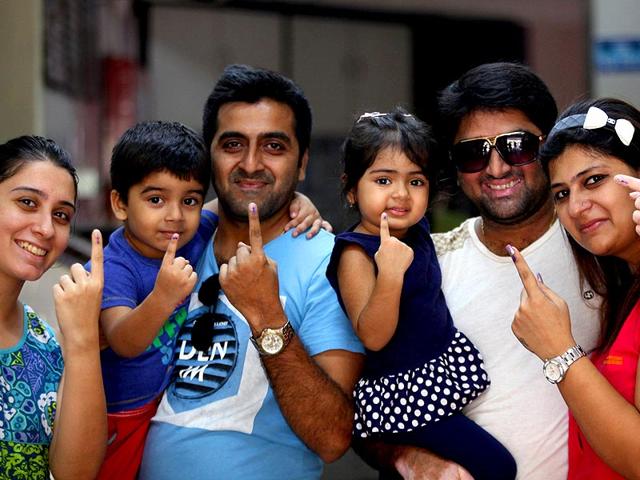
While it may have looked like the enthusiasm and the crowd at polling booths was far less than the Lok Sabha elections, the numbers tell a different story.
The voter turnout during the Lok Sabha polls was 51.59%.
The city’s voting percentage and on ground situation across its 36 constituencies indicated a “vote for change” with highest polling occurring in constituencies like Wadala (Matunga, King Circle, Hindu Colony), Mahim, Mulund, Ghatkopar (East), Borivli, Malabar Hill —areas where the Bharatiya Janata Party (BJP) and the Shiv Sena have their core vote banks.
In the past three elections, Mumbai recorded 44.9% voting in 1999, 48.4% in 2004 and 46.1% in 2009.
Higher turnout typically spells trouble for incumbents.
Political observers pointed out that like in the Lok Sabha polls, trends indicated strong anti-incumbency vote, apart from mobilisation by parties like the Sena and strong candidates from Congress and Maharashtra Navnirman Sena (MNS).
An element of unpredictability, however, cannot be ruled out in a multi-cornered contest, as candidates rally their core vote banks.
{{/usCountry}}An element of unpredictability, however, cannot be ruled out in a multi-cornered contest, as candidates rally their core vote banks.
{{/usCountry}}The highest voting percentage was registered in Wadala (59.6%) and Mahim (59.5%), while the lowest polling occurred in Versova (40.33%). In the island city, Mumbadevi registered a high polling at 59.2%, which indicates mobilisation of the minority vote bank.
Both the Marathi manoos, largely from chawls and slums, and the Gujarati community came out in large numbers to exercise their franchise. Upper-middle class and young voters spoke of change. The slum vote, however, seemed to be divided between the Congress and the Sena; while the Muslim vote was largely with the Congress.
“I feel the previous government has not done enough so I have consciously decided to vote differently this time,” said Gulshan Jasdanwala, a 76-year-old retired professional, who voted at Napean Sea Road.
The Modi factor also had a crucial role to play, especially in wooing young voters, educated middle class and the Gujaratis. “I want a stable BJP government in the state. I am fed up of coalition politics and am hoping that PM Narendra Modi can bring about some changes,” said Sanjay Shah, a broker from Matunga.
In core Maharashtrian localities, the Sena and MNS’ call for Marathi pride hit its mark. “The number of people from other communities coming to Mumbai has been on a rise, but there has been hardly any improvement in living conditions of the middle and lower-middle class Maharashtrians,” said Reema Bodhe, 30, a resident of Bhandup (West).