The Supreme Court stayed trial proceedings in two defamation cases against chief minister Arvind Kejriwal on Friday. It also asked the Centre to explain why defamation should not be decriminalised.
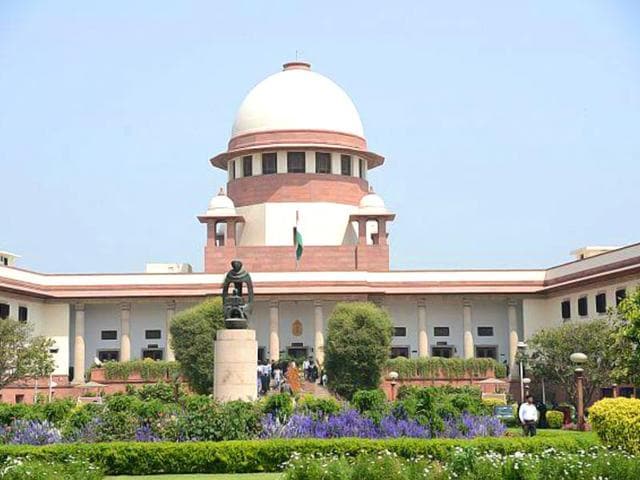
The top court issued a notice to the Ministry of Law and Justice on Kejriwal’s petition challenging the constitutional validity of the penal provisions that make defamation a crime and gave the government six weeks to respond.
Kejriwal’s petition will be heard on July 22 along with one filed by BJP leader Subramanian Swamy, who too wanted the decriminalisation of defamation on the grounds that it was being misused by politicians. The court has already issued a notice to the Centre on Swamy’s petition. Kejriwal was summoned by a magistrate in Patiala House Courts to face prosecution on a criminal defamation complaint lodged by Union minister of road transport and highways Nitin Gadkari.
Gadkari had said he was defamed by the AAP leader who had included his name in the party’s list of “India’s most corrupt.” The second defamation case pending against Kejriwal was lodged in the Karkardooma court by an advocate from east Delhi.
Swamy challenged the constitutional validity of Sections 499 and 500 of the Indian Penal Code - the two penal provisions that criminalise defamation. While Section 499 defines criminal defamation, Section 500 of the IPC prescribes a punishment of up to two years in jail. The court has already appointed senior advocates and former attorney generals - K Parasaran and TR Andhyaarujina to assist it in deciding the “debatable issue.”
{{/usCountry}}Swamy challenged the constitutional validity of Sections 499 and 500 of the Indian Penal Code - the two penal provisions that criminalise defamation. While Section 499 defines criminal defamation, Section 500 of the IPC prescribes a punishment of up to two years in jail. The court has already appointed senior advocates and former attorney generals - K Parasaran and TR Andhyaarujina to assist it in deciding the “debatable issue.”
{{/usCountry}}In the run-up to the 2014 Lok Sabha polls, politicians from various parties filed several defamations cases against each other for comments that could have been simply dismissed as political banter.
The Law Commission, which is looking into the issue, recently consulted media professionals - who are often at the receiving end for publishing alleged defamatory remarks - and legal luminaries to seek their responses whether to decriminalise defamation or not.
The UK did away with criminal defamation in 2013 and the new law requires claimants to show actual or probable serious harm before filing a civil suit. Sri Lanka repealed its criminal defamation law in 2002 which provided for a two-year jail term and fine for media.
Swamy contended the IPC provisions travel beyond the reasonable restrictions placed by Article 19(2) on Article 19 (1) (a) of the Constitution, that guarantees free speech. He has demanded defamation be decriminalised and limited to civil liability. A person who feels defamed should approach the court by way of a petition claiming damages from the alleged offender.