Hilsa, the queen of fish, which millions of Bengalis crave for, is yet to keep its annual date with monsoon and West Bengal this year.
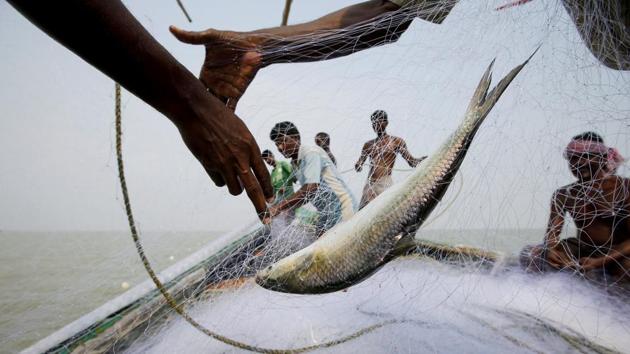
“On an average, a Hilsa catch of 20,000-25,000 tonnes in a year is considered to be normal. The maximum yield comes during monsoon, when the fish migrates upstream into rivers from the Bay of Bengal to breed. But so far, the catch has been less than 100 tonnes this year. In recent times, 2016 was, undoubtedly, the best,” said a senior official of the state fisheries department.
In June, when the over two-month-long coronavirus disease-induced (Covid-19) lockdown restrictions were lifted, fishermen associations had exuded hope that this year could see a bumper Hilsa catch, as the Ganges and its tributaries were less polluted due to the lockdown coupled with bountiful rains.
“There is an annual ban to catch Hilsa between April 15 and June 14 during its breeding season. Fishermen had suspended work from end-March due to the lockdown. The rivers were also relatively clean, which made us optimistic that there could be a bumper catch this year. However, the insignificant catch mostly includes Hilsa, which are less than a kilogram (kg) in weight,” said Shyamsundar Das, joint secretary, West Bengal United Fishermen Association.
Experts said that cleaner river water is not enough to attract shoals of Hilsa. Several other factors might have contributed to a poor catch, including siltation at the mouth of the rivers, poor flood pulse, inadequate rainfall and unfavourable wind pattern.
“Hilsa will migrate upstream into the rivers if they find a depth of 80–90 feet at their mouth. Unfortunately, prolonged siltation in some parts of the rivers have reduced their depth to less than 30 feet that are likely to go up to 60 feet during peak monsoon. Inadequate rainfall in the upper catchment basins has led to poor flood pulse, which could have led to a drastic shortfall in Hilsa catch this year,” said Utpal Bhowmik, a Hilsa expert and the former head of the riverine fishery division at Central Inland Fishery Research Institute.
{{/usCountry}}“Hilsa will migrate upstream into the rivers if they find a depth of 80–90 feet at their mouth. Unfortunately, prolonged siltation in some parts of the rivers have reduced their depth to less than 30 feet that are likely to go up to 60 feet during peak monsoon. Inadequate rainfall in the upper catchment basins has led to poor flood pulse, which could have led to a drastic shortfall in Hilsa catch this year,” said Utpal Bhowmik, a Hilsa expert and the former head of the riverine fishery division at Central Inland Fishery Research Institute.
{{/usCountry}}“Perhaps, Hilsa is moving towards Bangladesh following tremendous resistance in our rivers and, as a result, is avoiding channels in West Bengal,” said Pradip Chatterjee, convener, National Platform for Small Scale Fish Workers.
However, all is not lost for Bengal Hilsa lovers, as hope springs eternal to tickle an inveterate Bengali’s palate.
“There is still some time left, as the Hilsa season lasts until October in Bengal. A good monsoon in August-September will make up for the poor catch this year,” said Das.
On the contrary, rivers in neighbouring Bangladesh – the happy hunting ground for Hilsa – such as the Brahmaputra have good flood pulse because of heavy rains in their upper catchment areas.
Fishermen associations in West Bengal said that Bangladesh has had a bumper Hilsa catch this year – one of the country’s major exports to international markets.
Bangladesh, like Bengal, had suffered a jolt in early 1990, when the country’s Hilsa population had dwindled rapidly due to a raft of factors, including climate change, overfishing, and reduction in water flow in its rivers.
However, the Bangladeshi government strictly enforced seasonal ban on Hilsa fishing that led to a rebound over the past two and half decades.
Earlier this week, the Border Security Force (BSF) personnel in North 24 Parganas district on the Indo-Bangla border had seized around 126 kg of Hilsa, while the consignment was being smuggled into the country from Bangladesh.
A senior BSF official had said that it was the largest consignment of Hilsa seized in recent times and the first this year.