
 E-Paper



Nirupam Sen, the quiet priest of the CPI(M)’s industry drive in Bengal, dies in Kolkata
After he served as the industry minister of the state for 10 years, the combined assets of Sen and his school teacher wife barely amounted to ₹2.3 million.


Nirupam Sen, who served as the industry minister of West Bengal during the tumultuous days of Singur and Nandigram movement, died on Monday at a private hospital in Salt Lake. He was 71.
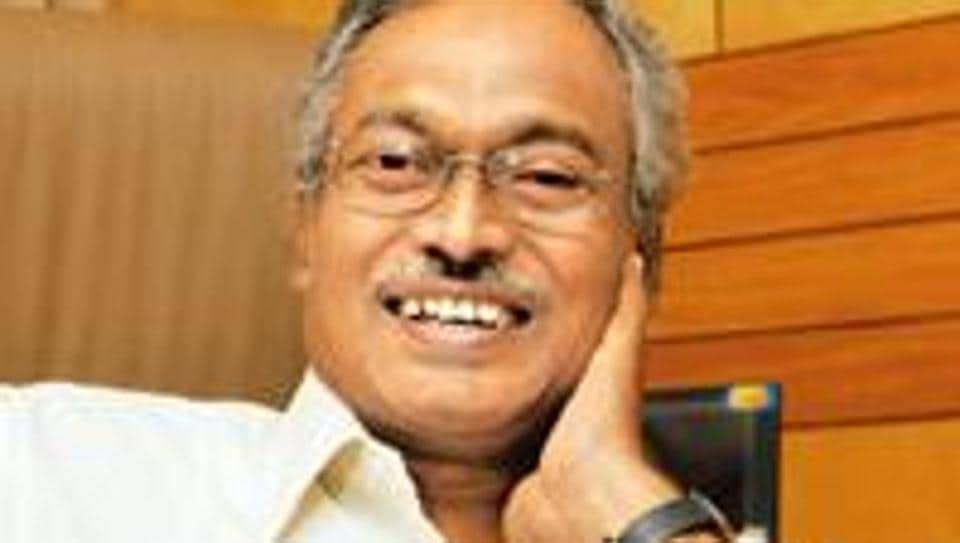
Sen is survived by his wife and a son. He will be cremated on Wednesday.
Recognised as the quiet, non-flashy priest of Communist Party of India (Marxist)’s industrialisation drive in Bengal between 2001 and 2011 -- the last 10 years of the Left Front rule -- Sen suffered a cerebral attack in November 2013.
A soft spoken man of few words and frugal lifestyle, Sen was easily the second most influential minister in Buddhadeb Bhattacharjee’s cabinet. He rarely wore anything but light-coloured half-sleeve shirts, trousers, open leather slippers and lived in a 940-sq ft apartment in Salt Lake with his spouse who was a school teacher.
Sen, widely held to be one of the hardliners in the party’s Bengal arena, steered the industrialisation drive of the state when chief minister Buddahdeb Bhattacharjee took it upon himself as his top priority.
Though the reformist Bhattacharjee became the face of the drive, Sen was the quiet performer, the back room boy who went through the grind of marketing the state to investors and trying to polish the image of Bengal that acquired a degree of notoriety in the industrial circles, thanks largely to militant trade unionism in the sixties and seventies.
The Tata Nano project was closest to his heart during his 10-year stint as the industry minister, and the slipped into despair after the project was abandoned in October 2008.
He started negotiating with the Tatas in 2004 and continued the exercise assiduously for two years to woo the most discussed automobile project of the country, though there are lingering doubts whether Sen agreed to the relocation of the factory from its initial site in Kharagpur to Singur, a move that ignited the land agitation that rebuilt Mamata Banerjee’s career.
Bureaucrats who worked with him recalled how, unlike a textbook Communist, he not only tolerated different opinions, but actually encouraged it.
Unlike Bhttacharjee, Sen spoke in measured, well-thought-out words, was never ebullient but always full of calibrated optimism.
That understated confidence deserted Sen before the Assembly elections of 2011 when the Trinamool Congress routed the Left to end the 34-year record breaking rule of the party. While he still believed that the government taking up the cause of the Tata Motors plant in Singur was justified, he was not so sure about the chemical hub project to be built by the Salims, a controversial industrial group of Indonesia, which resulted in the Nandigram movement that eventually turned out to be the single biggest factor to mobilise public opinion against the Left Front government.
For a number of years, Nirupam Sen was dogged by the shadow of Khokon Sen, who was named as one of the marauders in Sainbari in Burdwan district. In March 1970, a group of youths stormed the house of the Sains, speared two brothers Pranab and Moloy to death, and forced their mother to swallow rice stained with the blood of her sons.
The Sains were supporters of the Congress, and political opponents of the CPI(M) kept alleging down the years that Nirupam Sen was, in fact, Khokon Sen, who reinvented himself in a new avatar thanks to the cooperation of his party and the government that came in power in June 1977.
In 2012, the Mamata Banerjee government set up a commission of inquiry to probe the incident by retired high court justice Arunabha Basu. The commission is yet to submit its report though about ₹50 million has already been allocated for the probe.
Sen contested Assembly elections in 2001, 2006 and 2011 from Burdwan South constituency. He won twice and lost the last elections to a Trinamool candidate.
A follower of B T Ranadive, one of the nine founding fathers of the CPI(M), Nirupam Sen rose to be a politburo member and was respected by most in the party. He was an organisation man and initially worked in Burdwan district known to be Bengal’s rice bowl.
After 10 years as minister in charge of the industry department apart from industrial reconstruction and a brief stint in the power portfolio too, the total assets of Sen and his school teacher wife stood under ₹2.3 million.
When Buddhadeb Bhattacharjee was made the chief minister after Jyoti Basu, some even believed that Sen would have made a more competent and balanced, though less charismatic, head of government.


