
 E-Paper



100 years of Ulysses: A novel idea, a date celebrated around the world

 Prefer HTon Google


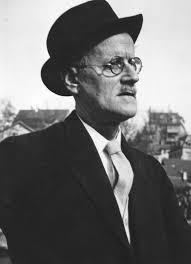
A man’s throbbing anxiety about his wife’s adulterous affair; an author plagued by fantasies he poured into his work — Saikat Majumdar looks back on the genius and despair of James Joyce’s Ulysses, published a century ago this month.
A true literary romance, wrote the American critic Lionel Trilling, must break social norm.
The 19th-century European novel celebrated adultery; in the 20th century, when adultery raised brows no longer, it turned to transgressive relationships, as between Vladimir Nabokov’s Humbert Humbert and Lolita. What would this line of thought make of a novel driven by the writer’s fantasy of his partner cheating on him?
James Joyce would not be the writer he was without this fantasy, and Ulysses, published a hundred years ago this month, would not be the novel it was to become without it. Much of the novel, set on the day of June 16, 1904, is driven by Leopold Bloom’s throbbing anxiety about his wife Molly’s ongoing affair with her concert manager Blazes Boylan.
That day, immortalised by the novel, also happened to be the day Joyce took his first walk with Nora Barnacle, the woman who would become his wife and inspire the character of Molly. But what a delicious anxiety it is; what deep masochism for the literary consciousness that created it.
In the real world, Joyce was torn by anxieties about other men, such as his friend the novelist Italo Svevo, but his suspicions were unfounded. Nora’s love for him was, by all accounts, single-minded. But Joyce’s masochistic fantasy would appear again and again in his work. In the play Exiles (1918), the writer Richard stages an affair between his wife Bertha and his friend the journalist Robert Hand, faking a letter written by Hand, much to Bertha’s horror.
It’s hardly surprising that Ulysses has been a lightning rod for feminists through the last 100 years. Some have hailed its fluid, experimental language as a landmark of feminine discourse. Others have lamented Molly Bloom’s broken sentences, and Joyce’s distressing claim that this is how women think and write.
The novel has run in concentric circles of gender. In his experimental series of fictional sketches, Elizabeth Costello (2003), the South African writer JM Coetzee’s protagonist is a 67-year-old Australian writer, Elizabeth Costello, best known for her fourth novel, The House on Eccles Street, named after the real Dublin street where Leopold and Molly live in Ulysses. While in Joyce’s novel Molly is homebound through the whole of June 16, in the novel by the fictional Costello, she is set free, roaming the streets of Dublin “a lioness… stalking the streets, smelling the smells, seeing the sights.” In Coetzee’s book, the fictional Australian writer describes Molly as “Looking for prey, even. Yes, I wanted to liberate her from that house, and particularly from that bedroom, with the bed with the creaking springs, and turn her loose – as you say – on Dublin.”
Boots on the ground
The streets of Dublin. The world the novel immortalises is also where it has picked up vibrant, popular life, triggering a Joyce industry. I remember the trip I took as a student from the US to Dublin on June 16, 2004, the hundredth anniversary of the fictional events described in Ulysses. At the immigration counter, I had a brief but intense conversation about a passage from the book, the absolute high literary point of all my immigration encounters.
I arrived in Dublin just late enough to miss the massive Bloomian breakfast that had been served to the public in O’Connell Street, supposedly including some of Bloom’s favourites: “the inner organs of beasts and fowls... thick giblet soup, nutty gizzards, a stuffed roast heart, liverslices fried with crustcrumbs, fried hencods’ roes”, though I don’t imagine they were fan enough to include exactly the kind of “grilled mutton kidneys” that offer the “palate a fine tang of faintly scented urine”.
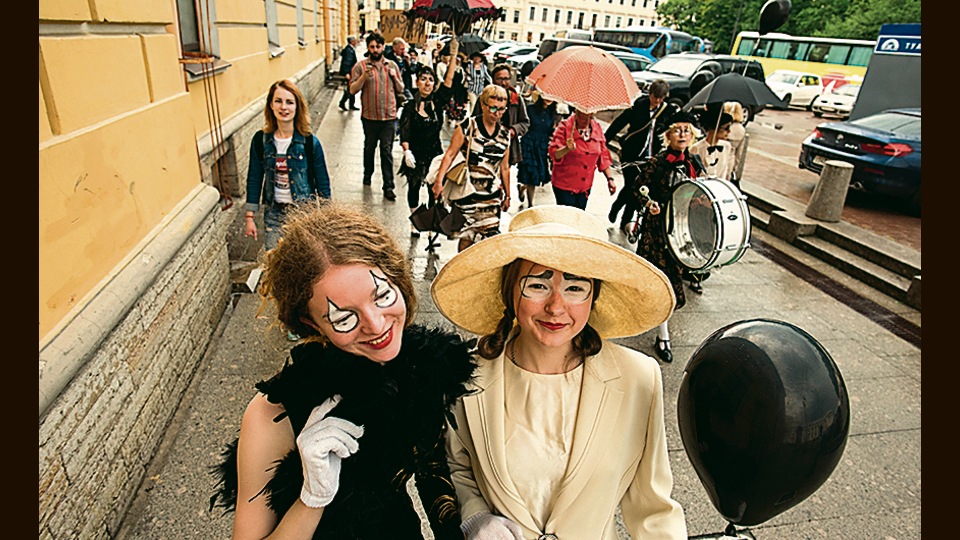
Inns, pubs, Dublin’s streets flowed with Ulyssiana that Bloomsday on a particularly grand scale, but there are celebrations every June 16, and not just in Dublin. Joyce-themed celebrations and costume marches are held on this date in cities from St Petersburg to New York.
That centennial year, the Euro Cup was underway at the same time, but even watching soccer in the pubs, or listening to a band playing U2 numbers in the Temple Bar area by the river Liffey (where Bloom buys erotic novels for Molly from a newsstand), everything was suffused with an air of Bloomsday.
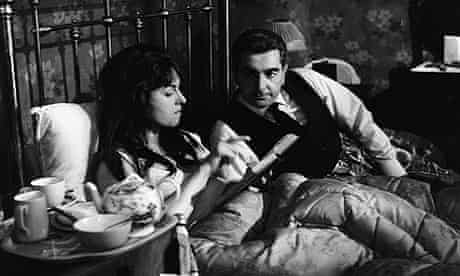
These are streets that become central characters in the two film versions of Ulysses that I sometimes screen for students while teaching the novel. There is Joseph Strick’s black-and-white 1967 film, which speaks the solemn artistic language that belongs to the young artist intent on his self-making. And there’s Bloom, the 2003 film by Sean Walsh, which celebrates the touching, very-human awkwardness of Leopold Bloom.
Molly, though more of a presence in Walsh’s film, remains the hardest to realise. She lives most fully in Elizabeth Costello’s novel, which, alas, exists only in the fictional world of JM Coetzee.
(Saikat Majumdar’s most recent novel is The Middle Finger. He tweets @_saikatmajumdar)


