
 E-Paper



Back to the future: Are there lessons for managing AI, climate, in tales from 1,000 years ago?

 Prefer HTon Google


What could the first-ever financial crash teach us about AI? Are there clues to tackling climate change, in slave revolts? Take a look.
As the bell strikes noon, nine figures draped in black appear outside the Door of the Apostles at St Mary’s Cathedral in the Spanish city of Valencia.
For centuries, members who are representatives of the city’s irrigation canals have gathered here weekly, for the Tribunal de las Aguas (The Tribunal of Water). It’s an unusual public court proceeding. With a brass harpoon in hand, the steward calls forward farmers accused of water-law violations; their cases are then deliberated on, resulting in fines or dismissals.
“It’s an example of living history. A form of local democratic resource governance with roots going back centuries, and it is what we need to start learning to do as we move into an era of increasing water scarcity,” says Roman Krznaric (pronounced kriz-NAR-ik).
The 53-year-old Australian is a social philosopher, political scientist and senior research fellow at Oxford University’s Centre for Eudaimonia and Human Flourishing.
His new book, History for Tomorrow: Inspiration from the Past for the Future of Humanity trawls through 1,000 years of historical records to arrive at new approaches, based on practices such as the water tribunal that have proven effective over centuries.

“You don’t drive a car without looking in the rear-vision mirror. History is an incredibly undervalued resource,” he says.
Looking around, he wondered why most governments, politicians and policymakers didn’t use this vast resource. It frustrated him that they didn’t, he adds. And from that frustration came the idea for his book.
History for Tomorrow features references from hundreds of works of academic literature, as well as perspective and commentary by experts ranging from historians specialising in 16th-century German witchcraft to technologists studying the future of artificial intelligence.
The four years he has spent working on History for Tomorrow have changed him too, Krznaric says.
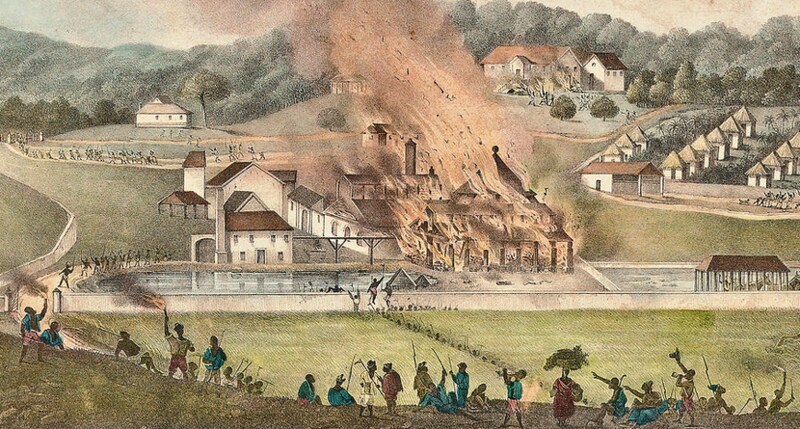
In the book, for instance, he explores what slave revolts from centuries ago can teach us about dealing with the climate crisis. A key lesson is the importance of a blend of disruptive social movements and visionary ideas.
In his own life, this led him to participate in a street protest for the first time.
“I’m not a natural disruptor and prefer sitting in old libraries reading books, but after reading about the power of disruptive movements, I found myself lying on the street, blocking the roads with my teenage daughter, in front of London’s Parliament, exasperated by the government’s glacial pace of action on the climate crisis.”

Smart cities
It concerns him, Krznaric says, that today’s policymakers seem stuck, “relying on future technologies for civilisational rescue”.
The truth, he adds, is that transformative change works on the triangular model referred to as the Disruption Nexus. This first element is a crisis, such as a financial crash or ecological calamity. This is followed by disruptive social movements, which help amplify awareness of the crisis and catapult it onto the political agenda. The third element is imaginative, visionary ideas, and this is where new models – or new models based on old ones – can play a key role, he says.
For his book, he explored a list of 10 core global challenges in the 21st century: fossil-fuel addiction, communal intolerance, hyper-consumption, the ills of social media, water crisis, floundering faith in democracy, the risks of genetic engineering, growing inequality, the uncertain future of AI, and civilisational breakdown. In each chapter, he delves into one of these.
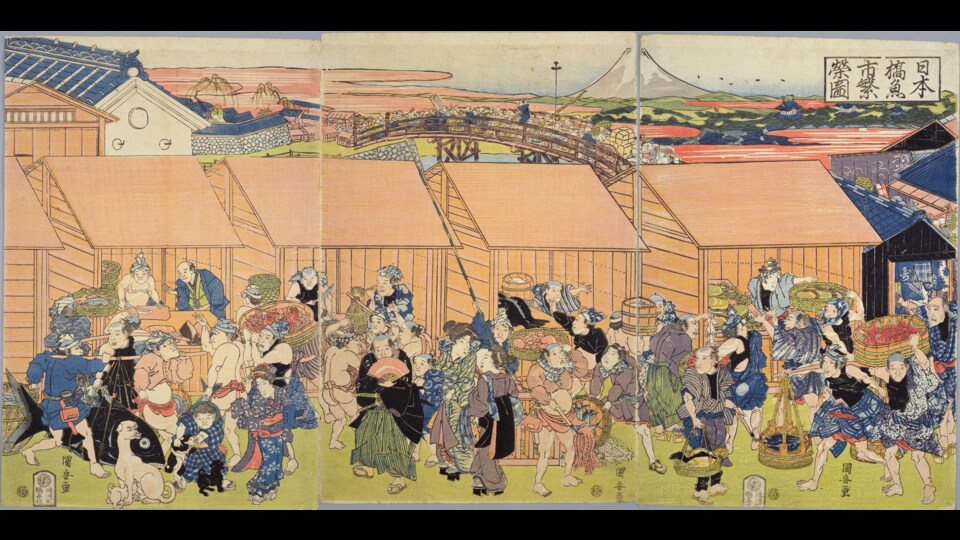
For inspiration in a world driven by hyper-consumption, for instance, he takes the reader to the pre-industrial 18th-century city of Edo in Japan, which practised what would today be called a circular economy. Almost everything was repaired, re-purposed or recycled.
An old kimono would become nightwear once the fabric began to fray. When it was unusable as a garment, it would be cut up into nappies, then dusters, and finally burned for fuel.
Japan’s sustainable practices were a response to strict regulations imposed by the Tokugawa shoguns, who ruled over a burgeoning population amid dwindling forest cover. Amid an acute shortage of wood and a no-trade policy with neighbours, instituted to keep Christian missionaries out, Edo pivoted. Records indicate that more than 1,000 refurbishing and recycling units opened up, as the new economy took shape.
“It was a prime historical example of a regenerative economy,” Krznaric says.
Human societies, he adds, have a remarkable ability to adapt and respond in times of crisis. “Perhaps the greatest value of the Edo experience is to remind us that it may be possible to move beyond the idea of mere sustainability — where something is maintained in its current state — to the more profound notion of regeneration,” he writes.
Paper trails
For a view of the possible future of AI and Artificial General Intelligence (or AGI; click here for a quick breakdown of exactly what this is), Krznaric travels back to the invention of financial capital markets in the Netherlands, in the early 17th century.
This is where the stock exchange and a range of associated financial instruments were born. Scottish financier John Law used the new model to establish the private Banque Générale in Paris, which began issuing paper notes to help pay off the debts of the French government.
The notes were issued on the promise of revenue that was expected to flow in from developing French territories in the Mississippi river valley.
Very quickly, the system spun out of control, leading to the world’s first full-fledged financial crash. Known as the Mississippi Bubble (1718-20), it left the French economy in ruins. France moved back to a gold-backed currency system, and it would be 80 years before paper money was reintroduced into its economy.
With the growth and escalating spread of fake information, Krznaric says, there are parallels outside the world of finance today, with the prospect of a “reality crash” caused by AI. “I think one of the most fundamental things that history tells us is to develop new ownership models of AI,” he says.
Currently, most of the world’s largest AI models are owned and controlled by about 10 giant corporations, he adds. “Such a concentration of power is dangerous. It is something we need to avoid as a society.”
For now, Krznaric hopes his book will get more people to take the idea of applied history seriously. He imagines governments developing “backsight” units which systematically learn from the history of public policy. “Wouldn’t it be fascinating to have a History for Tomorrow museum, which explored how the past can help us tackle challenges today, from the climate crisis to the risks of artificial intelligence?”
If he could do one more thing, he adds, “I would carve this Maori proverb above the doorway of every parliament in the world: ‘I walk backwards into the future with my eyes fixed on the past’.”


