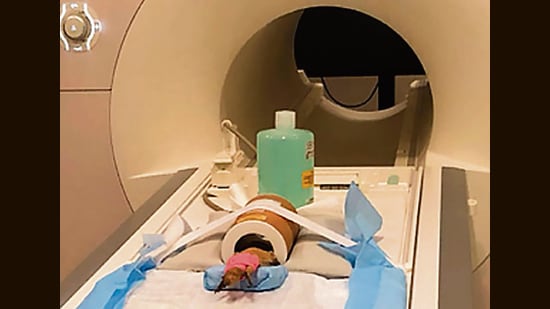
How differently do animals’ brains work? How do they register pleasure and pain? What areas light up as they sleep, and why?
Scientists have been using magnetic resonance imaging (MRI) to try and answer such questions, creating animal brain atlases of different species.
{{^htLoading}} {{/htLoading}}
These atlases, for now, map the brains of healthy specimens and cadavers, to establish scanning protocols and a clear view of a baseline. The aim is for these maps to eventually aid in research, and help diagnose
All Access.
One Subscription.Subscribe NowAlready subscribed? Login
One Subscription.
Get 360° coverage—from daily headlines
to 100 year archives.
E-Paper
Full
Archives
Archives
Full Access to
HT App & Website
HT App & Website
Games
{{^usCountry}}{{/usCountry}}
Explore the latest Lifestyle News on health, fashion, travel, relationships, food and festivals. Find useful tips, expert advice, trends and inspiring stories for everyday living.
Explore the latest Lifestyle News on health, fashion, travel, relationships, food and festivals. Find useful tips, expert advice, trends and inspiring stories for everyday living.
Advertisement
{{/htLoading}}{{#usCountry}}