
 E-Paper



Read an exclusive excerpt from Vagabond Princess, the story of Gulbadan Begum

 Prefer HTon Google


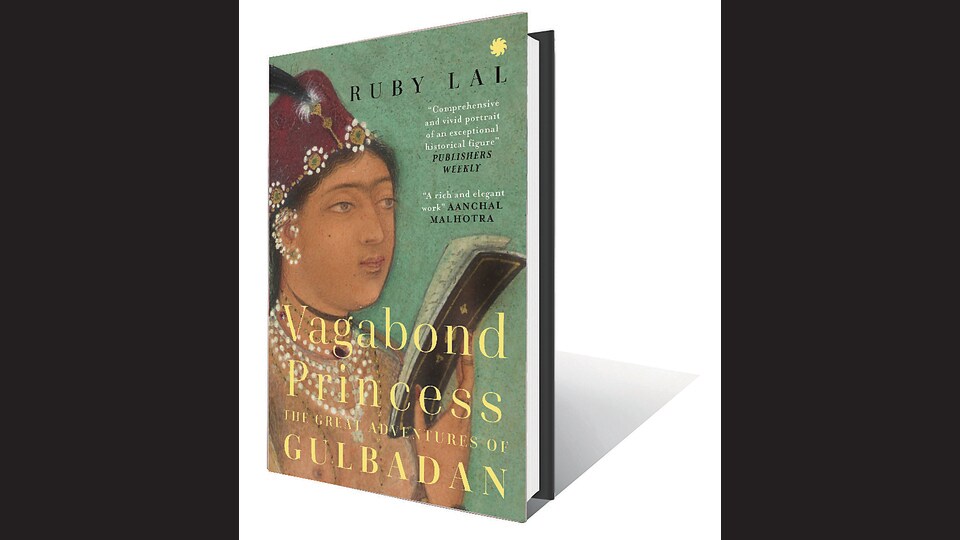
What likely happened in the post-hajj years that the Mughal princess spent in the desert? An excerpt from Ruby Lal’s book.
Five years after Gulbadan returned from the hajj, around 1587, Akbar made an important announcement. In keeping with his world-conquering ambitions, he commissioned the writing of a comprehensive history of his empire. It would be the official history, a state-sponsored record of Mughal glory unmatched in scope.
For this first-time history, the emperor asked servants of the state and old members of the family to record their memories of the Mughal dynasty. There was one woman among the invited contributors… the enormously accomplished Gulbadan, now sixty-three. She had spent her life as a royal witness, partaking in the ventures of her kith and kin along with her own magnificent initiatives. She was one of the best sources whom Akbar could have asked about their dynasty—a direct witness, family member… astute and highly regarded. Gulbadan noticed people, things, and happenings, and had a fantastic memory. While it was normal for aristocratic women to be literate, she was revered as a learned elder…
Although the emperor expected his aunt to write about the grand achievements and epic moments in the career of the Mughal dynasty, and Gulbadan’s writing is indeed expansive, she chose to call her work the Ahval-i Humayun Badshah, or Conditions in the Age of Humayun Badshah. Thus she emphasized the wider itinerant life force of Mughal kingship.
What she delivered was no simple memoir of an elderly lady—she penned in exceptional detail the ragged and robust lives of the people of her dynasty. Her writing is effortless, written as if it were being spoken, animating people and their actions in vivid characterization. Her genre is unclassifiable—not at all like her father’s poetic memoir, the Baburnama, which she had read and admired, or the hagiographies of kings that others had written.
Her book is unique also as the only prose work written by a woman of the Muslim courts, including Ottoman Turkey, Safavid Iran, and Mughal India, where women mostly wrote poetry… Not surprisingly, it yields information otherwise effaced from the official Mughal record…
…
I continue to wonder what happened to the rest of Gulbadan’s manuscript. What was in the missing pages?...
Within a year of the princess’s arrival in Mecca in 1578, Sultan Murad III of Turkey, the sovereign of the Holy Land (the Ottomans had been masters of Egypt and the Hijaz area since 1517), issued an imperial order to evict Gulbadan and her companions. He did so again two years later, in 1580. Five such orders are preserved in the National Archives in Istanbul, Turkey.11 There may have been more.
The Mughal women had become a prominent spectacle in public places, a circumstance, according to Murad, that was throwing the area into chaos. The matriarchs became the talk of the town. Around the Great Mosque, in places such as markets and fountains, and in other cities, ordinary folk stared at and crowded around Gulbadan and her companions. The hubbub spread to areas far beyond the sacrosanct Ka‘ba. According to Badauni, Gulbadan and her party also went overland to the Holy Iranian cities, such as Mashhad, and to other cities in Arabia.
The problem, as Murad saw it, was that Gulbadan and her group had surpassed the permissible boundary and propriety of being in the Holy Places. Their presence was indecorous. They violated the very source of the authority of Sultan Murad. They created fitna (chaos). (I will discuss in greater detail in later pages of this book what Murad dubbed the “un-Islamic” activities of Mughal ladies.) Among those he warned in his orders about the women, asking them to ensure that the ladies left the sacred area, was the sherif of Mecca, who wielded considerable prestige and political and diplomatic authority.
There was not a word from Akbar in response to Murad’s charges, even though the Red Sea and the Indian coast were closely knit and in constant contact. Tradesmen and pilgrims went to and fro, and news traveled with them. Although there are no surviving records of any exchange between Akbar and Murad, it is noteworthy that soon after Murad’s 1580 eviction edict, Akbar appointed Khwaja Yahya, a venerable courtier, as the next head of pilgrimage, commissioning him to escort Gulbadan and the other royal women back to India.
In March 1580 the princess, Yahya, and the women boarded the Tezrav, or Swift One, and headed south from Jeddah. But near the port of Aden, the ship was wrecked. Gulbadan, other Mughal women, and officers stayed in Aden for over seven perilous months. To top it all, the governor of Aden did not behave well toward the royal guests. Yet all of Murad’s edicts as well as a stray entry in the imperial history of Akbar record the women’s reluctance to leave Aden. Despite the rough conditions, they lived as a community amid natural surroundings in open country. By all accounts, they felt free and happy.
That Murad labeled the Mughal women’s activities “un-Islamic” and directed them to leave was nothing short of a disgrace for the Mughals. No wonder Akbar and his historians refused to record the details of what Mughal women did. Instead, the chroniclers wrote sanitized descriptions celebrating the homecoming of the royal aunt, a hajji back from her pilgrimage—not someone who had infuriated a contemporary Islamic monarch ruling in that region.
Thus four extraordinary years vanished from Mughal history. In this fading, many things disappear: the lush worlds that Mughal men and women inhabited, made, and lived; networks, explorations, and wonders that pilgrims and sojourners experienced. The lost years take with them the rich experiences of Mughal women—the history of half of humanity, as is now often said. Moreover, we lose the traces of inimitable experiences and the sense of the vast terrains, people, animals, and sacred geographies of Mughal India, the Red Sea, and the desert land of Arabia…
(Excerpted with permission from Vagabond Princess: The Great Adventures of Gulbadan, by Ruby Lal, published by Juggernaut; 2024)


