
 E-Paper



‘The Shompen way of life is set to be eroded,’ says Nicobarese anthropologist Anstice Justin

 Prefer HTon Google


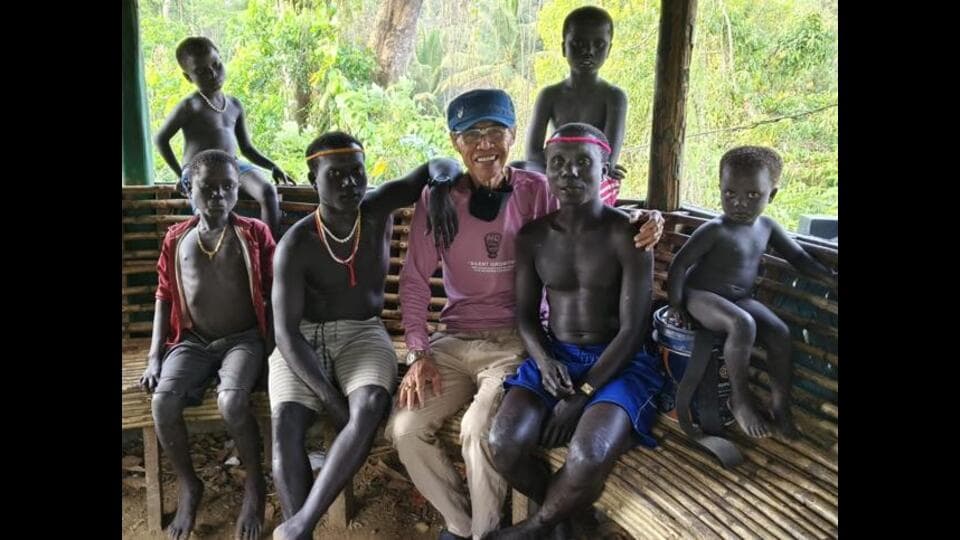
The Great Nicobar Island Development plan feels like a violation of their rights, he says. ‘They don’t have the needs we have. They are uninterested in contact’
He grew up on the island of Car Nicobar and was India’s first anthropologist from a Nicobarese tribe.
In his 30s, Anstice Justin was part of early contact missions organised by the government of India to North Sentinel island. He was among those who handed over gifts of coconuts to the Sentinelese at the island’s shore.
Justin retired as deputy regional director of the Anthropological Survey of India in Port Blair.
Now 71, he has spent a lifetime, he says, trying to understand the communities straddling modern civilisation on the one hand, and the loss of their independence, autonomy, land and way of life on the other.
The Great Nicobar Island Development Project is an unjust plan; it is a threat to every aspect of the tribes’ way of life, he says. Excerpts from an interview.
* What are your biggest concerns about the Great Nicobar Island Development Project?
My primary concern is that it does not appear to be constitutional. It appears to be a clear violation of aboriginal rights, as far as the Shompen, who are considered a Particularly Vulnerable Tribal Group, and the Nicobarese, who have the constitutional status of Scheduled Tribe, are concerned.
At least one Shompen village, three Nicobarese villages, and other hamlets adjacent to those three villages will be gravely affected by their proximity to the project site.
I am also concerned that we as a country can impose such a mega-development project without having a meaningful dialogue with these tribal communities.
The Shompen are a semi-nomadic, self-contained community. They have never asked anything of the government of India. But they need to be able to roam the land.
Look at this from their point of view. We saw what happened when the Nicobarese were displaced after the 2004 tsunami devastated their coastal villages.
Bureaucratic issues mean they still cannot return to their ancestral lands.
The district administration built permanent shelters for them instead. But all they are equipped to do in an urban setting is daily-wage labour, and that life does not suit them.
They keep saying they want to go “home”. In a system based largely on money, they are left with nothing, where once, in their villages, they had all that they required.
Do we want to see this happen to the Shompen too?
* Could any good come of the proposed co-habitation with a mainstream population?
The Shompen are uninterested in contact. To them, development holds no significance.
They don’t have the needs we have. They need fishing lines and minimal clothing — perhaps a T-shirt or shorts.
They have their own ways of sustaining themselves and meeting these needs.
They grow edible roots, practice honey-harvesting, and are skilled in fishing. They barter some of these goods with the Nicobarese for products such as tobacco and machetes.
Instead of supporting their self-sufficiency, there is a move to push them towards dependency.
The reality is that the Shompen are self-sustaining and have lived independently for centuries. Any interference will erode traditional culture.
* Is it possible that the two habitats could co-exist?
As animists, the Shompen treat the forest as their sacred complex. The impact of a mega project would be viewed as disrespectful to their beliefs and practices.
Besides, how will the incoming population of 6.5 lakh get their water? Where will their sewage go? How will the Shompen make their concerns known in any meaningful way?
Usually, in such cases, the tribes end up separated, one way or another, from their land and way of life.
Policy-makers might have extensive knowledge of the land and seas, but so do the Shompen. They have been drawing sustenance from the sea, streams and forest for as long as they’ve been here.
They and other tribes are the true heirs of this land. They have lived here for millennia. Their rights must be respected.


